Friese nagelkaas
A hard Frisian cheese studded with cloves and cumin
- Vegetarian
- Local name
- Friese nagelkaas
- Served with
- Bread
- Pairs with
- Dutch beer
What it is
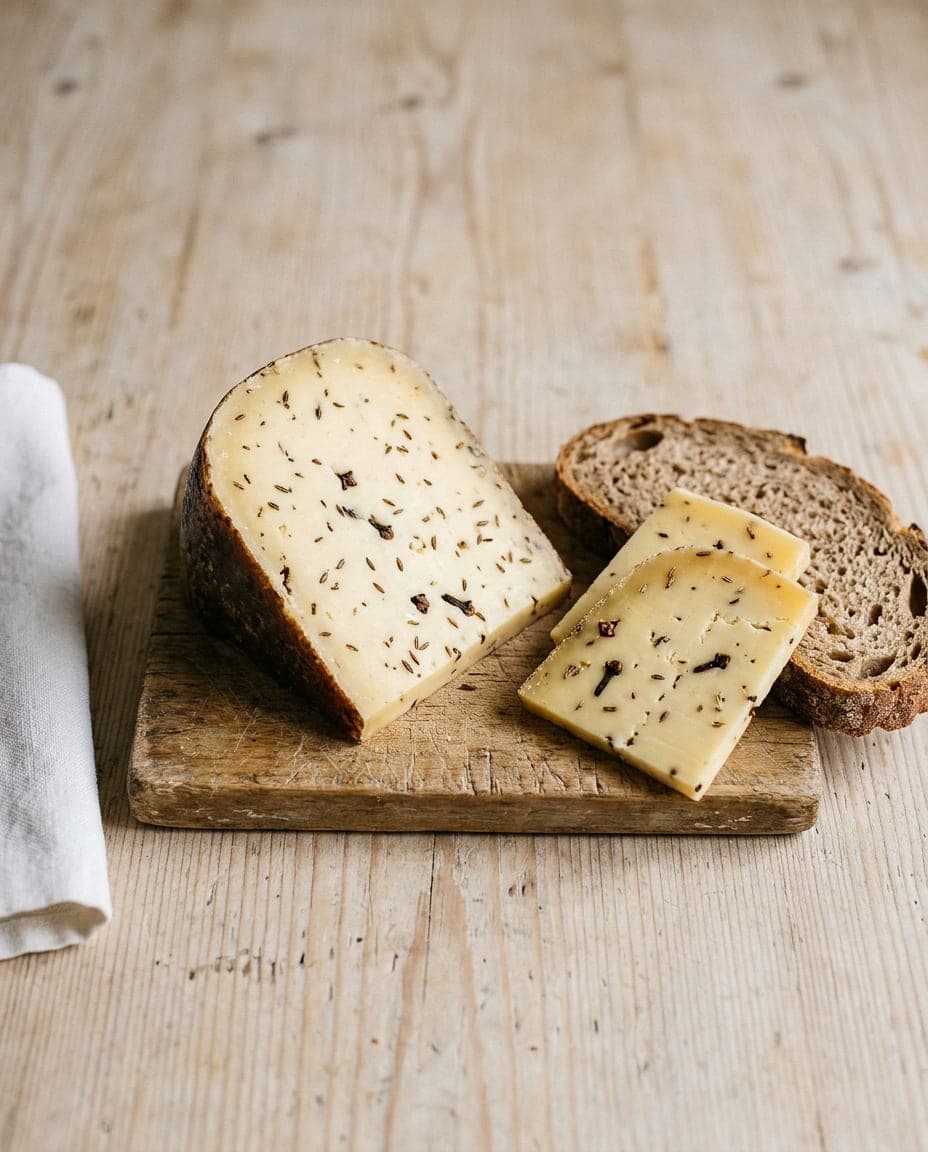
Friese nagelkaas, closely related to the protected Kanternagelkaas, is a hard, low-fat cheese made in the Dutch province of Friesland. It is distinguished by the presence of whole cloves and cumin seeds mixed into the curd before the cheese is formed. The result is a dense, dry block with a pale yellow interior speckled with dark spice.
The name nagelkaas simply means clove cheese: it comes from kruidnagel, the Dutch word for clove, so called for its nail-like shape. While the Netherlands produces many cheeses, this one remains a regional speciality rather than a nationwide staple. It is a savoury, earthy cheese where the spice does not mask the milk but adds a sharp, aromatic layer to the flavour. Because the curd is pressed hard and matured for some time, the texture is firm enough to be cut into thin slices without crumbling.
The history of the spices
The inclusion of cloves in Dutch cheese dates back to the era of the Dutch East India Company. As merchants traded with the East Indies, they brought spices such as cloves and nutmeg back to the Netherlands. While these spices became common in general cooking, they found a lasting home in the dairy regions of the north.
In Friesland, spiced cheese has a long paper trail: a 1725 regulation of the States General even required Frisian kanterkaas to contain spices, though the rule was later dropped. The tradition is tied to butter-making: farms churned their cream into butter and made hard, long-keeping cheese from the skimmed milk that was left. The clove version flourished in the second half of the 19th century, and over time the style became a marker of local identity, surviving even as other regional varieties faded from common menus.
There is no single recorded date for when the first nagelkaas was made, nor is there a known inventor. The recipe appears to have evolved through practice in farmhouses and small dairies rather than through official decrees. Today, it remains a product of the region's agricultural history, linking the modern table to the era of maritime trade.
What goes into it
The ingredients are simple, relying on the quality of the milk and the choice of spices:
- Cow's milk, typically low-fat, which forms the base of the cheese.
- Whole cloves, which provide a warm, pungent aroma and a distinct bite.
- Cumin seeds, adding an earthy, slightly nutty note that complements the clove.
- Salt, for seasoning and preservation during the maturation process.
The spices are not ground into a powder but kept as whole seeds or cloves to ensure they do not dissolve completely. This allows the eater to encounter distinct bursts of flavour with each bite. The cheese is matured until it becomes dry and dense, losing much of its moisture in the process.
How to eat it
Friese nagelkaas is traditionally eaten as part of a savoury meal rather than a dessert. It is cut into thin slices and served on dark rye or brown bread. The strong flavour means that a little goes a long way; a small portion is often enough to satisfy the palate.
Locals often pair the cheese with a cold Dutch beer, which helps to cleanse the palate between bites. Some also serve it with pickles or onions to balance the intensity of the spices. The cheese is rarely cooked; its value lies in its raw state, where the spice notes remain sharp and distinct.
Curious facts
- A regional anchor. While found in shops across the Netherlands, authentic Friese nagelkaas is produced almost exclusively in Friesland.
- The whole seed rule. The spices are never ground for this cheese; the texture relies on the contrast between the smooth curd and the hard seeds.
- Lean by design. It is made from skimmed milk: the cream went into butter, which was the valuable product, and the cheese was made from what was left.
- A keeping cheese. The dry, hard texture let the cheese keep for a long time, which mattered when it was traded well beyond the province.
- Protected under another name. The name Friese nagelkaas itself is not protected, but its close relative Kanternagelkaas, made in Friesland and the Westerkwartier, holds an EU protected designation of origin.
Where to try it
The best place to find Friese nagelkaas is within the province of Friesland itself, where a few farm and small dairy producers still make the cheese in the old style. It is on the shelves of supermarkets and delicatessens across the province, and the farm shops and weekly markets cut it from the wheel.
Where to try it
3 destinations
 Boat Rentals
Grou
Sailing village in Friesland with boat rentals for exploring the lake district.
Boat Rentals
 Boat Rentals
Warten
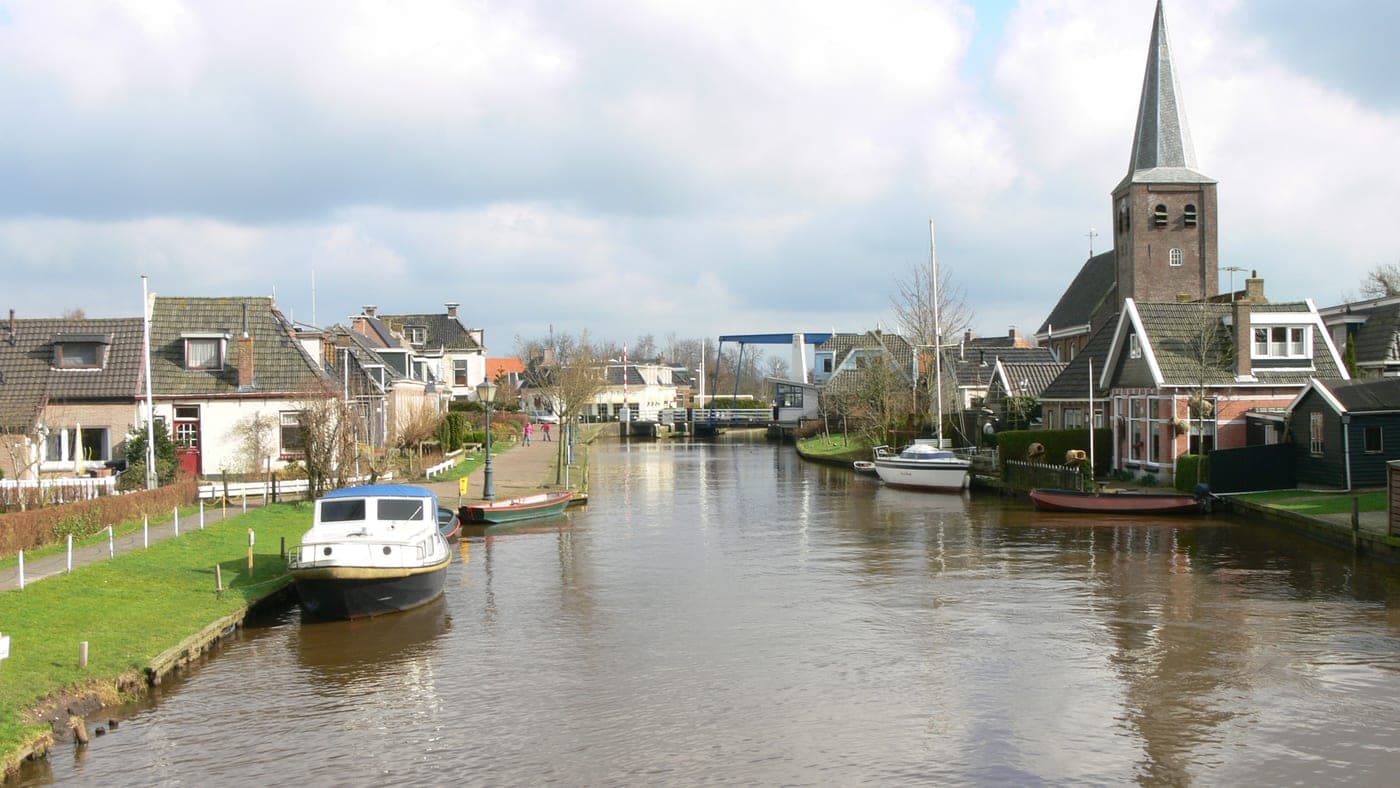
Small village in Friesland with boat rentals on quiet waterways.
Boat RentalsHiking
1 region
- Boat Rentals12 destinations
Friesland
Friesland, known for its lakes and waterways, is the largest province in the Netherlands by area. The region features unique cultural heritage, with the Frisian language recognized alongside Dutch. Leeuwarden, the capital, boasts historical architecture and was a European Capital of Culture in 2018. Small towns like Dokkum and Sneek offer cobbled streets and traditional festivals. Friesland is famous for its dairy products, particularly Frisian cheeses, and the annual Elfstedentocht, a long-distance ice skating tour. Nature lovers can explore the Wadden Sea, a UNESCO World Heritage site, and the expansive Frisian Lakes, ideal for sailing and cycling.
Boat RentalsHiking