Tarte au riz de Verviers
A deep, creamy rice tart from Verviers in Wallonia, Belgium
- Vegetarian
- Local name
- Tarte au riz de Verviers
- Served with
- Coffee
- Best eaten at
- A Verviers bakery
- Pairs with
- Coffee
What it is
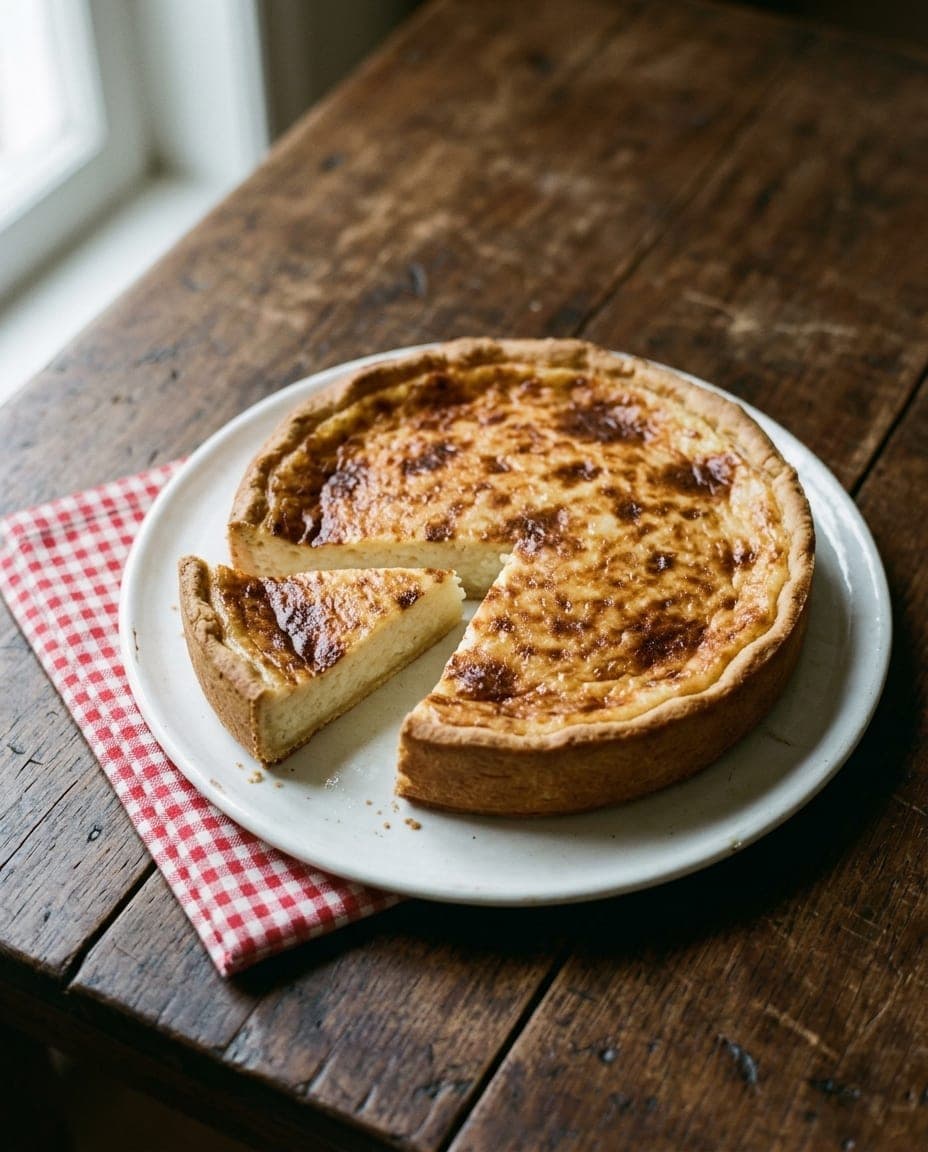
The tarte au riz of Verviers is a substantial sweet tart from Liège Province in Wallonia. It is not a delicate French-style fruit tart nor a thin custard slice. Instead, it is a deep, open-faced pastry where the filling takes centre stage. The base is a yeasted dough, risen until light and airy, which forms a wide, shallow case that holds a generous amount of rice pudding.
The filling itself is the defining feature. It consists of rice cooked slowly in milk until soft and creamy, bound together with egg and sweetened with sugar and vanilla or cinnamon. Unlike the thin custards found elsewhere, this mixture retains its texture, creating a thick, spoonable layer that sits high above the pastry rim. When baked, the top sets just enough to hold its shape while remaining moist inside, emerging from the oven with a lightly golden crust.
It is a dish of modest origins rather than fine dining. You will not find it on the dessert cards of luxury hotels in Brussels or the grand boulevards of Liège city centre. Instead, it belongs to the Walloon tradition of the dorêye, the large open tarts of the Liège region, cousins of the Limburg vlaai. It is a cake meant for fair days, Sunday tables, communions and weddings, or the afternoon break at a local bakery.
The Verviers connection
Verviers, a town in the far east of Belgium near the German border, claims this tart as its own. While rice tarts exist in various forms across the Low Countries and are sold all over Belgium, the version from Verviers has a specific character tied to the region's baking habits, and the name "tarte au riz de Verviers" has been in use since around 1900. Since 1990 a local gastronomic brotherhood has championed it, and Verviers bakers have applied for EU protected geographical indication status.
Verviers grew rich as a wool-industry town, and one local story holds that rice first reached the area through the wool trade. The tarte au riz reflects this practical, hearty approach to baking. It is designed to be shared, often cut into thick wedges that are substantial enough to serve as a snack or a light dessert after a meal. The depth of the filling ensures that every slice offers a satisfying ratio of creamy rice to buttery dough.
What goes into it
The ingredients are simple and local, relying on the quality of the dairy and the grain rather than complex techniques.
- Yeasted dough: A soft, risen base that provides a light contrast to the heavy filling.
- Rice: Short-grain rice is typically used, cooked slowly in milk until it becomes tender and releases its starch.
- Milk and egg: These bind the rice into a creamy, cohesive mass without becoming a dry custard.
- Macaroons: In some versions, a habit dating from the early 20th century, crumbled almond macaroons are added to the filling or scattered on top, adding a touch of almond flavour and extra texture.
- Sugar and vanilla: Used to sweeten the mixture gently, allowing the rice and milk flavours to shine.
The result is a tart that is rich but not cloying, with a texture that sits somewhere between a pudding and a cake. The macaroon variation is a distinct local habit found in several bakeries around Verviers, setting their version apart from simpler recipes.
How to eat it
This tart is best enjoyed at a traditional Verviers bakery, where it is often displayed in the window or kept warm on the counter. It is served in thick wedges, either warm or cold, depending on the time of day and personal preference. The warmth enhances the creaminess of the rice, while the cool version offers a firmer, more sliceable texture.
It is rarely eaten alone. The standard accompaniment is a black coffee, usually a strong filter coffee or an espresso served in a small cup. The bitterness of the coffee balances the sweetness of the tart and cuts the fat of the milk and egg. Coffee remains the classic companion.
The experience is casual and unhurried. You do not need cutlery for the whole tart; often the wedges are sturdy enough to hold in hand, though a fork is provided for those who prefer to scoop the creamy filling. It is a food that invites conversation, meant to be shared among friends or family while standing at the counter or sitting on a nearby bench.
Curious facts
- A deep filling: The defining trait of this tart is the volume of rice pudding it holds, which rises well above the pastry rim.
- Macaroon twist: Crumbled macaroons are sometimes mixed into the filling in Verviers, adding an almond note not found in other regional rice tarts.
- Fair-day favourite: It belongs to the same family as the Walloon dorêye and the Limburg vlaai, large open tarts made for fairs and feast days rather than restaurant service.
- Regional pride: Rice tarts are eaten all over Belgium, but Verviers claims the original, and a local brotherhood, the Vèrvî-riz, has promoted it since 1990.
- Coffee pairing: Black coffee is the standard drink served with it, balancing the sweetness of the rice and egg mixture.
Where to try it
1 region
 Wine Tasting5 destinations
Wallonia
Wallonia, the French-speaking region of Belgium, is known for its rich history and diverse landscapes. It is the largest region in the country, featuring cities like Liège, Namur, and Charleroi, each with unique cultural offerings. The region is famous for its stunning countryside, dotted with picturesque villages, and the Meuse River, which provides scenic vistas and outdoor activities. Wallonia is also home to several UNESCO World Heritage sites, including the Grand-Hornu industrial complex. The area boasts local specialties like artisan cheeses and Trappist beers. For history enthusiasts, the medieval towns of Durbuy and Bouillon offer a glimpse into the past with their ancient castles and cobblestone streets. Wallonia's hidden gems and natural beauty create a compelling backdrop for a leisurely exploration of Belgian heritage.
Wine TastingHikingLocal Cuisine