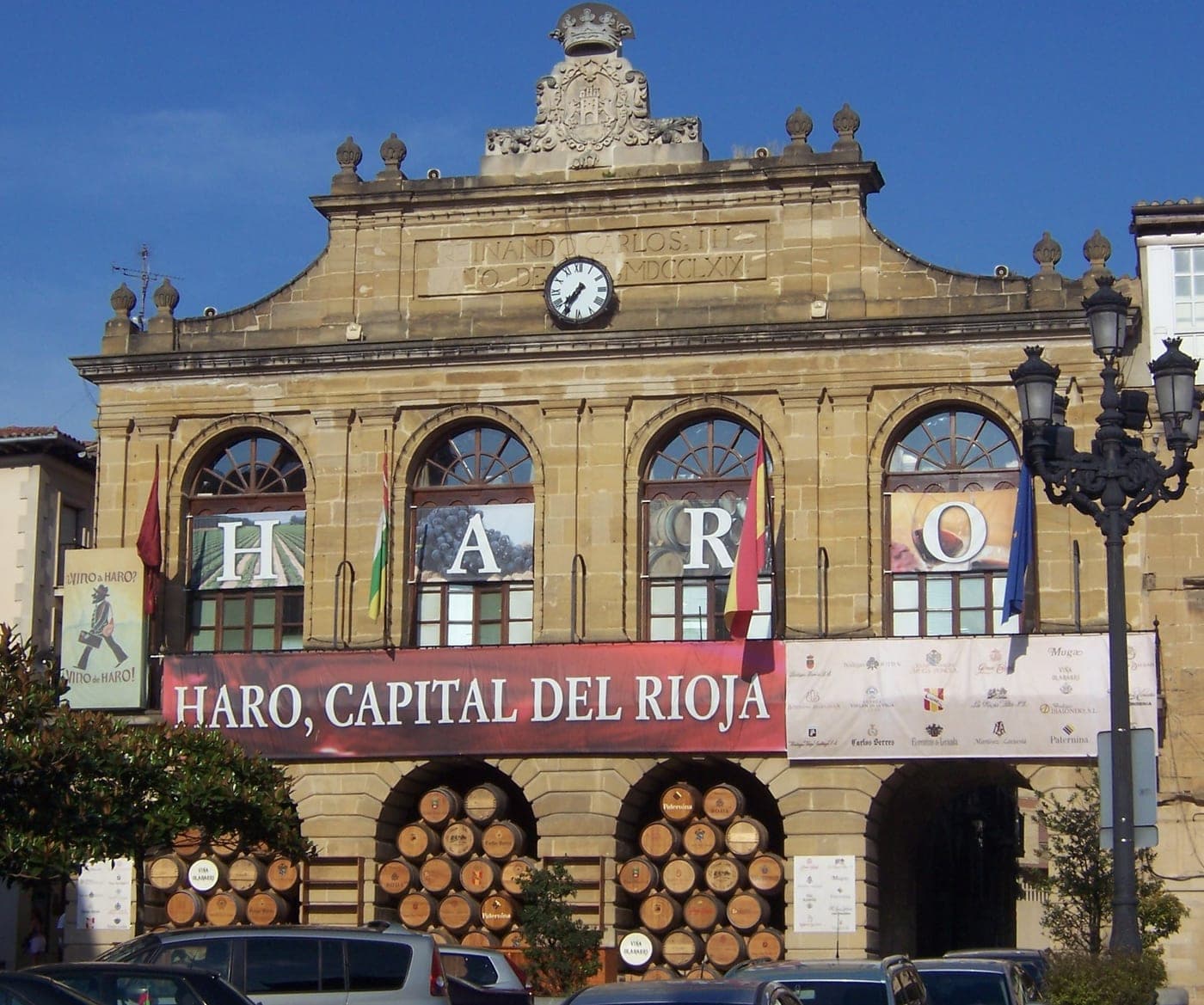
Photo by BigSus · license: CC BY 2.5
Haro sits in the north of La Rioja, Spain's smallest mainland region, where the Ebro valley meets the limestone ridges rising toward the Sierra de la Demanda. The town marks the heart of Rioja Alta, the coolest and highest of Rioja's three winemaking zones, close to the point where La Rioja borders the Basque Country and Castile y León. For anyone tracing where Haro is in Spain, this borderland setting explains much of its character: a market town built on river crossings, trade routes and centuries of wine grown on both banks of the Ebro.
Haro pueblo is compact, laid out on a slope above the river, with narrow streets opening onto the Plaza de la Paz, the long-standing centre of town life. The Church of Santo Tomás stands at the top of the old quarter, its carved south portal moving from Gothic into Renaissance work. Around it, arcaded houses and stone façades keep the layout of a town that grew wealthy on grapes well before Rioja became a name protected by law.
That wealth shows most clearly in the Barrio de la Estación, the wine quarter that gives Haro its identity. In the late nineteenth century, when the phylloxera insect had devastated vineyards across France, Bordeaux merchants and their winemaking methods crossed the Pyrenees and settled around Haro's new railway station. Bodegas such as López de Heredia, La Rioja Alta S.A., CVNE and Bodegas Bilbaínas built their cellars side by side there, and several still work from the same buildings, with galleries cut into the rock below street level and oak barrels aging wine in the dark. Cellar visits move past racks of bottles resting under decades of dust and into tasting rooms where the difference between a young Crianza and a long-aged Gran Reserva becomes clear on the palate.
Wine also sets the calendar. Grapes are picked from September, when Tempranillo vines on the surrounding hillsides turn gold and red, and pressed in the weeks that follow. Haro has run a formal wine-tasting competition, the Concurso de Calas, since the early twentieth century, drawing producers from across Rioja Alta to have their barrels judged blind. The town's most vivid wine tradition, though, falls earlier in the year, on 29 June, the feast of San Pedro. Haro's Batalla del Vino sends crowds up to the Riscos de Bilibio cliffs above town armed with buckets, water pistols and wineskins filled with red wine; white shirts turn deep purple within minutes, and a mass and procession give the morning its religious anchor before the celebration continues in the streets below.
Away from the cellars and the wine battle, Haro's daily rhythm is set by its bars. Tabernas clustered around the old town serve small plates alongside local wine by the glass, turning an evening walk into a slow round from one counter to the next. Cured meats, local cheeses and mushrooms gathered in the Sierra de la Demanda in season fill the menus, built around what pairs with the wine in the glass.
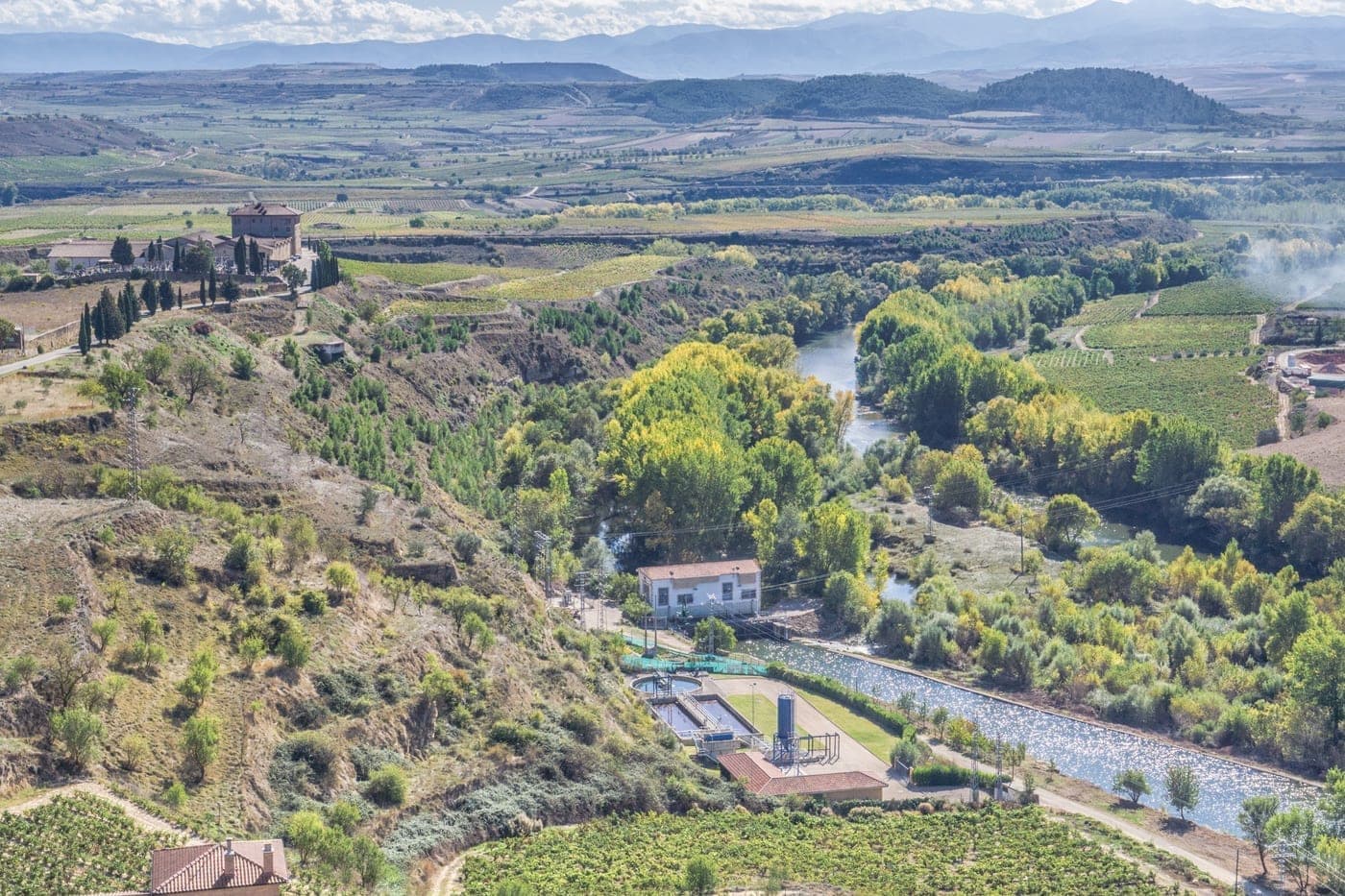
The vineyards themselves are part of the view rather than something separate to seek out. Paths climb from the edge of town into rows of vines following the contour of the hills, with the Ebro visible below and the Sierra de la Demanda closing the horizon to the south. Rioja Alta's soils shift within a short distance here, from clay-limestone on the higher slopes to alluvial ground nearer the river, a variation that producers point to when explaining why wines from neighbouring plots can taste so different. Olive groves share some of this land with the vines, and small producers press oil that turns up on local tables alongside the wine.
Haro's surroundings extend the same story into the rest of La Rioja. Briones, a walled village a short distance southeast, holds a wine museum inside a historic palace and looks out over vineyards from its hilltop position. San Vicente de la Sonsierra, across the Ebro, keeps a fortified old town above its own vines. Further south, La Guardia sits inside intact medieval walls, another wine town built on the same soil. None of these places competes with Haro so much as continues it: the same grape, the same limestone-heavy ground, a different set of streets to walk through.
What sets Haro apart within Rioja is this concentration of wine history in one small footprint: a nineteenth-century wine quarter still working from its original cellars, a religious festival that doubles as the region's best-known wine event, and an old town built entirely on the trade that surrounds it. The industry here is not tucked behind tasting-room doors; it shows in the architecture, the yearly calendar and the conversation at every bar counter.
 3 km
 8 km
Hilltop wine village crowned by castle ruins in La Rioja Alta.
 10 km
Historic Rioja town with wine cooperatives and traditional winemaking.
 11 km
Medieval village with castle and traditional Rioja wine cellars.
 11 km
Charming Rioja wine village with medieval architecture and family bodegas.
 16 km
Drop the places you like into one list. The planner orders them by day and works out the distances.
Get slow travel tips delivered to your inbox
A short message when something worth the trip lands. Reply STOP anytime.
By subscribing, you agree to be contacted via WhatsApp. Privacy policyOccasional letters in your inbox — with recommendations, maps and routes.
By subscribing to newsletter, you agree to our privacy policy.