Irish Mist
A whiskey and heather-honey liqueur from Tullamore
- Alcoholic
- Local name
- Irish Mist
- Served
- Neat or on ice
- Best eaten at
- An Irish pub
- Pairs with
- Desserts
What it is
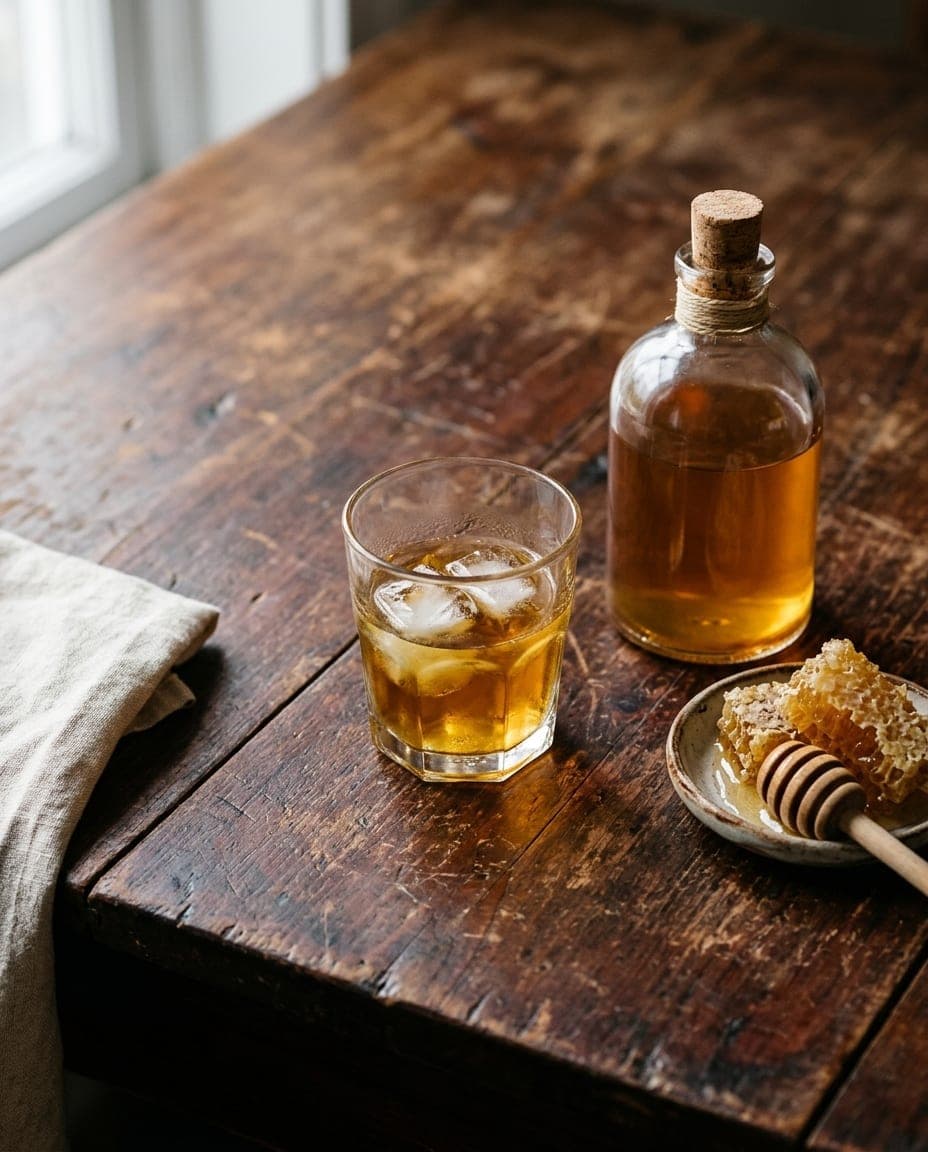
Irish Mist is an amber-coloured liqueur made from Irish whiskey, honey and a blend of herbs. It was first produced in Tullamore, County Offaly, in 1947, by the Williams family of the town's whiskey distillery. The drink sits between a spirit and a dessert wine, offering a sweet, warming taste that relies on the smooth character of the base whiskey and the floral notes of the honey.
It belongs to a family of liqueurs where honey or sugar is blended with a distilled spirit to create a mellow, golden drink. Unlike the dry, smoky profile of many straight whiskeys, Irish Mist is defined by its sweetness and its ability to coat the palate. Although the brand presents it as the revival of an ancient heather wine, it is a modern blend designed for sipping or mixing.
The liqueur was born in Tullamore, a town in the Irish midlands with a long history of whiskey making. While many spirits claim deep roots stretching back centuries, this one began in the mid-20th century. It is no longer made in Tullamore and has changed owners several times, but it has long been sold across Ireland and abroad.
The story behind the blend
The tale attached to Irish Mist claims it is based on an ancient recipe for heather wine drunk by Irish chieftains, lost when they fled to the continent after 1691 and rediscovered in an old manuscript. This narrative presents the liqueur as the revival of a lost tradition.
Historians and food writers often treat this story as marketing folklore rather than verified history. There is no surviving record of a specific "ancient" recipe that was directly adapted in Tullamore during the 1940s. The idea of an ancient origin adds romance to the bottle, but the reality is simpler: it was created by Desmond Williams of the Tullamore distillery, partly as a way to use whiskey stocks at a time of falling sales after the war.
Tullamore itself was a hub for whiskey production long before the liqueur appeared. The town's location in the flat, fertile plains of County Offaly made it a natural place for grain farming and distilling. When the liqueur was introduced, it leveraged this existing reputation for quality spirits while adding the sweetness of honey.
What goes into it
The ingredients are straightforward, though the exact proportions remain a secret held by the makers. The base is Irish whiskey, which provides the alcoholic strength and the vanilla or oak notes typical of aged spirit. This is blended with heather and clover honey, the most distinctive element, which gives the drink its floral sweetness.
A small number of herbs are added to the mix to round out the taste. These do not dominate the taste but provide a subtle complexity beneath the honey. The result is a smooth, syrupy liquid that does not burn like a high-proof spirit. It is neither dry nor bitter, but soft and rich on the tongue.
- Irish whiskey: The backbone of the drink, providing warmth and depth.
- Honey: Heather and clover honey, the main sweetener, offering a floral aroma.
- Herbs: An undisclosed blend of aromatic herbs that add subtle layers without overpowering the honey.
How to drink it
Irish Mist is usually served neat or over ice in a small glass. The cold temperature can mute some of the sweetness, while serving it at room temperature allows the floral notes to rise more clearly. It is also common to find it used as an ingredient in coffee or hot chocolate, where its honeyed character complements the bitterness of the beans.
The liqueur belongs naturally to the setting of an Irish pub. In these spaces, it is often ordered as a digestif after a meal or as a slow sip while waiting for friends. It pairs well with desserts, particularly those that feature fruit, chocolate or nuts, where the honeyed notes can bridge the gap between the sweet food and the drink.
It turns up in a few mixed drinks, but it is more often treated as a standalone experience, best enjoyed slowly rather than quickly. The warmth of the whiskey combined with the softness of the honey makes it suitable for cold evenings, but it is not a drink designed for large gatherings or quick refreshment.
Curious facts
- A mid-century birth. Unlike many spirits claiming ancient roots, Irish Mist was created in the 1940s, making it a relatively young liqueur by global standards.
- Tullamore's identity. The drink is still linked to the town and County Offaly's distilling heritage, even though production has moved away and the brand has changed hands several times.
- Not a wine. Despite the story about heather wine, the product is not a fermented drink but a blend based on distilled whiskey.
- Ireland's first liqueur. The brand calls it the first liqueur produced in Ireland, and it has been exported for decades.
- A digestif role. Its primary use is as a post-meal drink or a cold-weather comfort sip, rather than an aperitif.
Where to try it
Irish Mist can be found in Irish pubs, especially traditional ones with a long back bar of spirits. A glass in Tullamore, where it began, adds a sense of place, though the liqueur is no longer made there.
Visitors looking for the drink should ask for it by name rather than expecting it to appear on every menu. The liqueur is not as ubiquitous as standard Irish whiskey, so finding it may require a specific request. Poured neat, it is usually left to sit for a moment before the first sip.
Where to try it
1 region

Offaly
Located in the heart of Ireland, Offaly is known for its rich cultural heritage and stunning landscapes. The biggest town, Tullamore, is famous for its whiskey distilleries, particularly Tullamore D.E.W. The region is steeped in history, with the ancient monastic site of Clonmacnoise offering a glimpse into Ireland's spiritual past. Offaly's flat countryside is perfect for cycling and walking, with scenic routes along the Grand Canal. Nature enthusiasts can explore the stunning boglands, home to diverse wildlife. This area celebrates local traditions with festivals like the Tullamore Show, showcasing agricultural excellence and craftsmanship. Offaly offers a unique blend of history, culture, and natural beauty.