Barmbrack
The speckled Halloween bread with a ring in it
- Vegetarian
- Local name
- Báirín breac
- Served with
- Butter
- Best eaten at
- A Halloween table
- Pairs with
- Tea
What it is
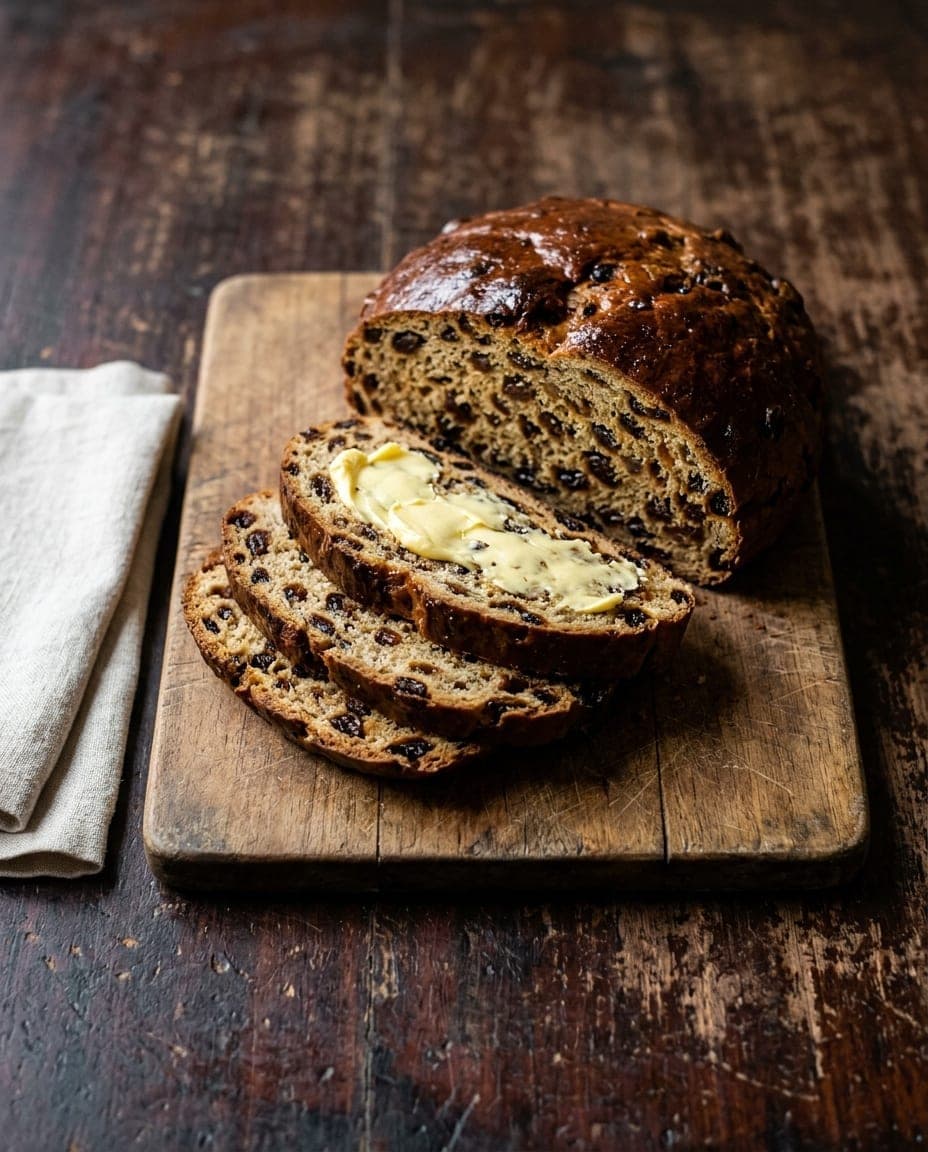
Barmbrack, known locally as báirín breac or "speckled loaf", is a dark, sweet bread that defines the Halloween table across Ireland. It is not a simple cake nor a plain loaf; it is a yeasted fruit bread, often made with dried fruit soaked overnight in cold tea or whiskey, before being mixed with spices and baked into a dense, moist loaf. The result is a deep amber crumb studded with plump raisins, sultanas and currants, often flecked with candied peel or apple.
The name báirín breac translates literally to "speckled bread", a reference to the scattered fruit that gives the loaf its mottled appearance. While the modern version sold in supermarkets is sometimes a tea loaf made without yeast, the traditional barmbrack remains a yeasted bread, leavened with yeast and often moistened with the tea used to soak the fruit. The texture is firm yet tender, holding together well when sliced thickly and spread with butter.
The Halloween tradition
The true identity of barmbrack is tied to the night of October 31st. For centuries, it has been the centrepiece of the Halloween table in Irish households, from the cities to the rural counties. The bread is not merely a dessert or a snack; it is a vessel for fortune-telling. A small charm is hidden inside the loaf before baking, and whoever finds it in their slice learns something about their future.
The most famous charm is a clean ring, which predicts that the finder will be married within the coming year. Other traditional items include a pea, which suggests the finder will not marry; a stick, foretelling quarrels or an unhappy marriage; a coin, promising wealth; and a piece of cloth, hinting at poverty. In modern times, these charms are often wrapped in clean paper to ensure hygiene and safety before being baked into the bread. Shop-bought versions still contain a toy ring, though the other charms have been dropped for food-safety reasons.
The custom is widespread across the island, with no single region claiming exclusive ownership, though it remains particularly strong in rural areas where the baking of home-made loaves persists. The bread is typically sliced and served, often toasted, often alongside a pot of strong tea, creating a ritual that blends flavour with folklore.
How it is made
The preparation begins long before the oven is preheated. Dried fruits are soaked in cold brewed tea overnight, allowing them to absorb the liquid and swell while taking on a deep, dark hue. This soaking step, in tea or sometimes whiskey, plumps the fruit and darkens the crumb. The next morning, the tea-infused fruit is mixed with flour, yeast, sugar, spices such as cinnamon and nutmeg, and sometimes grated apple or candied peel.
The dough is left to rise until it doubles in size, then packed into a loaf tin and baked until the crust is dark brown and the crumb is fully cooked through. The bread is usually cooled before slicing, though many find it tastes best when served slightly warm. There is no single official recipe; every baker has their own ratio of fruit to dough, and some add a splash of treacle or golden syrup for extra depth.
The modern shop version often simplifies this process, using a tea loaf base rather than a yeast dough, but both forms are sold under the name barmbrack. The traditional yeasted version remains the preferred choice for those seeking the authentic experience, particularly from home bakers and small bakeries.
What goes into it
It is a short list, and the fruit and the tea do most of the work:
- Dried fruits: raisins, sultanas and currants that have soaked in cold tea overnight.
- Tea: usually a strong black tea, which infuses the fruit and adds moisture to the dough.
- Flour: plain or strong white flour forms the base of the yeasted bread.
- Yeast: active dry yeast or fresh yeast to leaven the dough.
- Spices: cinnamon, nutmeg and sometimes ginger for warmth.
- Sweeteners: sugar or treacle to balance the tartness of the tea-soaked fruit.
- Optional additions: candied peel, grated apple or a splash of brandy in some variations.
The final loaf is dark, sweet and moist, with a texture that holds together when sliced. It is not a light cake but a substantial bread, dense enough to be eaten in thick slices.
How it is eaten
Barmbrack is traditionally served at the Halloween table, often as part of a larger spread or as a standalone treat. The loaf is sliced thickly and spread generously with butter, which melts slightly into the warm crumb. It is almost always paired with a strong cup of black tea, creating a simple but satisfying combination that has endured for generations.
The ritual of finding the charm adds an element of anticipation to the meal. Families gather around the table, slicing the bread and searching their portions for the hidden object. The discovery is met with laughter and stories, as each person interprets the meaning of the charm they have found. This shared experience turns the bread into a focal point of the evening, connecting the present moment with centuries of custom.
Curious facts
- The name means speckled. Báirín breac translates directly to "speckled loaf", referring to the scattered fruit that marks the bread's surface.
- Charms are now wrapped in paper. Modern hygiene practices mean charms are often sealed in clean paper before baking, ensuring they remain safe to eat.
- The ring predicts marriage. A ring in the slice traditionally means marriage within the year.
- Tea soaking is customary. The dried fruits are usually soaked overnight in cold tea (some bakers use whiskey) to plump them and darken the crumb.
- Both yeasted and tea loaf versions exist. While traditional barmbrack is yeasted, modern shop versions often use a tea loaf base without yeast.
- It is eaten across Ireland. The bread is a national staple for Halloween, found in every county from Dublin to Kerry.
Where to try it
The best place to eat barmbrack is at an Irish home table during the Halloween season. In towns and villages across the country, bakeries will sell fresh loaves in October, often with a ring or charm included. Local markets in rural areas may also feature homemade versions baked in traditional ovens.
For a genuine experience, seek out a bakery that still bakes the yeasted version, where the fruit has soaked in tea overnight. The bread is most enjoyable when served warm with butter and a strong cup of tea, as it was intended to be eaten at the Halloween table.
Where to try it
1 region

Offaly
Located in the heart of Ireland, Offaly is known for its rich cultural heritage and stunning landscapes. The biggest town, Tullamore, is famous for its whiskey distilleries, particularly Tullamore D.E.W. The region is steeped in history, with the ancient monastic site of Clonmacnoise offering a glimpse into Ireland's spiritual past. Offaly's flat countryside is perfect for cycling and walking, with scenic routes along the Grand Canal. Nature enthusiasts can explore the stunning boglands, home to diverse wildlife. This area celebrates local traditions with festivals like the Tullamore Show, showcasing agricultural excellence and craftsmanship. Offaly offers a unique blend of history, culture, and natural beauty.