Drisheen
A custard-like blood sausage from Cork, eaten with tripe
- Local name
- Drisheen
- Served with
- Tripe, white sauce
- Best eaten at
- Cork's English Market
What it is
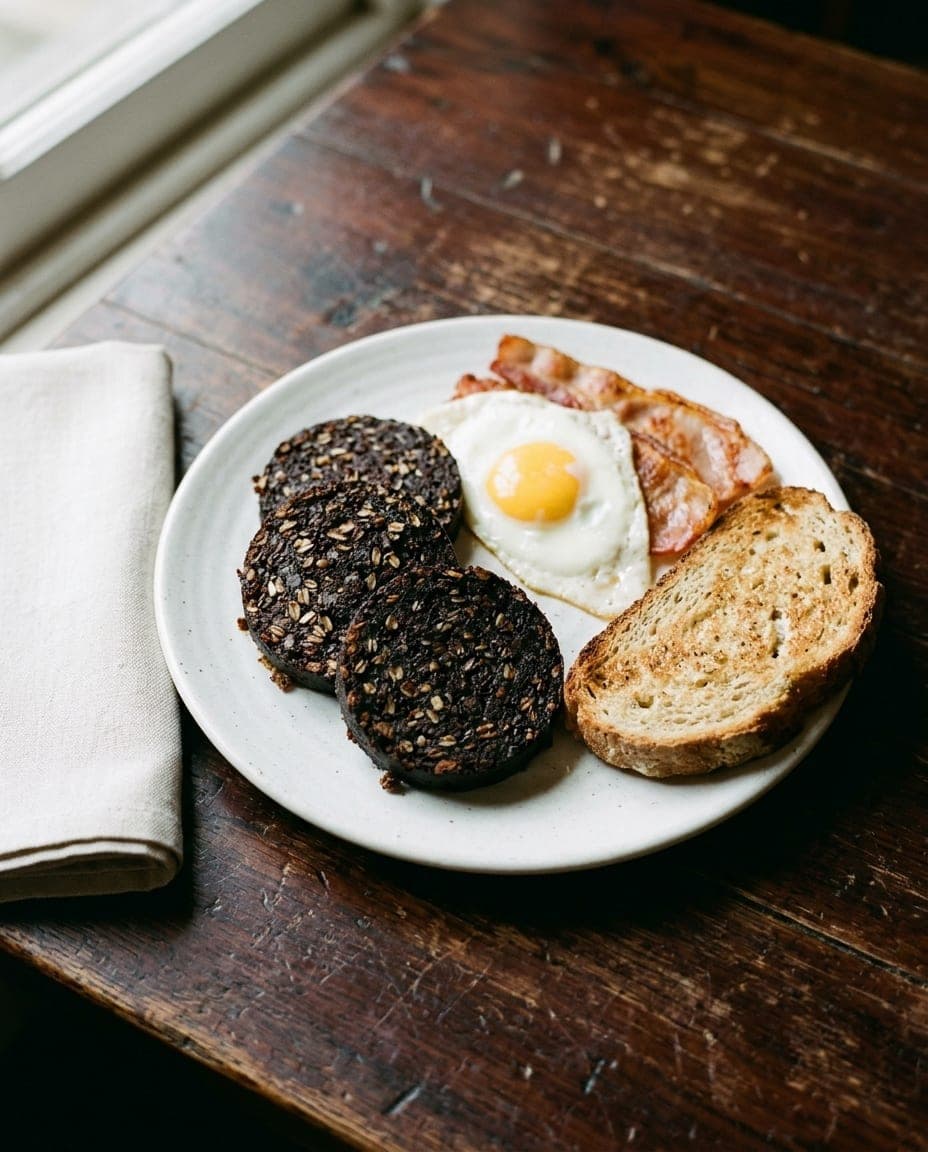
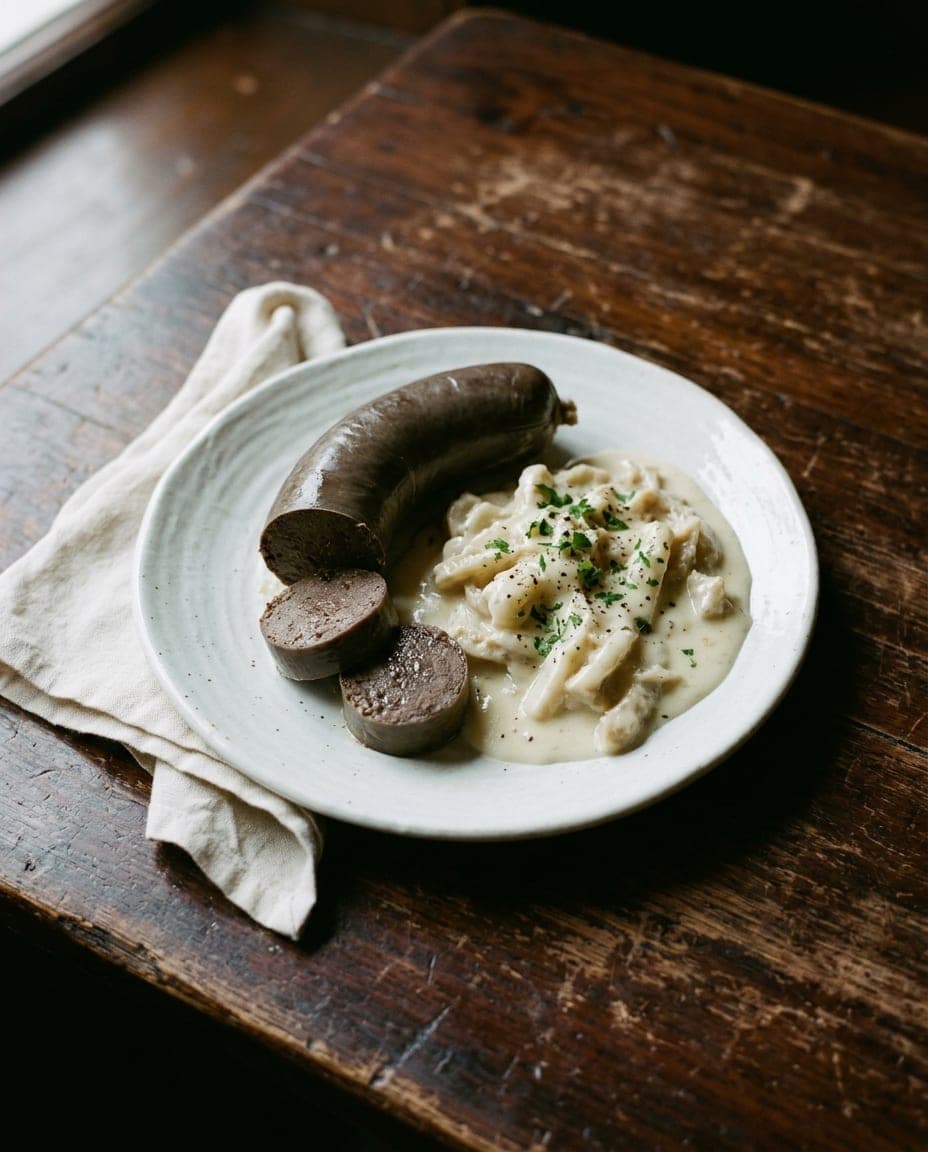
Drisheen is a blood pudding peculiar to County Cork, distinct from the oatmeal-heavy black puddings made elsewhere in Ireland. Made with blood (sheep's, cow's or pig's) mixed with milk, salt and fat rather than much grain, the mixture sets into a soft, pale, almost custard-like texture inside a wide casing. It is not fried hard like other sausages but cut into thick rounds and gently heated until just warm through.
The dish is now one of the strangest surviving items in Irish cooking and is nearly gone. A handful of Cork butchers still make it, and tripe with drisheen has become an old person's dish and a market curiosity rather than a weekly meal. It is a regional speciality of Cork, and to a lesser extent Limerick, where it goes into "packet and tripe".
The origin of the name
The name is the Irish drisín. While the exact date of its first appearance in a written record remains unclear, local butchers have produced it for generations. Unlike black pudding, which has roots stretching back to ancient times across Europe, drisheen appears to be a local variation that developed in the Cork area.
The texture is the defining feature. Because the blood is bound with milk instead of oats or barley, the result is smooth and delicate when cooked gently. It lacks the dense, crumbly bite of standard black pudding. Instead, it offers a creamy mouthfeel that absorbs the flavours of the sauce it is served in.
How it is eaten
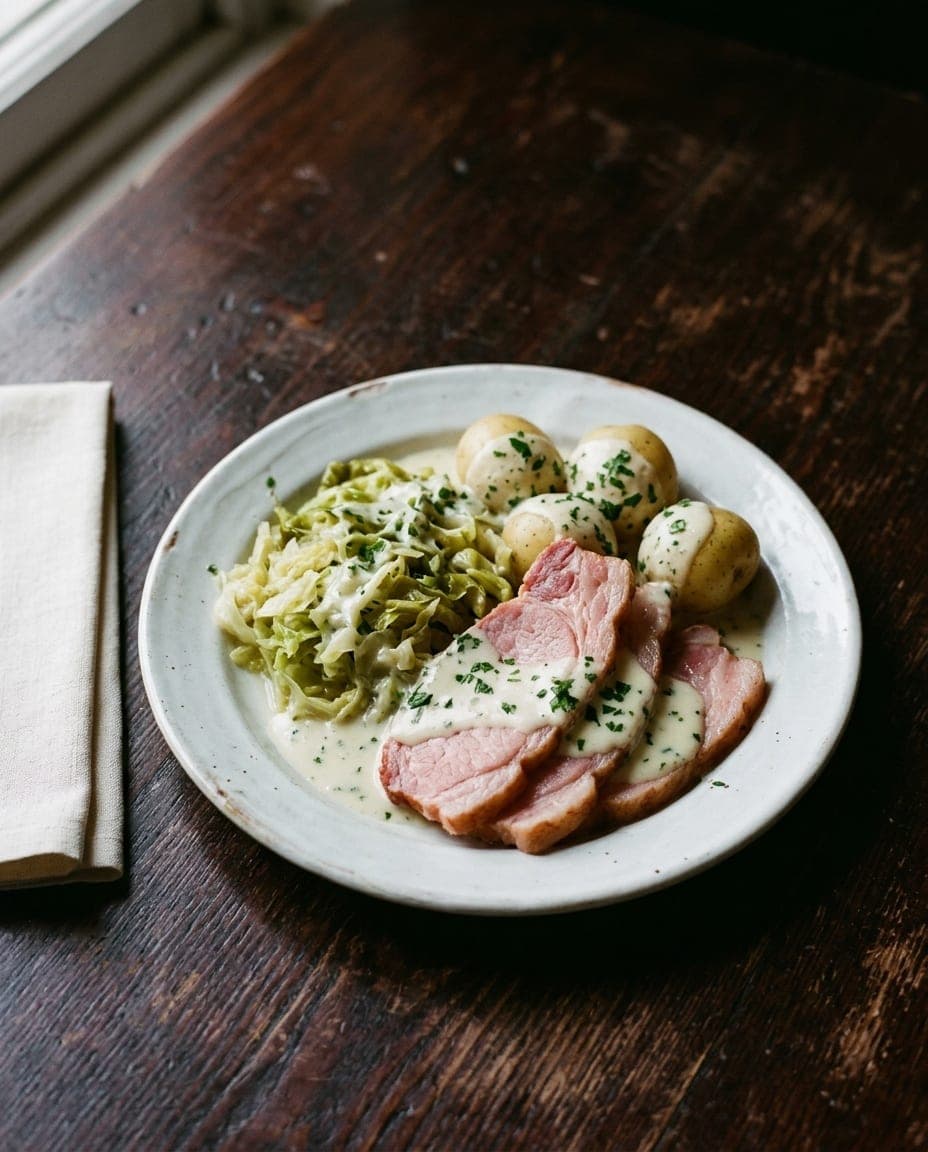
The traditional way to eat drisheen is with tripe in a white sauce. The tripe, usually beef stomach, is boiled until tender and then cooked in a thickened milk-based sauce, seasoned simply with salt and pepper. The warm rounds of drisheen are placed on top or alongside the tripe, creating a dish where the creamy sausage balances the chewy texture of the offal.
This combination is rarely found on restaurant menus outside of Cork. It is a dish of the local butchers' shops and small, traditional establishments that have survived in the city. The sauce is mild and creamy, allowing the subtle taste of the blood and milk to come through without being overwhelmed by spices.
Curious facts
- A custard texture. Unlike other blood puddings that use grain, drisheen uses milk to create a soft, almost pudding-like consistency that melts in the mouth when heated gently.
- The herb tansy. Drisheen itself was once sometimes flavoured with tansy, a bitter herb since found to be toxic and no longer used.
- Regional only. Outside Cork and Limerick it very rarely appears on menus.
- An old person's dish. The combination of tripe and drisheen is now mostly eaten by older generations, as younger people rarely seek out such traditional offal dishes.
- Market survival. The English Market in Cork remains the primary hub for this dish, where a small number of butchers continue to produce it despite the decline in demand.
Where to try it
The best place to find fresh drisheen and tripe is Cork's English Market. This covered market, with its high ceilings and wooden stalls, remains one of the few places where the dish is sold regularly. One or two stalls in the market still sell it, though stock can be limited. Most of it is bought to take home, though a counter in the market will serve a plate of it.
The market trades year-round, so the season is no obstacle; the limit is how much the butchers have made that week.
Where to try it
1 region
 Boat Rentals1 destination
County Cork
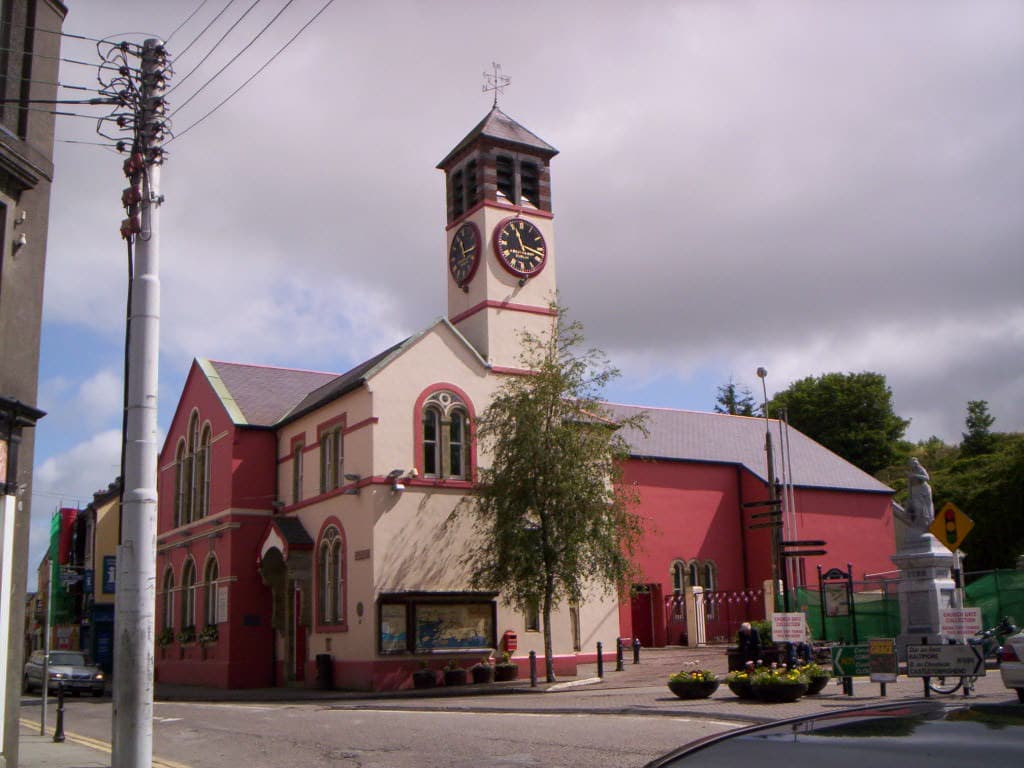
County Cork, the largest county in Ireland, boasts a diverse landscape of rolling hills, rugged coastline, and picturesque villages. The city of Cork, known for its vibrant cultural scene, is the region's only major urban center. The scenic coastline features attractions like the historic town of Kinsale, famous for its culinary offerings and maritime history. Nearby, the remote Beara Peninsula offers stunning views and fewer tourists, perfect for leisurely hikes. The region is also home to the historic Blarney Castle, where travelers can kiss the famous stone. With rich traditions in music and crafts, County Cork provides numerous opportunities for authentic cultural experiences. Explore local markets and artisan workshops to discover the region's unique heritage.
Boat RentalsHiking