Bacon and cabbage
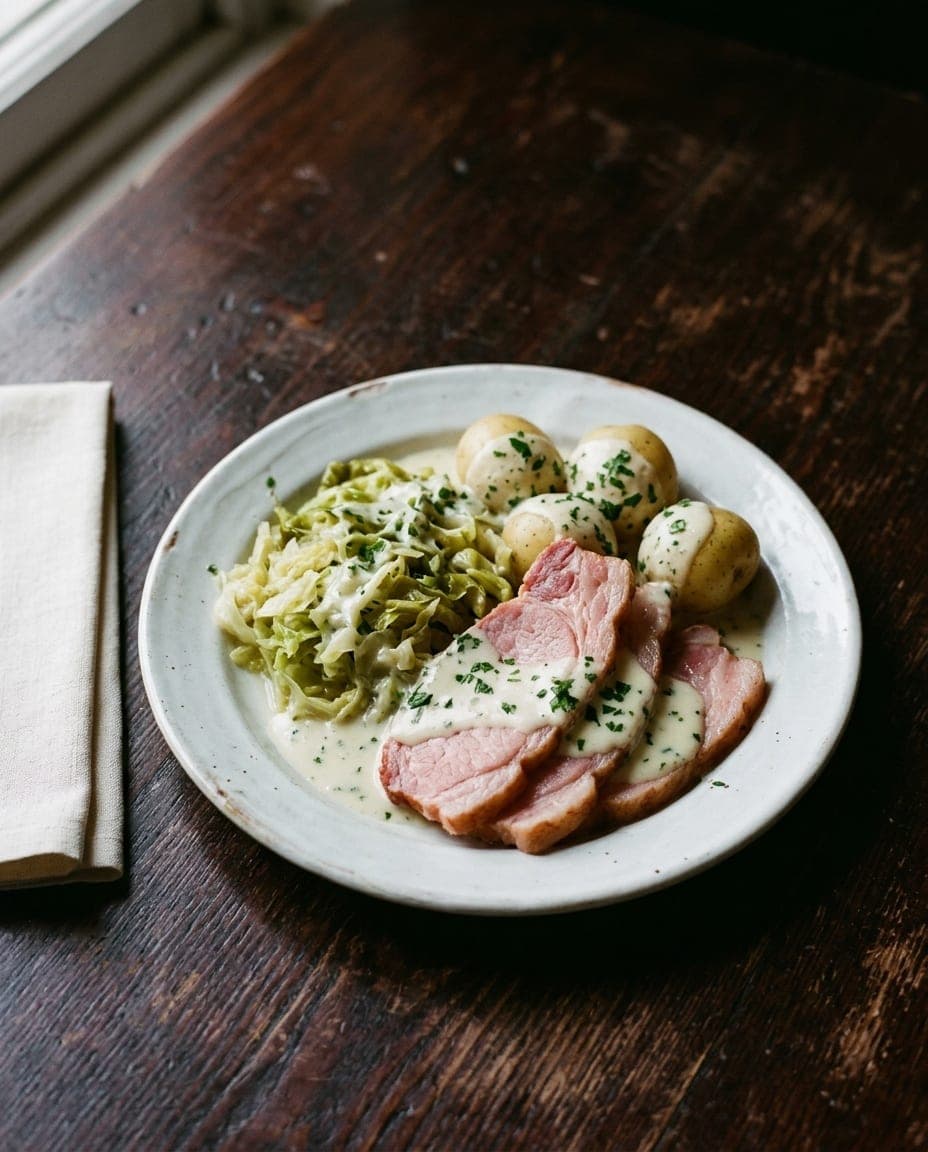
Boiled bacon, cabbage, potatoes, parsley sauce
- Local name
- Bacon and cabbage
- Served with
- Boiled potatoes, parsley sauce
- Best eaten at
- An Irish country pub
- Pairs with
- Irish stout
What it is
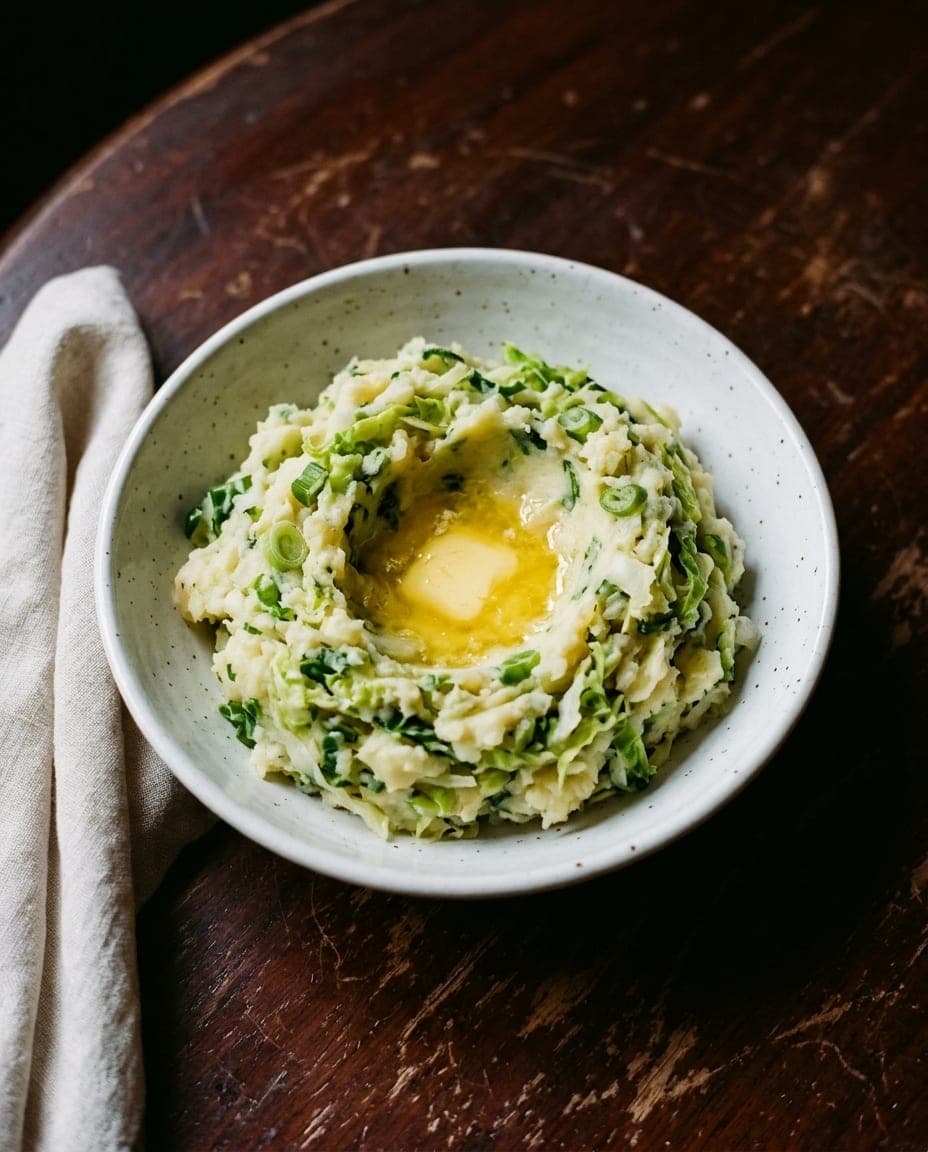
Bacon and cabbage is a humble, country-style dish that forms the backbone of the family dinner table in rural Ireland. It consists of a large joint of boiled bacon, usually cured pork loin or collar, simmered with a head of green cabbage until soft. The meat is served alongside floury potatoes and a parsley sauce: a white sauce of butter, flour and milk, often loosened with some of the cooking liquor.
The dish is not complicated, but its texture and flavour rely on the quality of the ingredients and the patience required to boil it correctly. The bacon should be tender enough to cut with a spoon, the cabbage sweet and melting, and the potatoes starchy enough to hold their shape without turning to mush. It is a meal designed for cold weather and long evenings, often eaten in an Irish country pub or at a family table.
The history of the boiled joint
The tradition of boiling bacon and cabbage dates back centuries, when the pig was the most important animal in the Irish household. Often called "the gentleman who pays the rent", the pig provided meat for the year through curing and smoking. Families would cure large joints of pork to last through the winter months, using salt to preserve the meat against spoilage.
Cabbage was the other staple, growing easily in the damp Irish soil even during the coldest months. The combination of these two ingredients created a meal that was cheap, filling and nutritious. While the dish is eaten across the whole country today, it has deep roots in farming communities across the country, where most households kept both a pig and a vegetable patch.
For generations, this was the standard weekday dinner for farmers and their families. The meat was boiled slowly to ensure it did not become tough or salty, and the cabbage was added later so it would not disintegrate completely. The result was a dish that required no fancy equipment, only a large pot and a fire.
What goes into it
The ingredients are few, but each plays a specific role in the final flavour of the plate:
- Cured pork: A joint of bacon, either from the loin or collar, soaked in water to remove excess salt before boiling.
- Green cabbage: A whole head cut into wedges or quarters, boiled until tender but not mushy.
- Floury potatoes: Starchy varieties that absorb the savoury cooking liquor and provide a soft base for the meat.
- Fresh parsley: Chopped leaves stirred into a white sauce of butter, flour and milk.
- Salt and pepper: Added sparingly, as the bacon and cooking water are already seasoned.
The parsley sauce is not merely a garnish; it is half the plate. A ladle of the cooking liquor, which carries salt from the meat, is often whisked into the white sauce before the fresh herbs are stirred in. This creates a savoury, aromatic sauce that ties the whole dish together.
The transatlantic swap
The most interesting fact about this dish is its relationship to the American version known as corned beef and cabbage. When Irish emigrants arrived in the United States during the 19th century, they brought their traditions with them. In Ireland, bacon was the everyday meat of the household pig, but in America, Irish-style bacon was harder to find and comparatively dear.
Emigrants are often said to have found that beef brisket, which had been cured in brine by Jewish butchers in New York City, was cheaper and more available than Irish bacon. They adapted their recipe, substituting the corned beef for the boiled bacon while keeping the cabbage and potatoes. Over time, this became a staple of St Patrick's Day celebrations in cities like Boston and Philadelphia, even though it is not the original Irish dish.
In Ireland, the boiled bacon joint remains the standard. The American version shows how immigrants adapted their food to new circumstances, turning a local necessity into a national symbol elsewhere.
How to eat it
Bacon and cabbage is usually served as a main course at lunch or early evening dinner. It arrives in large portions, often in a deep bowl or on a wide plate, with the meat sliced from the bone and arranged alongside the cabbage and potatoes. The parsley sauce is poured generously over everything, coating the vegetables and meat in its salty sheen.
It is best eaten in an Irish country pub, where the atmosphere matches the simplicity of the food. The dish pairs naturally with a glass of Irish stout, whose bitterness cuts through the saltiness of the bacon and the sweetness of the cabbage. A cold beer is also acceptable, but stout is the usual companion.
Do not rush through it. The meat should be tender, the cabbage soft, and the potatoes creamy. Many people use their bread to soak up the remaining parsley sauce at the bottom of the bowl. It is a meal that demands attention to its textures and flavours rather than speed.
Curious facts
- The soaking step. Before boiling, the bacon is usually soaked in cold water for several hours or overnight to draw out the salt. Skipping this step can leave the dish far too salty.
- A single pot meal. The cabbage is often boiled in the same water as the bacon, absorbing the meat's flavour into its leaves.
- Not a starter. It is too heavy for an appetiser and is always served as a substantial main course, often with no other side dishes required.
- The American twist. The corned beef version found in America is not traditional Irish cuisine but an adaptation made by emigrants who could not afford bacon.
Where to try it
The best place to eat this dish is a traditional country pub anywhere in Ireland, particularly in rural areas. It appears in small pubs and taverns that cook plain local food, often as a Sunday plate or a weekday special. The plain version — boiled joint, potatoes, parsley sauce — is the dish; anything with a reduction on it has drifted somewhere else.
The pubs that still cook it have short menus and large pots.
Where to try it
1 region

Offaly
Located in the heart of Ireland, Offaly is known for its rich cultural heritage and stunning landscapes. The biggest town, Tullamore, is famous for its whiskey distilleries, particularly Tullamore D.E.W. The region is steeped in history, with the ancient monastic site of Clonmacnoise offering a glimpse into Ireland's spiritual past. Offaly's flat countryside is perfect for cycling and walking, with scenic routes along the Grand Canal. Nature enthusiasts can explore the stunning boglands, home to diverse wildlife. This area celebrates local traditions with festivals like the Tullamore Show, showcasing agricultural excellence and craftsmanship. Offaly offers a unique blend of history, culture, and natural beauty.