Guinness
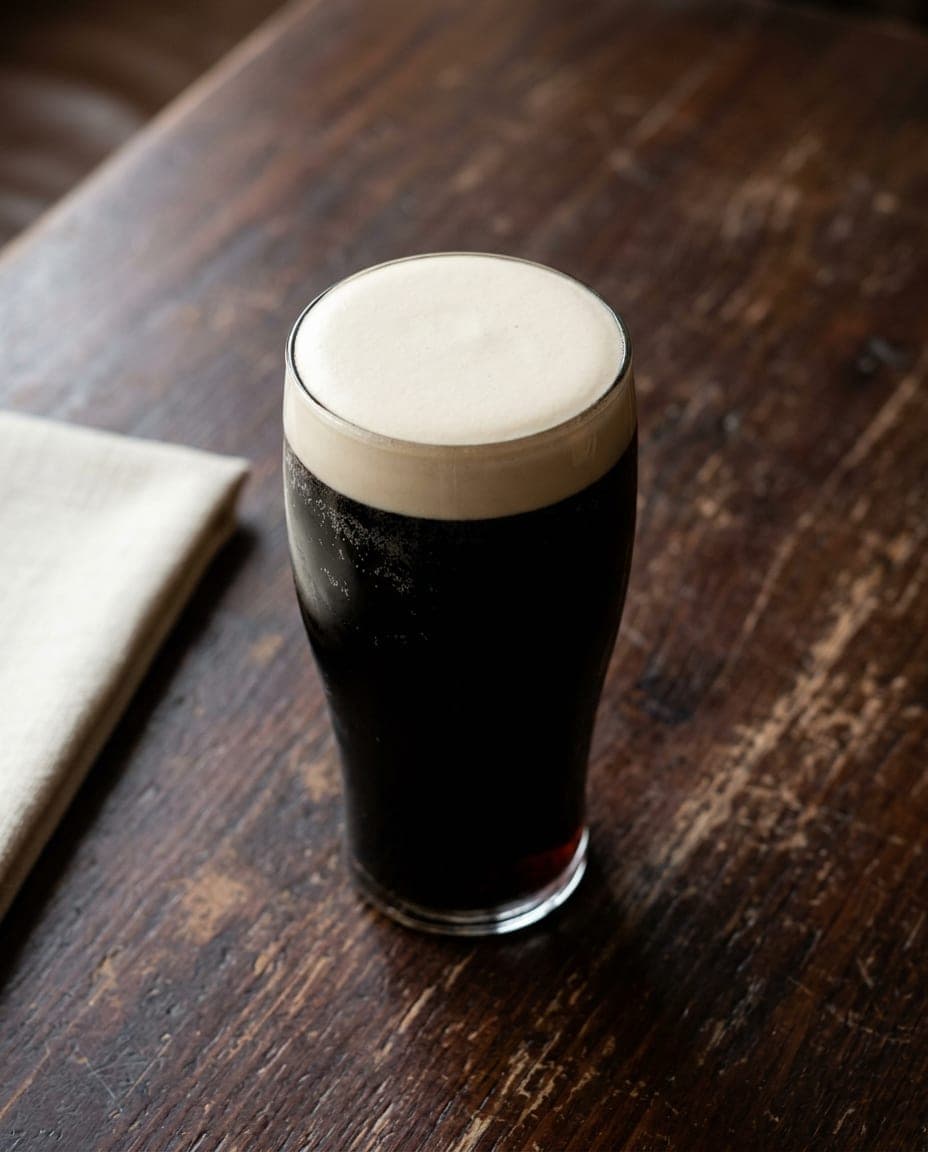
A dark ruby stout poured in two stages at a Dublin pub
- Alcoholic
- Local name
- Guinness
- Served
- Pulled in two stages, by the pint
- Best eaten at
- A Dublin pub
- Pairs with
- Oysters
What it is
Guinness is a dry Irish stout from the St James's Gate brewery in Dublin, where Arthur Guinness began brewing in 1759 – ale at first, with porter following from 1778. It is a style defined by its ruby-black colour and by roasted malt rather than fruit or spice. When held up to the light, the liquid reveals a deep, dark red hue rather than the absolute black one might expect from such a heavy colour. The texture is distinctively smooth and creamy, a result of the gas used to serve it, which creates a dense, white head that lingers all the way down the glass.
The drink is inextricably linked to the city of Dublin. While versions of dry stout exist elsewhere, the original recipe remains at the St James's Gate brewery, where Arthur Guinness signed his 9,000-year lease in 1759. The site has remained a place of production ever since, serving as the spiritual home for this beverage that defines the Irish pub experience for visitors and locals alike. It is a drink designed to be consumed slowly, often standing at a counter or sitting at a small table, rather than rushed down in one gulp.
The history of St James's Gate
Arthur Guinness, already brewing at Leixlip up the Liffey, took a lease in 1759 on a disused brewery at St James's Gate in the Liberties. The site sat near the river and had the water for brewing. He brewed his last ale in 1799 and turned St James's Gate into a porter brewery; over the following century the operation went from a small city brewery to an industrial one. The business is now owned by Diageo, formed in 1997 when Guinness merged with Grand Metropolitan.
The brewery's location has never changed. St James's Gate remains the sole address where the original Guinness recipe is produced for the domestic market. While the company now operates breweries in other countries and sells its product globally, the liquid served in Dublin pubs comes from this single site. The lease was for 9,000 years at £45 a year, a detail every Dublin account of the brewery repeats. It gave the business a security that saw it through wars and slumps which closed many other breweries in the city.
The drink was widely exported from the nineteenth century, and over the twentieth century it became a symbol of Dublin itself. The brewery's harp, on every can and bottle, was registered as a trademark in 1876 and is modelled on a medieval Irish harp, the Trinity College harp. When the new Irish state adopted the same instrument as its emblem, the brewery's mark was already registered, which is why the state's harp faces the other way.
How it is poured
The most distinctive feature of a pint of Guinness is the method by which it is served. Unlike most beers that are carbonated with carbon dioxide, this stout is dispensed using a mixture of nitrogen and carbon dioxide. Nitrogen forms far smaller bubbles than carbon dioxide alone; they create a smooth, velvety texture and a thick, stable head that sits atop the dark liquid for many minutes.
The pour follows a strict two-stage process designed to achieve this specific texture. First, the glass is tilted at a forty-five-degree angle and filled until it reaches about three-quarters of its capacity. The beer is then left to settle; the whole two-part pour should take about two minutes. During this pause, the large bubbles collapse, and a visible surge travels down the sides of the glass before clearing from the bottom up. Once the liquid has settled and the head has formed a dense white cap, the glass is stood upright and topped off with a final pour.
This waiting period is not a performance for the customer but a necessary step. A pint poured in a single motion will have a loose, fizzy head and a thinner mouthfeel. The patience required to wait for the surge to clear is what gives the drink its characteristic creaminess. The result is a beverage that feels heavier than it actually is, with a dry finish that lingers on the tongue without leaving a sugary residue.
What goes into it
The ingredients of Guinness are simple but carefully selected to achieve the specific profile of a dry stout. The primary component is water, which comes from the Wicklow Mountains south of the city – never, despite the legend, from the Liffey. Alongside malted barley, the colour and the characteristic roasted flavour come from roasted unmalted barley, part of the recipe since the mid-twentieth century. This grain is heated until it turns black, imparting notes of burnt coffee, dark chocolate and a subtle bitterness that defines the style.
Unlike many other beers, Guinness does not rely on a high volume of hops for its taste. The hop varieties used are mild and serve primarily to balance the sweetness of the malt rather than to add a sharp, bitter punch. Yeast is added to ferment the sugars, converting them into alcohol and carbonation. The use of nitrogen in the dispensing system, alongside carbon dioxide, lowers the usual fizz, creating the fine bubble structure responsible for the creamy texture.
The final product is a dry stout, meaning it contains very little residual sugar. This dryness is what makes it so refreshing and pairs it well with savoury foods. The alcohol content is generally lower than many visitors anticipate, making it suitable for long sessions in a pub without the intensity of stronger ales. The balance between the roasted malt and the nitrogenated smoothness creates a drink that is complex yet straightforward in its appeal.
How to drink it
Guinness is traditionally served at a cool temperature (Diageo recommends 6–7°C) rather than a cold one. If the beer is chilled too much, the aromatic qualities of the roasted barley are muted, and the creamy texture becomes less distinct. The ideal serving temperature allows the subtle notes of coffee and chocolate to emerge while maintaining the refreshing quality of the drink.
The most traditional food pairing for this stout is oysters. The briny, mineral taste of fresh oysters complements the dry, roasted character of the beer without overwhelming it. The saltiness of the shellfish cuts through the creamy head of the pint, creating a harmonious balance between the sea and the malted grain. This combination has been a staple in Dublin pubs for generations, often enjoyed during the cooler months when both ingredients are at their peak.
When ordering in a Dublin pub, it is common to see the drink served in a tulip-shaped pint glass, which helps the head hold as the beer is consumed. Pints are usually bought in rounds among friends, or enjoyed while standing at a bar counter where conversation flows freely. The ritual of the pour is part of the experience, and the drinker is expected to watch the settle process before taking the first sip.
Curious facts
- The colour is red. When held against light, the dark liquid reveals a deep ruby-red hue rather than an opaque black.
- Nitrogen creates the cream. The use of nitrogen gas alongside carbon dioxide produces the small bubbles that give the head its velvety texture.
- The settle takes time. A pint poured correctly takes about two minutes from first pour to serving, most of it spent waiting for the surge to settle.
- A dry finish. The beer contains very little residual sugar, resulting in a crisp, dry taste that contrasts with sweeter ales.
- The oyster pairing. Fresh oysters are the traditional accompaniment, offering a briny contrast to the roasted malt flavours.
Where to try it
Dublin pubs pour it closest to the brewery at St James's Gate, which is the argument locals make for the pint tasting different there. While the brand is available worldwide, the version served in Ireland comes directly from the historic site. Any pub in the city centre or the surrounding neighbourhoods will offer a pint, provided they have a working tap system for the stout.
A traditional Dublin pub — small, wooden counter, conversation rather than spectacle — is the setting. No famous address is needed: the pour depends on the person behind the bar and the state of the lines, which is why regulars have opinions about which pub down their own street does it best.
Where to try it
1 destination
 Camper Van Rentals
Dublin
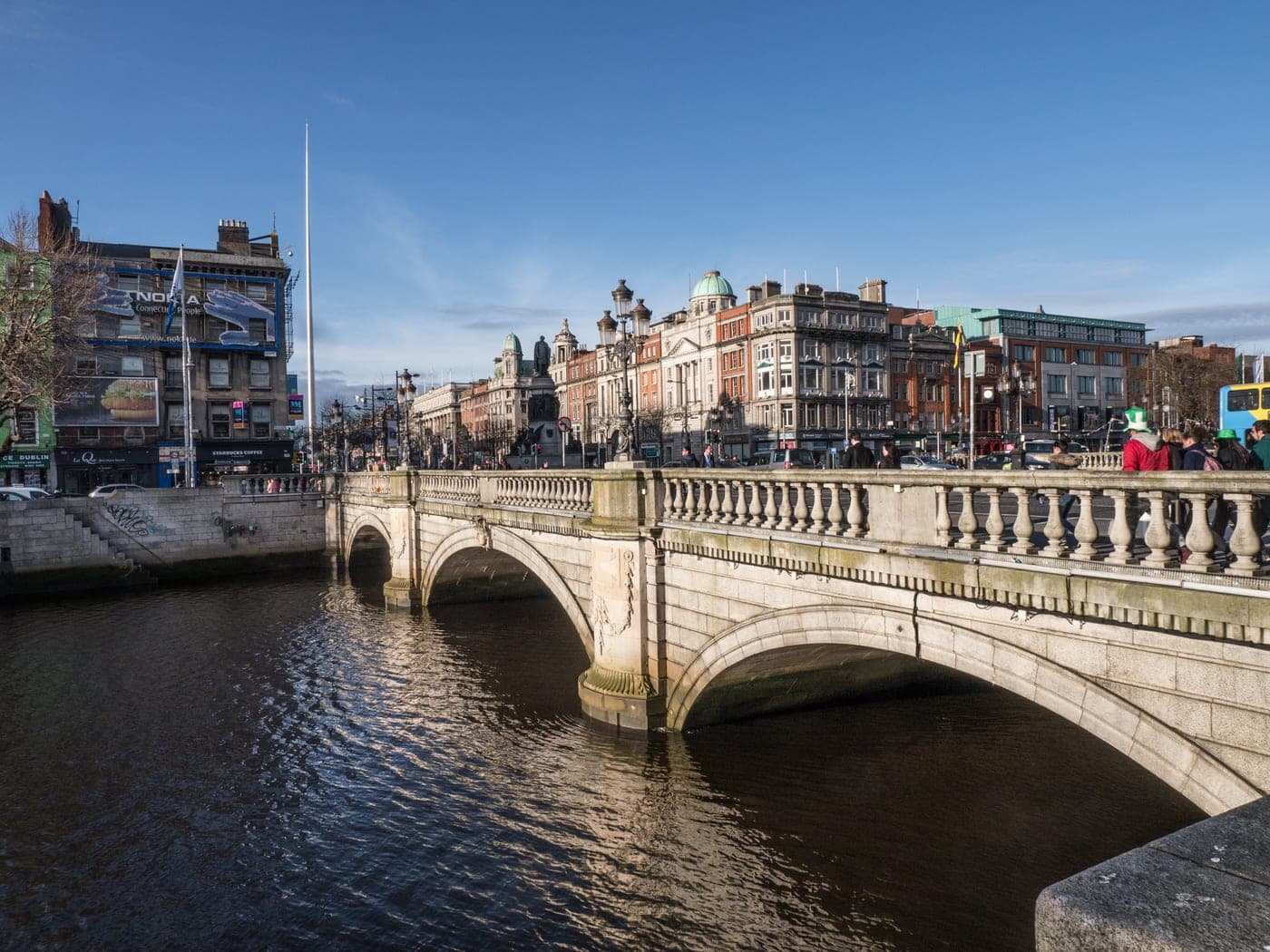
Ireland's vibrant capital with Georgian architecture and pub culture.
Camper Van RentalsHiking
1 region
- Camper Van Rentals1 destination
Dublin
Dublin, the capital of Ireland, is a vibrant city known for its rich literary heritage and historic architecture. The city is home to several notable landmarks, including the iconic Trinity College, which houses the Book of Kells, and Dublin Castle, which dates back to the 13th century. Beyond the city center, neighborhoods like Temple Bar offer a bustling atmosphere filled with pubs and cultural events, while areas such as Stoneybatter provide a glimpse into local life with artisan shops and community markets. The surrounding county features scenic coastal views, particularly in Howth and Dalkey, where hiking trails and fresh seafood await discovery. Dublin's history of literature is celebrated in various museums and literary pubs, making it a hub for those interested in Irish culture and storytelling.
Camper Van RentalsHiking