Gubbeen cheese
A washed-rind farmhouse cheese from West Cork
- Local name
- Gubbeen
- Served with
- Oatcakes, chutney
- Best eaten at
- West Cork farmers' markets
- Pairs with
- Irish cider
What it is
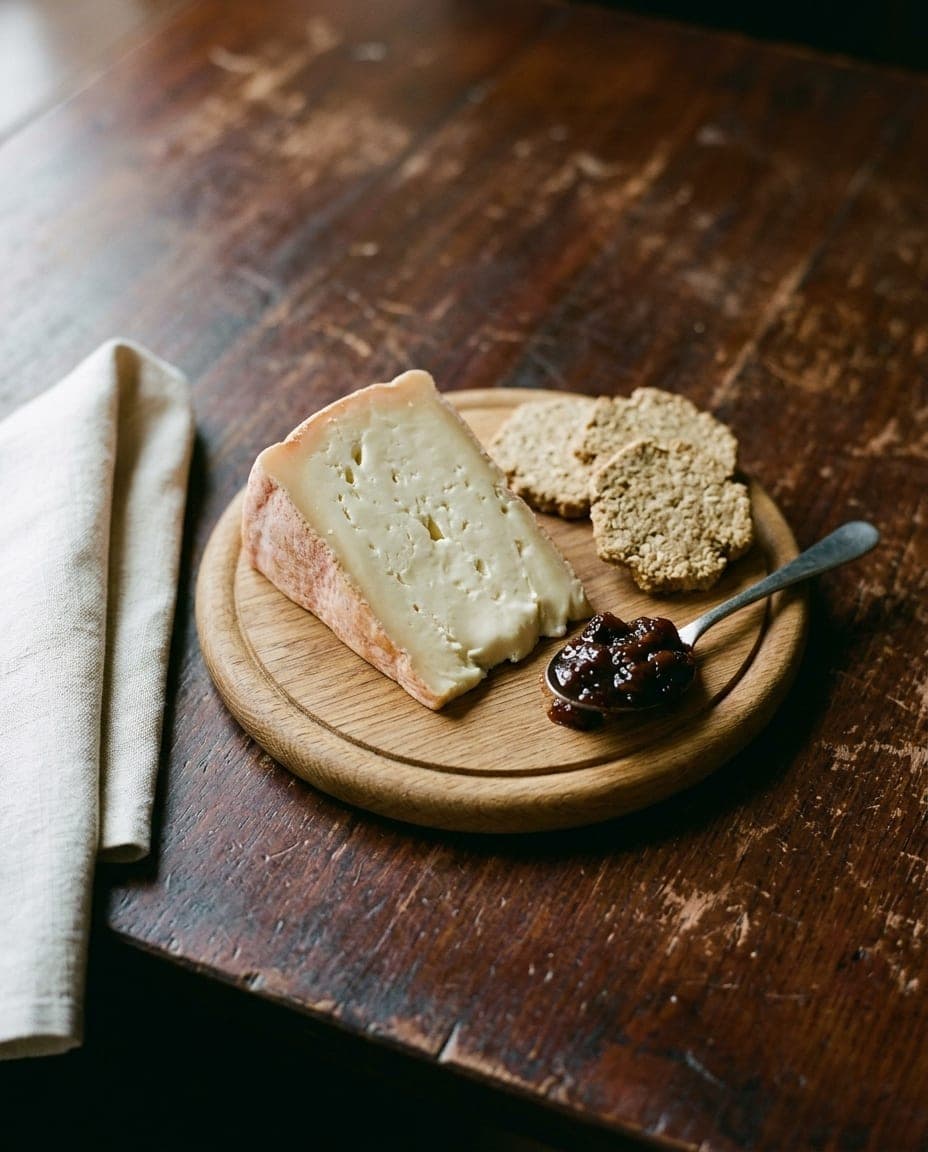
Gubbeen is a washed-rind cheese made since 1979 by the Ferguson family on Gubbeen Farm, near the town of Schull in County Cork. It is a semi-soft cow's milk cheese with a pink-orange rind that develops a distinct aroma as it matures. The paste inside is smooth and creamy when young, becoming firmer and more savoury with age. A smoked version is also produced, offering a different profile while keeping the same texture.
The name Gubbeen comes from the townland where the farm stands (from the Irish goibín, a small beak or mouth), but the cheese stands for something larger than a single product. It is a key example of the Irish farmhouse movement that began in the 1970s. Before this period, Ireland had very little artisan cheese production, as most dairy was destined for export or large industrial factories. A small group of farmers, many of them new to the land, decided to make cheese again using local milk and traditional methods. Gubbeen is one of the few remaining survivors from that original wave, alongside a handful of other West Cork farms.
The West Cork farmhouse revival
The history of Gubbeen reflects a broader shift in Irish agriculture. In the 1970s, the country's dairy sector was dominated by large-scale processing for butter and powder. A few pioneers began to experiment with small-batch cheese making, some of them newcomers to the region, others from long-established farming families. They focused on high-quality milk from their own herds and traditional techniques that allowed the character of the land to show in the final product.
This movement was slow and difficult. It required knowledge of local grasses, patience with the aging process, and a willingness to sell directly to customers rather than through big distributors. The farms that survived became anchors for a new food culture in Ireland. They proved that small-scale dairy could be viable and that Irish milk had a unique quality worth highlighting. Gubbeen remains a reference point for this era, representing the moment when Irish farmhouse cheese began to reappear on plates across the country.
The West Cork region was central to this revival. The climate and the soil there carry heavy grass, which is where the character of the milk is said to come from. Several of the early cheesemakers settled in this area, creating a cluster of small farms that still exist today. They worked together to share knowledge and build a reputation for quality, often selling their goods at local markets rather than through supermarkets. This approach helped create a direct link between the maker and the eater.
How it is made
The cheese is made from pasteurised cow's milk on the farm near Schull. The curds are cut gently and cooked to a low temperature, which helps keep the texture soft and creamy. After pressing into moulds, the wheels are moved to a cellar for aging.
During maturation, the rind is washed regularly, mainly with brine. This process encourages the growth of specific bacteria that create the pink-orange colour and the characteristic aroma. The washing stops the cheese from drying out too quickly and adds depth to the flavour. Young Gubbeen is mild and nutty, while older wheels develop a stronger, meatier taste. A smoked version is also available, where the cheese is exposed to smoke before or during aging to add a woody note.
How to eat it
Gubbeen is best enjoyed at its source, particularly at the farmers' markets in West Cork. It pairs naturally with oatcakes and a sharp chutney, which cuts the fat of the rind. The smoked version works well with similar accompaniments or simply on its own.
An Irish cider is a good drink to go with it. The fruitiness of the cider complements the creamy texture and the salty notes of the washed rind. While the cheese can be found in some specialist shops outside the region, the experience is most complete when tasted at a local market in Skibbereen or nearby towns.
Curious facts
- A bacterium of its own. The regular washing of the rind encourages a bacterium first described from this cheese in 2001 and named after it: Microbacterium gubbeenense.
- The Irish farmhouse revival. Gubbeen is one of the few cheeses from the small group of farms that started making artisan cheese in Ireland during the 1970s.
- A local origin story. The name comes from the farm near Schull, but it represents a wider movement of small-scale dairy production across West Cork.
- Smoked variety. A smoked version is produced alongside the standard wheel, adding a woody note to the creamy paste.
- Market tradition. The cheese is a fixture of West Cork farmers' markets, where makers sell directly to the people who eat it.
Where to try it
West Cork, at a market. The weekly farmers' markets in Skibbereen, Bantry and Schull are where the cheese is sold closest to where it is made. The washed-rind version and the smoked version are generally on the same table.
Cheesemongers in Cork city, including the stalls of the English Market, carry it year-round, as do specialist shops in Dublin. It travels well and is widely exported, but the farmhouse cheeses of the region are easiest to compare where several of them are side by side.
Where to try it
1 destination
 Boat Rentals
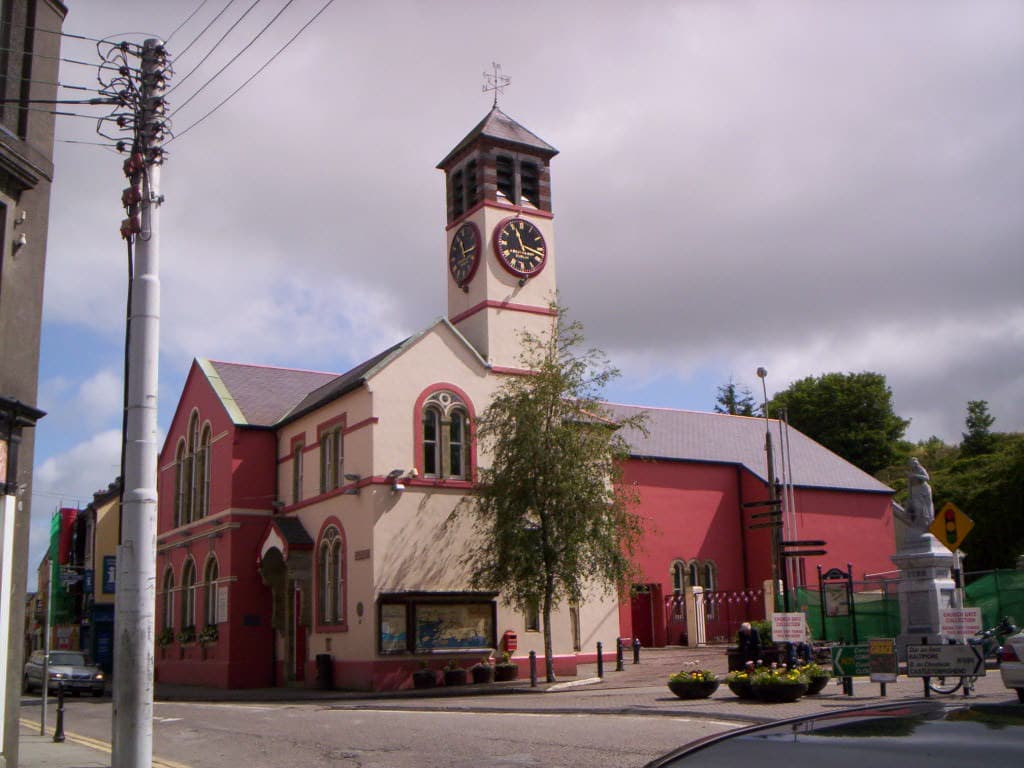
Skibbereen
Charming market town known for vibrant food scene and historical sites.
Boat RentalsHiking
1 region
- Boat Rentals1 destination
County Cork
County Cork, the largest county in Ireland, boasts a diverse landscape of rolling hills, rugged coastline, and picturesque villages. The city of Cork, known for its vibrant cultural scene, is the region's only major urban center. The scenic coastline features attractions like the historic town of Kinsale, famous for its culinary offerings and maritime history. Nearby, the remote Beara Peninsula offers stunning views and fewer tourists, perfect for leisurely hikes. The region is also home to the historic Blarney Castle, where travelers can kiss the famous stone. With rich traditions in music and crafts, County Cork provides numerous opportunities for authentic cultural experiences. Explore local markets and artisan workshops to discover the region's unique heritage.
Boat RentalsHiking