Dublin Bay prawns
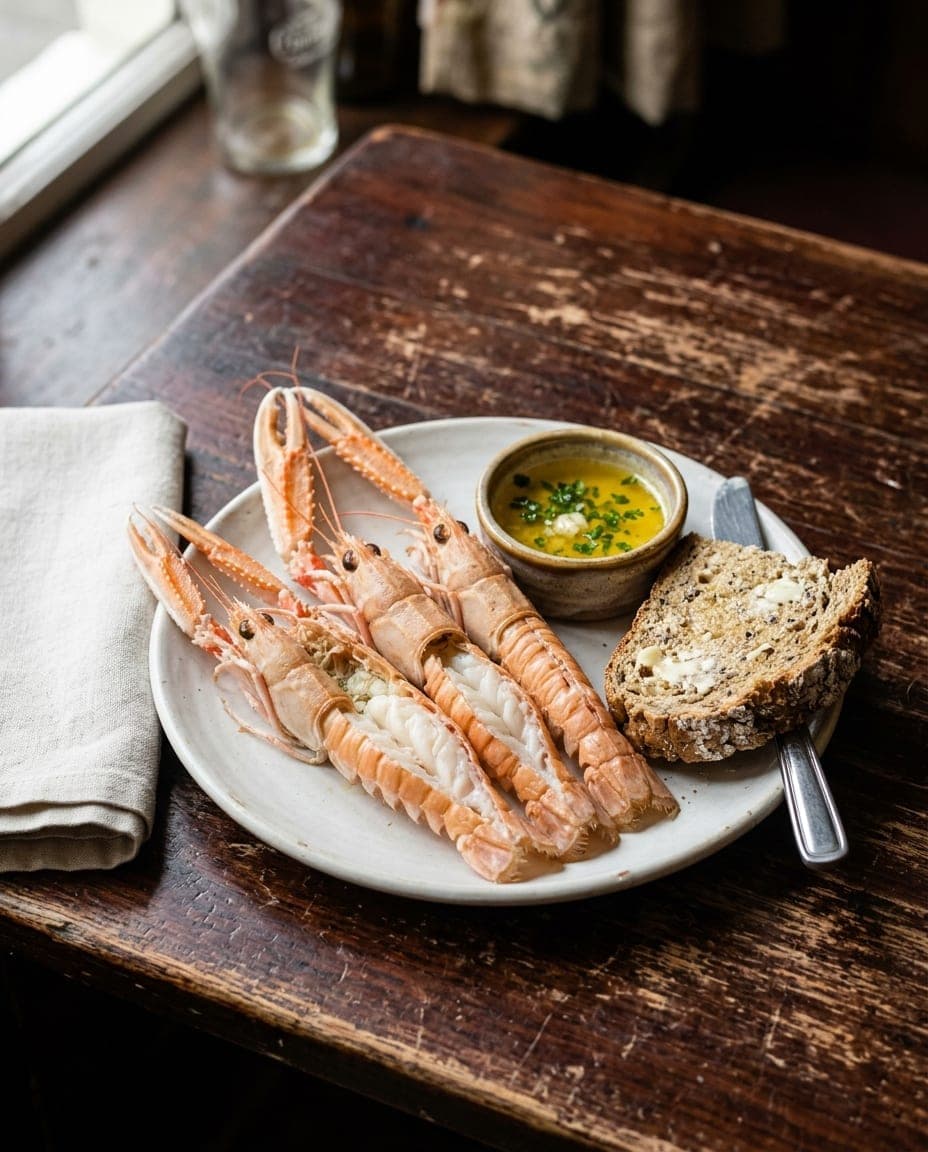
Langoustines from Dublin Bay, with garlic butter
- Local name
- Dublin Bay prawns
- Served with
- Garlic butter, brown bread
- Best eaten at
- A Howth harbour seafood restaurant
- Pairs with
- Dry white wine
What it is
Dublin Bay prawns are the local name for Nephrops norvegicus, a small, clawed lobster that lives in the muddy seabeds of the North Atlantic. In Ireland and Britain, the creature is known by this specific name because, in Victorian times, fishing boats anchored in Dublin Bay sold them on, largely as by-catch, to local street sellers. They are not actually caught in the bay itself today, but further out in the Irish Sea and beyond. Despite the name, they are not true prawns or shrimp. They are a type of lobster, slim and orange-pink in colour.
The flesh is sweet, firm and delicate, lacking the heavy mineral taste sometimes found in larger lobsters. This texture makes them suitable for simple preparation: boiling them briefly or grilling them over high heat preserves their natural flavour. In Ireland, they are rarely served as part of a complex sauce or curry. The tradition is to keep the dish honest, letting the sweetness of the meat speak for itself against a backdrop of garlic butter and coarse brown bread.
The catch and the export trade
The reality of Dublin Bay prawns involves a quiet irony. Most of the langoustines caught in Irish waters are not eaten in Ireland at all. A significant portion of the annual catch is exported, much of it to continental Europe, where they are sold as high-end delicacies or processed into frozen products for the wider European market.
Much of the domestic catch that remains is shelled before it reaches the consumer. These peeled tails become scampi, a staple in Irish fish and chip shops and casual dining rooms across the country. The langoustine became a household food in Ireland and Britain largely through this processed form, breaded and fried, from the 1950s on. A diner might order "scampi" without knowing they are eating the tail of a creature named after their own bay.
However, whole langoustines remain available, particularly in coastal towns where the catch is landed and cooked on the same day. When the boat returns to the harbour with fresh catch, the kitchen will boil or grill them immediately. This proximity to the sea ensures the meat retains its firmness and sweetness, which can be lost if the prawns are frozen for long periods before cooking.
Howth: where the catch meets the table
Howth, a fishing village on the north side of Dublin Bay, is the place to find these prawns in their whole form. The harbour here has long been a working port, and the seafood restaurants that line the quay serve the daily catch as it arrives. It is not uncommon for the menu to change based on what the local trawlers, which fish well out in the Irish Sea, have landed.
In a Howth harbour restaurant, the experience is defined by this immediacy. The prawns are often served in their shells, allowing the diner to peel them at the table. This ritual connects the eater directly to the work of the fisherman. The kitchen will not overcook them; the goal is to heat the meat just enough to set it and release its aroma.
The setting is typically a casual, unpretentious space where the focus remains on the food. The rooms range from a counter beside the kitchen to a dining room over the water.
What goes into it
The ingredients for a proper serving of Dublin Bay prawns are minimal, designed to enhance rather than mask the flavour of the shellfish.
- Whole langoustines, served either boiled or grilled, often still in their shells.
- Garlic butter, melted until foaming and poured generously over the hot prawns. The garlic is fresh and pungent, cutting through the fat of the butter.
- Brown bread, a coarse, dense loaf that provides a sturdy base for soaking up the garlic butter and any remaining juices from the shell.
- Lemon wedges, offered on the side for those who wish to add a touch of acidity, though many prefer the prawns plain.
Everything depends on the catch. If the prawns are fresh, the meat is sweet and firm. If they have been sitting in storage, the texture can become soft and the flavour muted. The garlic butter acts as a warm sauce, binding the bread to the prawns in a single, savoury bite.
How to eat it
Dublin Bay prawns are typically eaten as a main course or a substantial starter, particularly at lunch or dinner. In Howth, they are often served in a bowl or on a plate with the shells intact. The diner uses their fingers to peel back the tail, extracting the meat before dipping it into the garlic butter.
The brown bread is essential. It is not merely an accompaniment but a tool for eating. A slice of the coarse loaf is torn and dipped into the butter, then used to scoop up any remaining meat from the shell. This method ensures that no part of the dish is wasted.
A dry white is the usual glass beside them. The crisp acidity of the wine cuts the garlic butter. A cold beer is also a common choice for those who prefer something lighter, though the wine complements the seafood more traditionally.
Curious facts
- Not true prawns. Despite the name, Dublin Bay prawns are small lobsters with long, slender claws, unlike true shrimp or prawns.
- Not from the bay. The name comes from Victorian Dublin, when boats anchored in the bay sold the catch to street sellers; the prawns themselves are caught offshore.
- The export market. A large proportion of the Irish catch is sent abroad for processing or sale, meaning the fresh whole version is rarer locally than the shelled scampi found in chip shops.
- Seasonal availability. They are caught year-round, though catches dip when the prawns stay down in their burrows, for instance during strong tides.
- The Howth connection. The dish is closely tied to the harbour at Howth, where the daily landing allows for immediate cooking and serving on the same day.
- A simple pairing. The combination of garlic butter and brown bread is a familiar way of serving them on the Irish coast, designed to highlight the natural sweetness of the langoustine without added complexity.
Where to try it
The best place to eat Dublin Bay prawns in their whole form is a Howth harbour seafood restaurant. The kitchens worth finding buy off the quay the same day. The experience is about the freshness of the catch, so visiting a working harbour town is essential.
In Howth, the menu will often list the prawns simply as "Dublin Bay prawns" or "langoustines," with no elaborate descriptions needed. The focus is on the quality of the ingredient and the skill of the cook to prepare it without overcooking. It is a dish that rewards a slow approach, allowing the diner to peel each prawn and savour the buttery, garlicky finish.
Where to try it
1 destination
 Camper Van Rentals
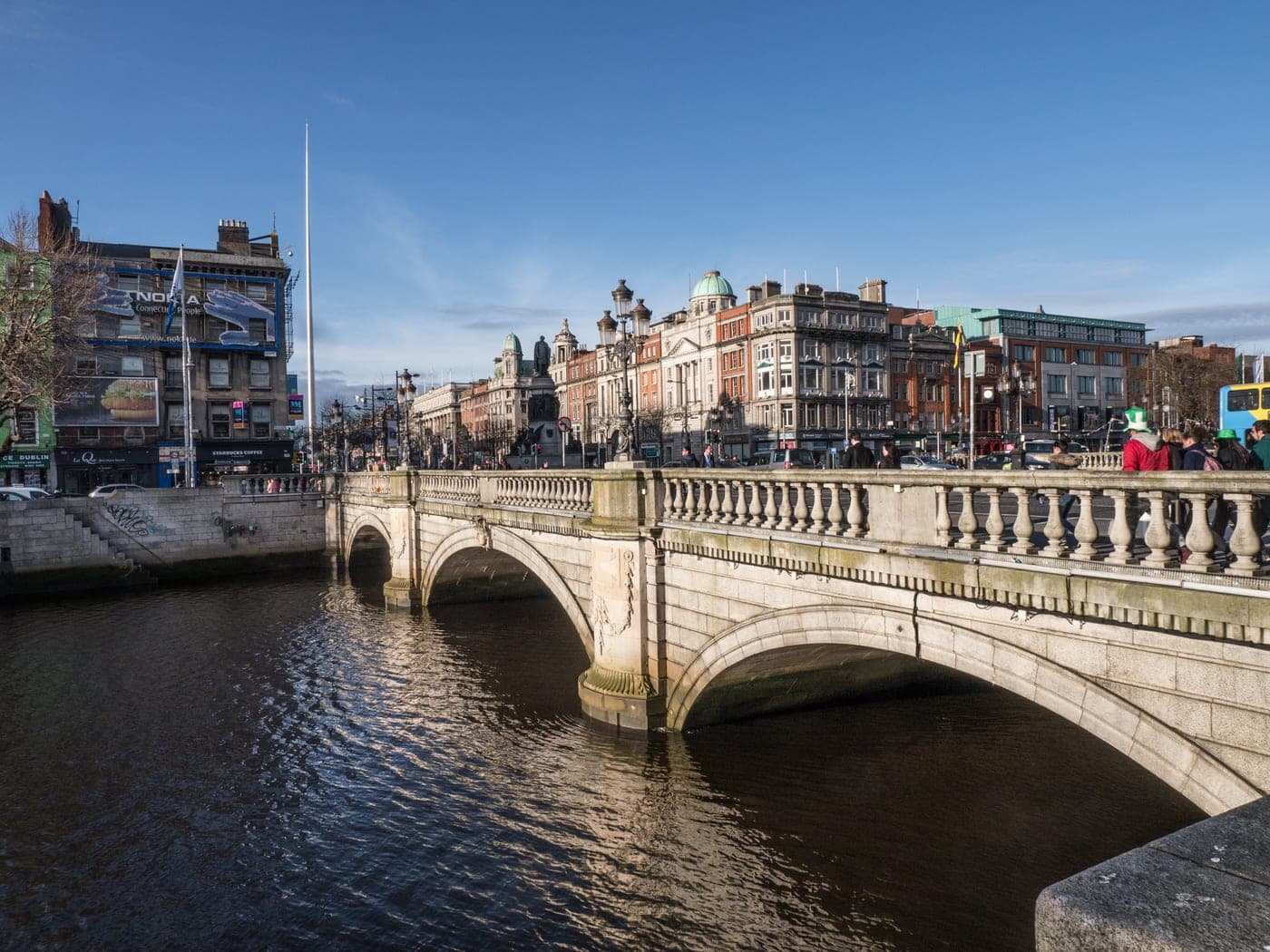
Dublin
Ireland's vibrant capital with Georgian architecture and pub culture.
Camper Van RentalsHiking
1 region
- Camper Van Rentals1 destination
Dublin
Dublin, the capital of Ireland, is a vibrant city known for its rich literary heritage and historic architecture. The city is home to several notable landmarks, including the iconic Trinity College, which houses the Book of Kells, and Dublin Castle, which dates back to the 13th century. Beyond the city center, neighborhoods like Temple Bar offer a bustling atmosphere filled with pubs and cultural events, while areas such as Stoneybatter provide a glimpse into local life with artisan shops and community markets. The surrounding county features scenic coastal views, particularly in Howth and Dalkey, where hiking trails and fresh seafood await discovery. Dublin's history of literature is celebrated in various museums and literary pubs, making it a hub for those interested in Irish culture and storytelling.
Camper Van RentalsHiking