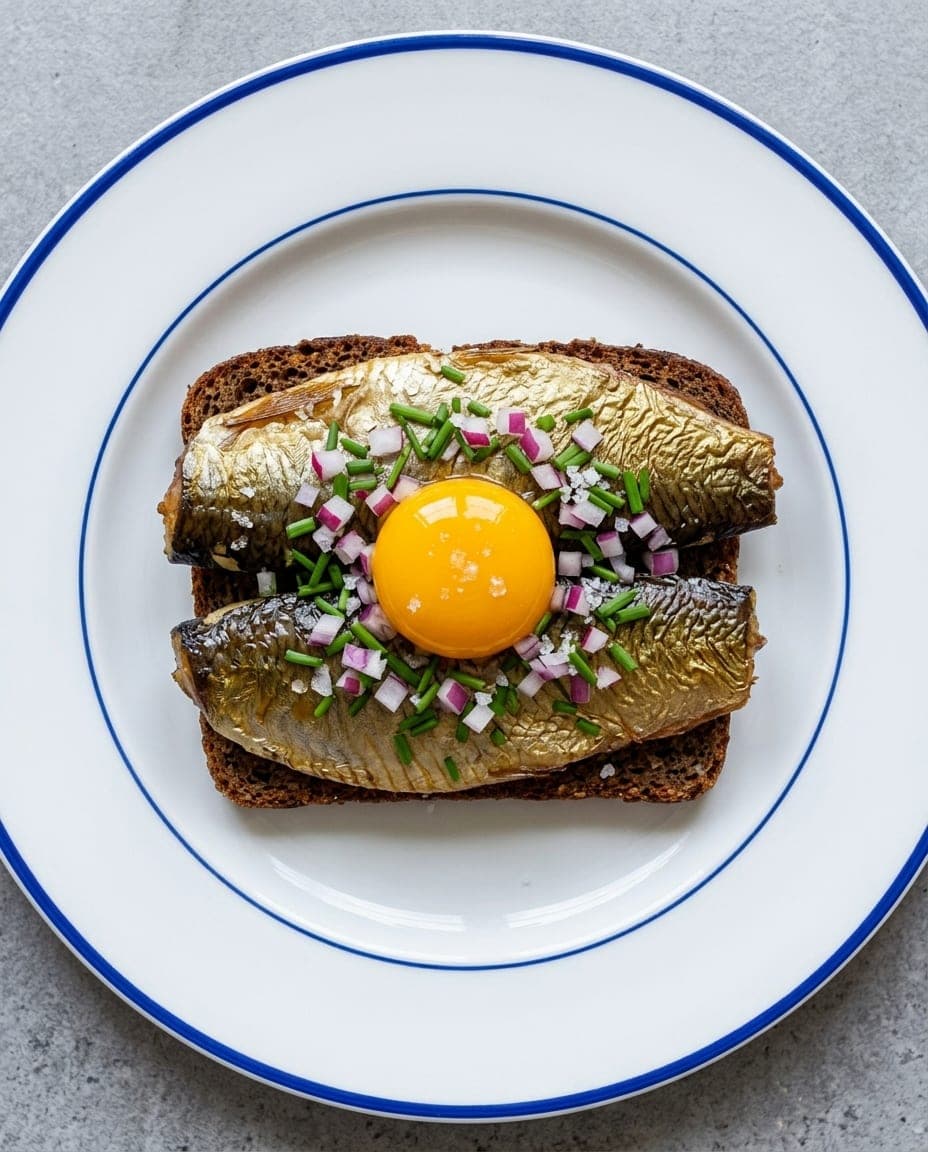
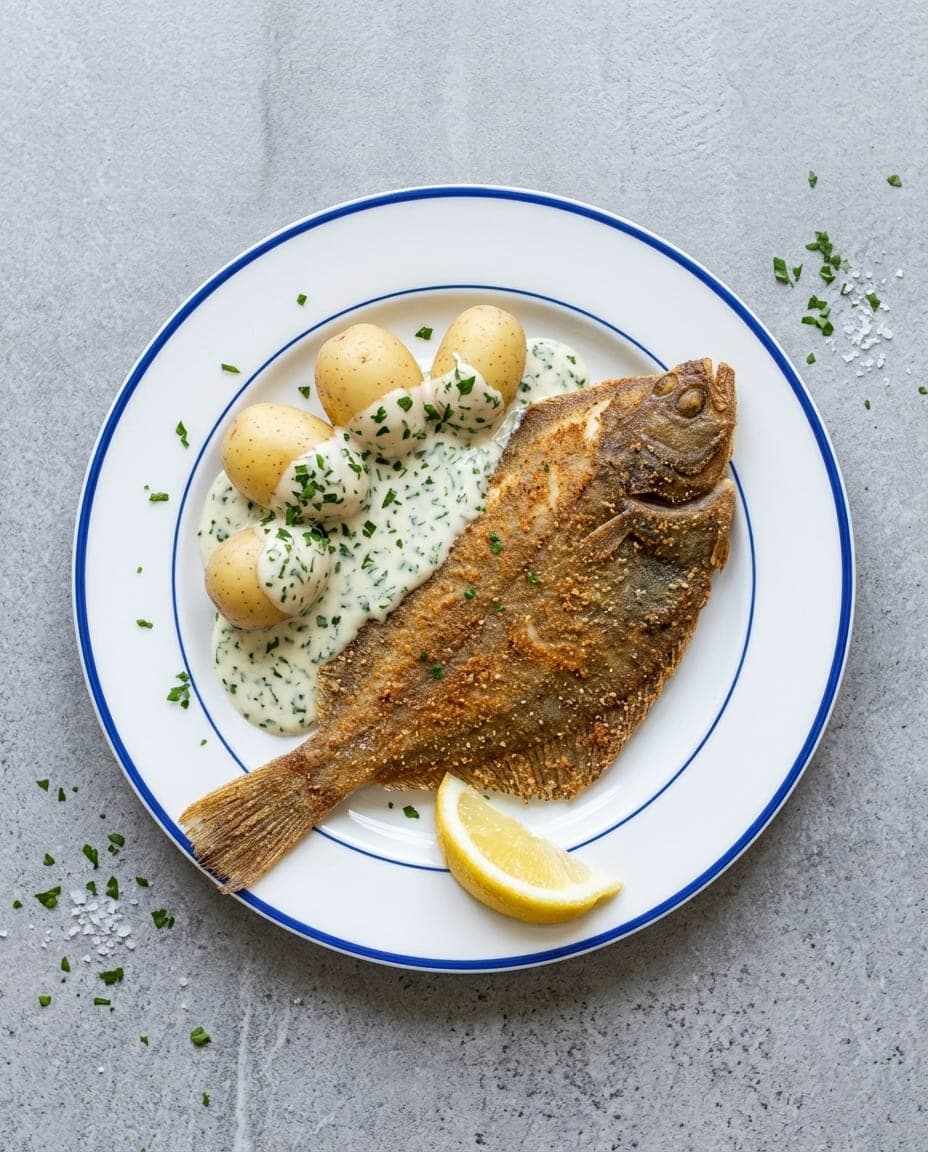
Stegt rødspætte (fried plaice)
A whole flatfish, fried in butter, on a Friday
- Local name
- Stegt rødspætte
- Served with
- Parsley sauce, new potatoes, lemon
- Best eaten at
- A Danish seaside kro
- Pairs with
- Danish lager
What it is
Stegt rødspætte is a simple dish of whole plaice, coated and fried in butter until golden, served with a creamy parsley sauce, new potatoes and a wedge of lemon. It is a classic of Danish home cooking, found all over the country rather than tied to one region, though it is at its most natural in the fishing towns of the coast. The fish is cooked whole, sometimes with the head left on, giving the plate a rustic, seaside appearance that contrasts with the refined simplicity of the sauce and vegetables.
It belongs to the kro, the Danish roadside inn, and to the restaurants along the coast — practical places with short menus where the fish comes in from boats a few hundred metres away.
The Friday fish
Plaice is a flatfish of the shallow sandy water all round Denmark, which is why it is cheap, common and good. Eating fish on a Friday goes back to pre-Reformation fast days, and in some Danish households and canteens Friday is still a fish day; where it is, plaice is a likely choice.
There is no technique to hide behind. The fish has to be fresh enough to be firm, the coating stays thin, and the butter has to be hot without burning. Done properly the coating crackles and the flesh comes off the bone in one piece.
What goes into it
The components are few, each playing a clear role in the final balance of the plate:
- Whole plaice, sometimes with the head left on and often skinned, dusted with flour or fine breadcrumbs before frying.
- Butter for frying, which creates a crisp, golden exterior and infuses the fish with a nutty flavour.
- Parsley sauce (persillesovs), a white sauce of butter, flour and milk with a great deal of chopped parsley stirred through it.
- New potatoes, boiled until tender and served plain.
- Lemon wedges for squeezing over the fried fish just before eating.
The plate works on contrasts: hot crisp coating, soft white fish, a sauce with no sharpness in it at all, and the lemon to supply what the sauce does not.
How to eat it
The fish arrives whole and is filleted at the table — the flesh lifts off the frame in two pieces if the knife follows the bone. The sauce goes over it or alongside, the potatoes are plain, and the lemon is squeezed last.
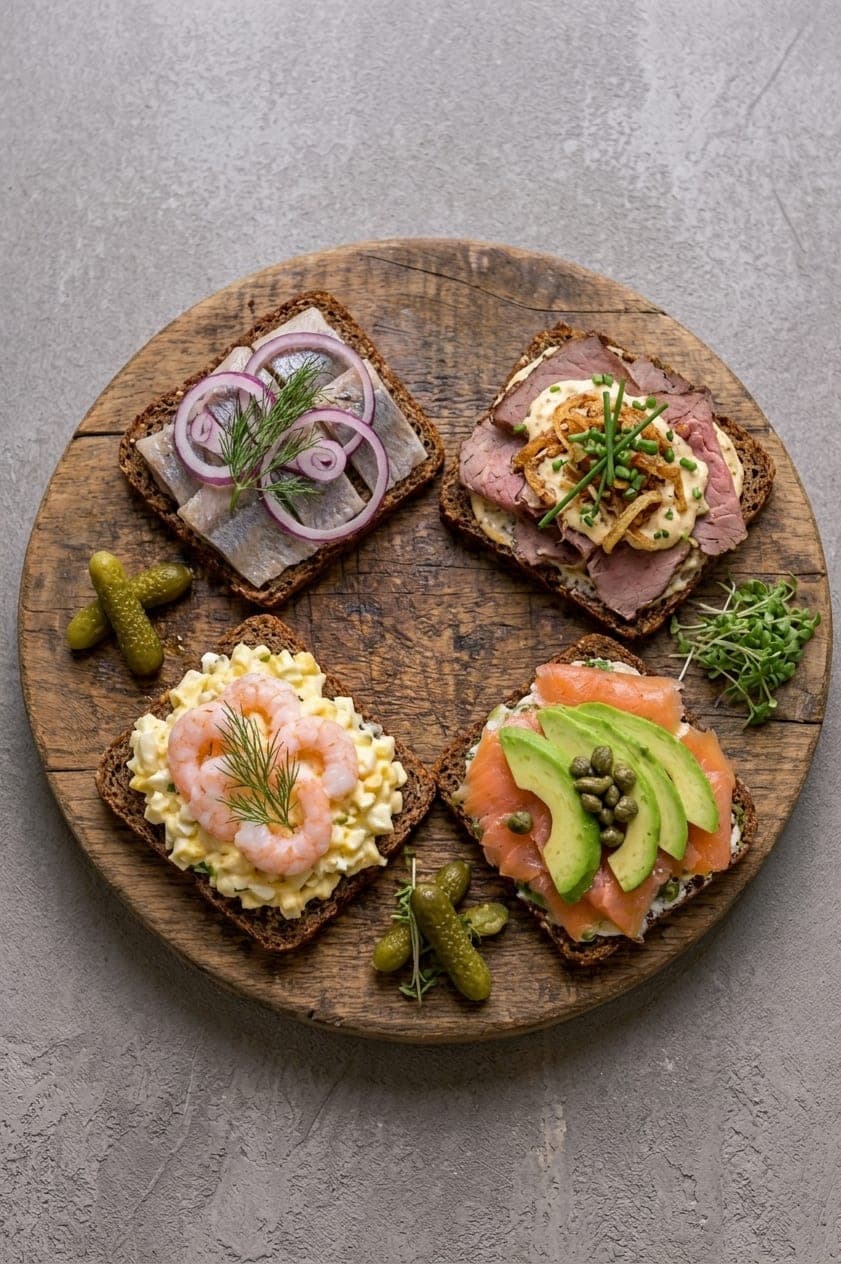
A Danish lager is the usual drink. The other thing worth knowing is that breaded, fried plaice fillet is one of the standard smørrebrød toppings: on rye with remoulade and a slice of lemon, and the base of the stjerneskud open sandwich.
Curious facts
- An old classic. Stegt rødspætte appears among Danish dishes listed as far back as the late 19th century.
- Head on or off. Some kitchens serve the fish with the head on, leaving diners to lift the fillets off the bone at the table.
- A lunch twist. Fried plaice fillet on rye bread with remoulade and lemon is a classic smørrebrød.
- Butter matters. Butter, often added to a little oil in the pan, browns and gives the coating its nutty taste.
- A Friday habit. Fish on Fridays, rooted in pre-Reformation fasting, lingers in some Danish households and canteens.
Where to try it
A kro or a harbour restaurant on the Danish coast — Skagen and the fishing towns of North Jutland are good places to start — where the menu lists it plainly and the fish is whole rather than filleted in the kitchen. A plate that arrives as two neat fillets is a different, easier dish.
Friday is a good day to look for it, and the early summer, when the new potatoes beside it are actually new, is when the plate is at its best.
Where to try it
1 destination
 Boat Rentals
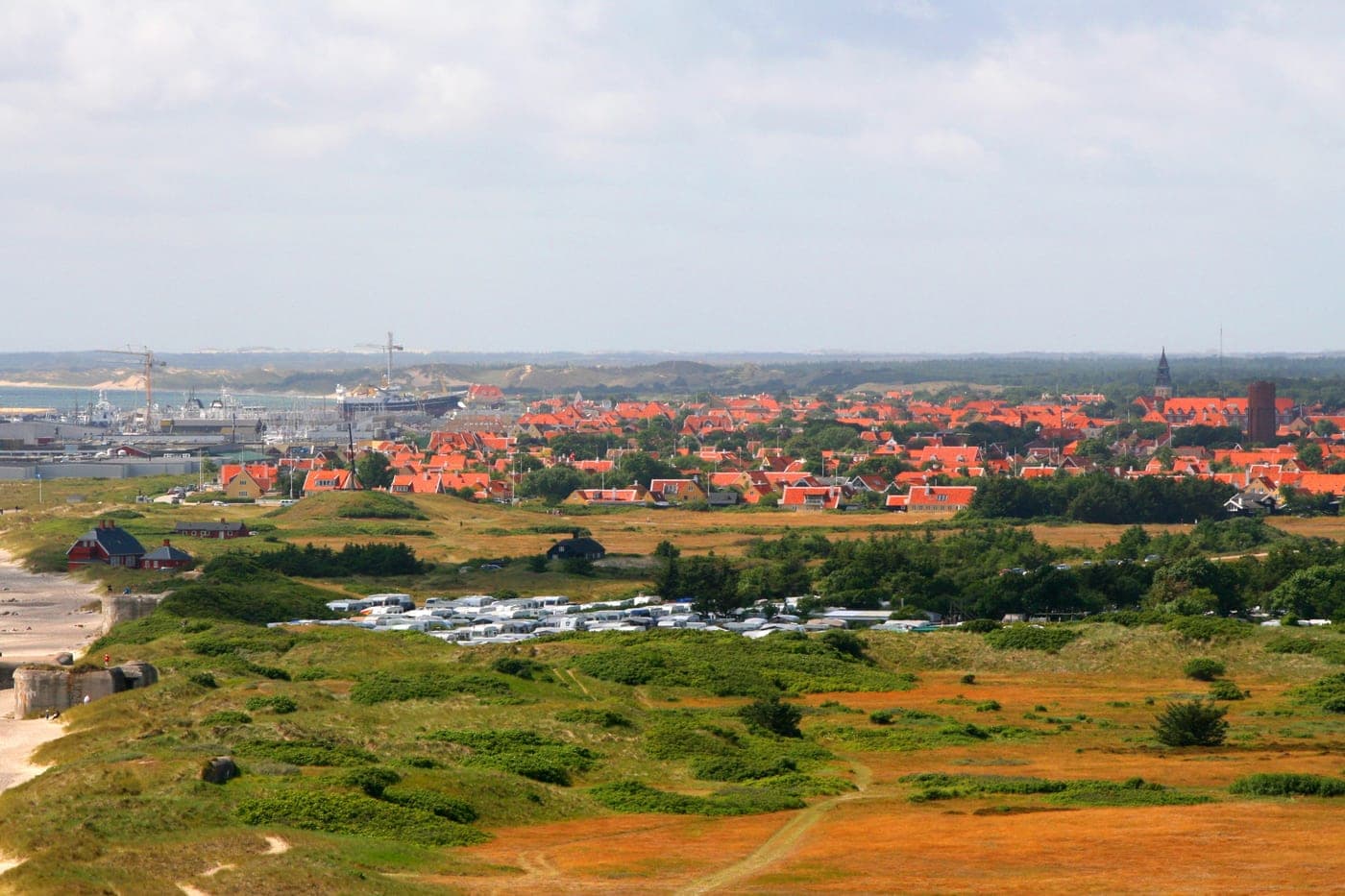
Skagen
Picturesque coastal town known for its sandy beaches and vibrant art scene.
Boat RentalsHiking
1 region
 Boat Rentals3 destinations
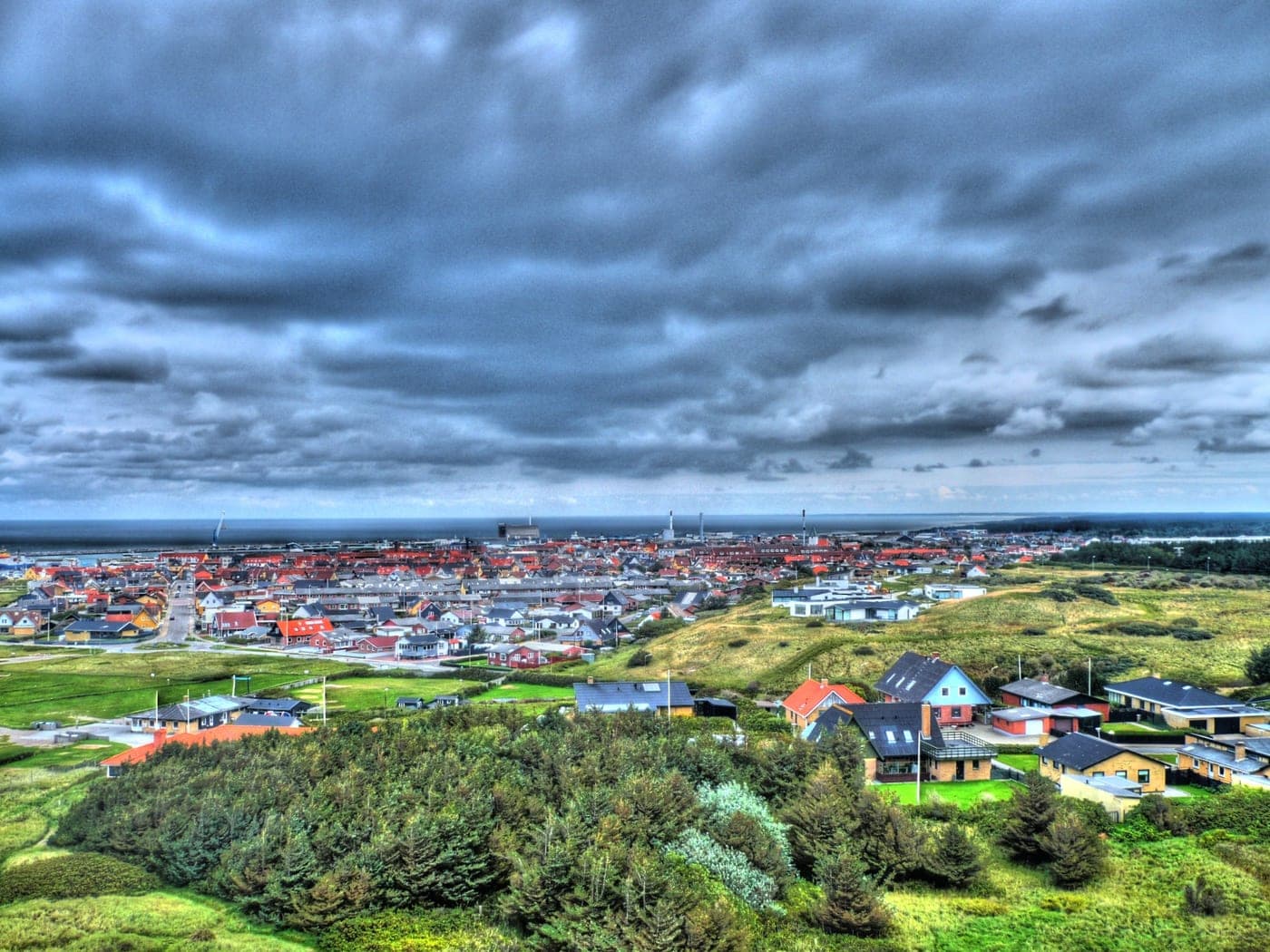
Nordjylland
Nordjylland sits at the top of the Jutland peninsula, where the North Sea and the Kattegat come close enough that both are within reach of the same coastal walk. The region has built its character slowly, around fishing harbours, dune landscapes, and a clear northern light that has drawn painters here for more than a century. The sea sets the pace along this coast, and daily life in many towns still runs on tides, weather, and the rhythm of the harbour market. Aalborg is the largest city and sits on the Limfjord, the long stretch of water that cuts across northern Jutland. Old harbour warehouses have become cafés and concert venues, and cobbled streets in the historic centre lead down to a waterfront promenade where locals cycle along the water in the evening and boats sit moored until morning. It is a good introduction to the unhurried mood that runs through the wider region. North of Aalborg, the coastline changes character from one stretch to the next. On the North Sea side, Løkken and Lønstrup keep the look of old bathing towns, with rows of small beach huts, wide sandy beaches, and fishing boats still hauled up onto the sand by tractor, since there is no natural harbour deep enough here for permanent moorings. Further along, Hirtshals and Frederikshavn work as proper fishing and ferry harbours, their quaysides busy with the day's catch heading into smokehouses along the water. At the very tip of the peninsula lies Skagen, where the Skagerrak and the Kattegat meet at the sandy point known as Grenen, the two currents visibly colliding just off the beach. The same clear light that pulls those waters from two directions drew a colony of painters north in the late nineteenth century, and Skagen's yellow houses with blue-grey window frames still carry that artistic history. Inland and to the west, Thy holds a different landscape: heather-covered dunes, pine plantations, and wide open skies over Denmark's first national park, home to a wild red deer population and a scattering of small lakes. This stretch of coast is wilder and less developed, a reminder that much of Nordjylland's calm comes from simple remoteness. Cycling ties the region together. Nordjylland is flat and its coastal paths are well kept, so moving between harbour towns on two wheels feels like a natural way to take in dune ridges, fjord edges, and quiet lanes through fields of rapeseed and barley. Villages in Nordjylland tend to gather around a church, a harbour, or both, with a bakery and a smokehouse doing most of the daily trade. Hygge here shows up in practical comforts: a warm café after a windy beach walk, a bowl of fish soup in a harbour restaurant, an evening spent watching the sun go down over the water. The local table draws directly on the sea and the fjord, with smoked mackerel and herring, whole fried plaice, and shrimp landed daily by small boats working the Kattegat. Each coastal town in Nordjylland faces its own stretch of water and takes its character from it, so a morning in Skagen and an evening in Løkken can feel further apart than the short distance between them suggests. The harbours, dunes, and fjord towns each keep their own pace, set more by the sea and the season than by any set route between them.
Boat RentalsHiking