Smørrebrød
Rye, butter and a knife and fork
- Local name
- Smørrebrød
- Served with
- Remoulade, pickles, onions
- Best eaten at
- A Copenhagen frokost restaurant
- Pairs with
- Lager and akvavit
What it is
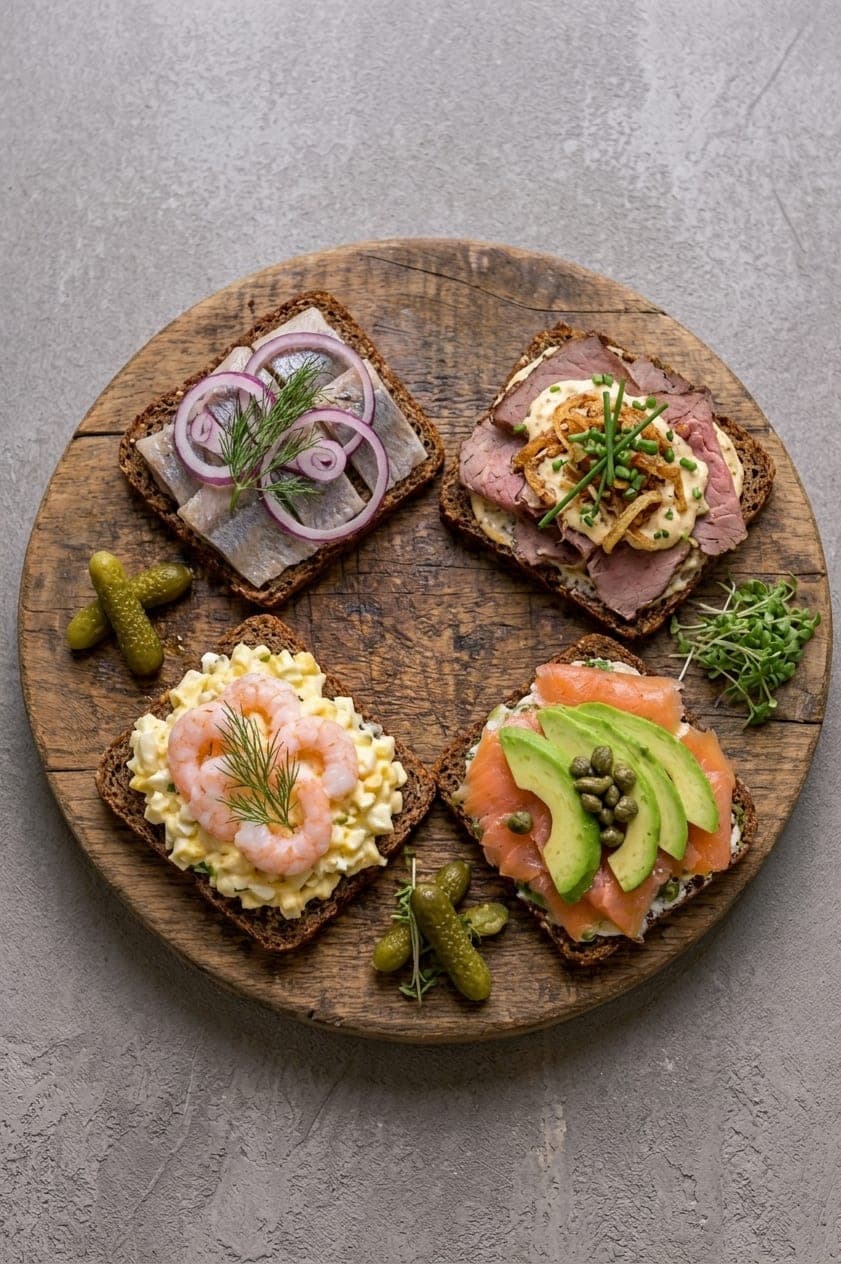
Smørrebrød is the name given to the open-faced sandwich that forms the backbone of Danish lunch culture. It is not a quick snack or a casual toast, but a structured meal built on a thick slice of dense, sour rye bread known as rugbrød. The bread is spread generously with butter before being topped with an array of carefully arranged ingredients, from pickled herring and roast pork to hand-peeled shrimp and liver pâté.
The word is simply smør og brød, butter and bread, which undersells it considerably. Each one is built rather than assembled, the toppings laid in order and the garnish placed rather than scattered, and two or three of them make a full lunch. Open sandwiches exist everywhere; what Denmark has added is a set of rules.
How it began
The origins of smørrebrød lie in the working lunches of 19th-century Denmark. It started as the madpakke, or packed lunch, carried by labourers, shopkeepers and office workers to their places of work. The dense rye bread was chosen for its durability; it stayed fresh longer than white bread and did not crumble easily when carried in a bag. Workers would top the buttered slice with whatever they had available: cheese, cold cuts, or pickled vegetables.
Towards the end of the 19th century it moved from the lunchbox to the restaurant. Copenhagen lunch houses began listing open sandwiches as a frokost service, and the lists grew — long printed menus of named combinations, each one assembled to a fixed specification. The packed lunch had become a trade.
The rules of the table
The first rule is that it is not picked up. A knife and fork, cut as one goes — the toppings are wet and heavy and a handheld attempt ends badly, which is the practical reason behind what looks like formality.
The second is the order. A full frokost begins with herring, sharp and salty and eaten while the palate is clean; then the other fish; then the meat, the pork and the liver pâté; then cheese at the end. A kitchen will serve the plates in that sequence whatever order they were listed in.
What goes into it
The foundation of every smørrebrød is a thick slice of dark rye bread, which provides a sturdy base for the toppings. The spread is usually butter (under some toppings, lard), laid on thickly to create a moisture barrier between the bread and the topping. The variety of toppings defines the character of the dish:
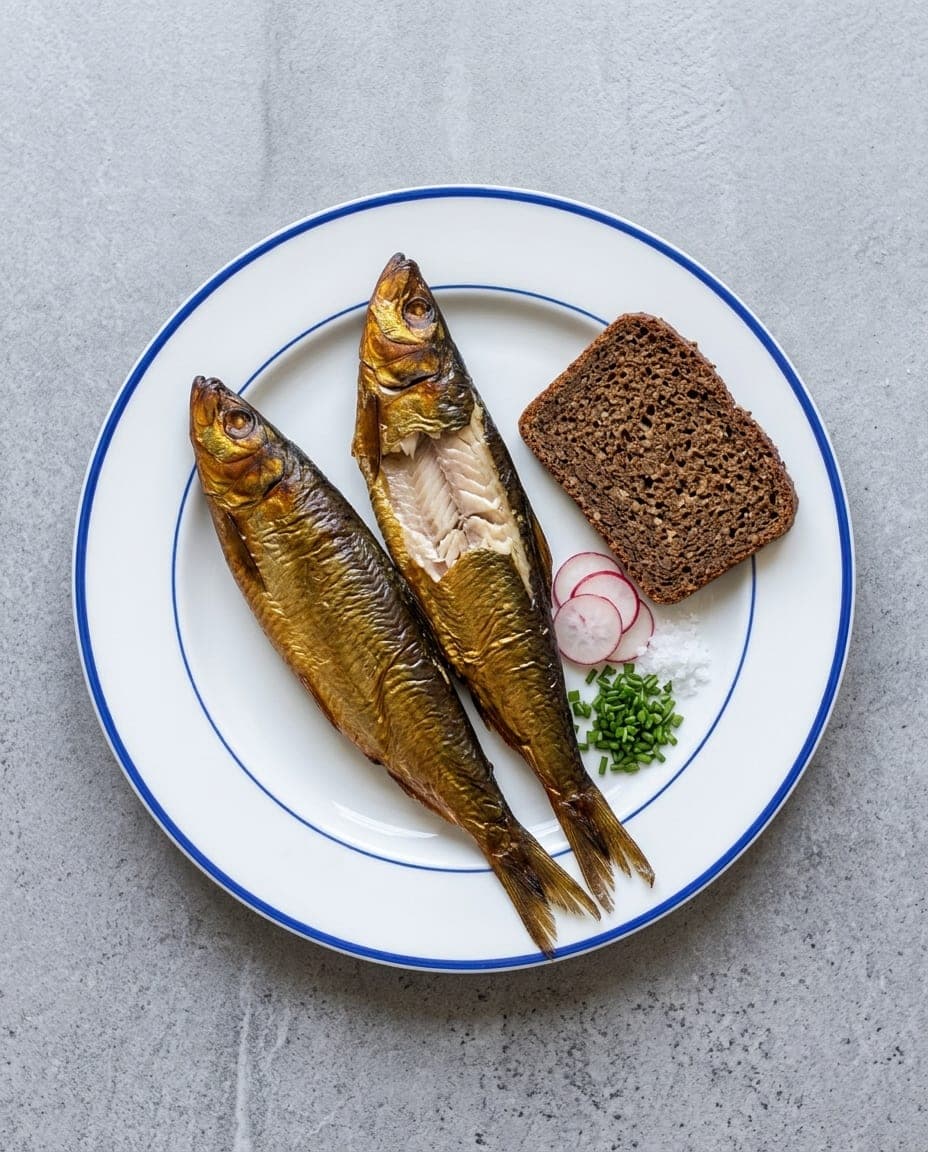
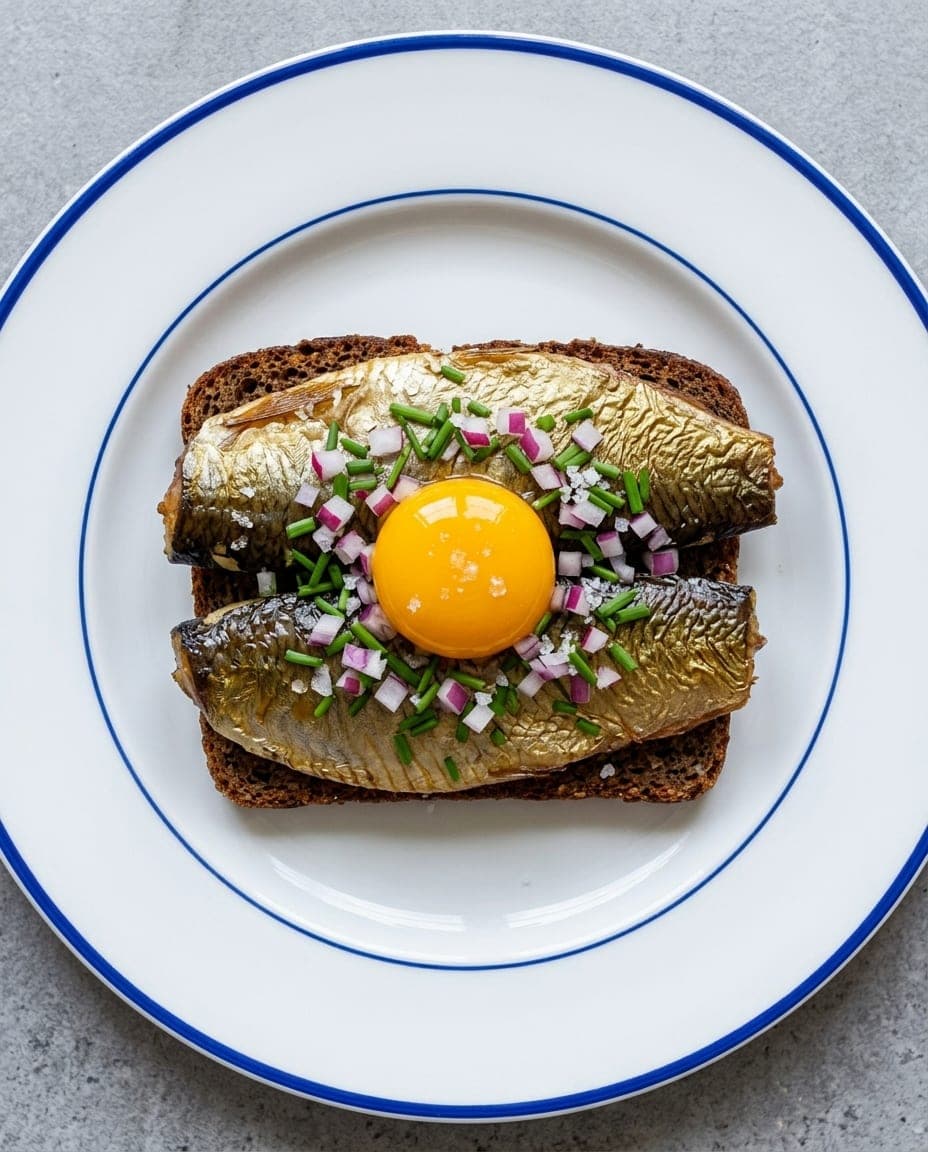
- Pickled herring in various marinades, such as mustard, onion, or dill vinegar.
- Roast pork with red cabbage, usually finished with pickled cucumber and sometimes a slice of orange.
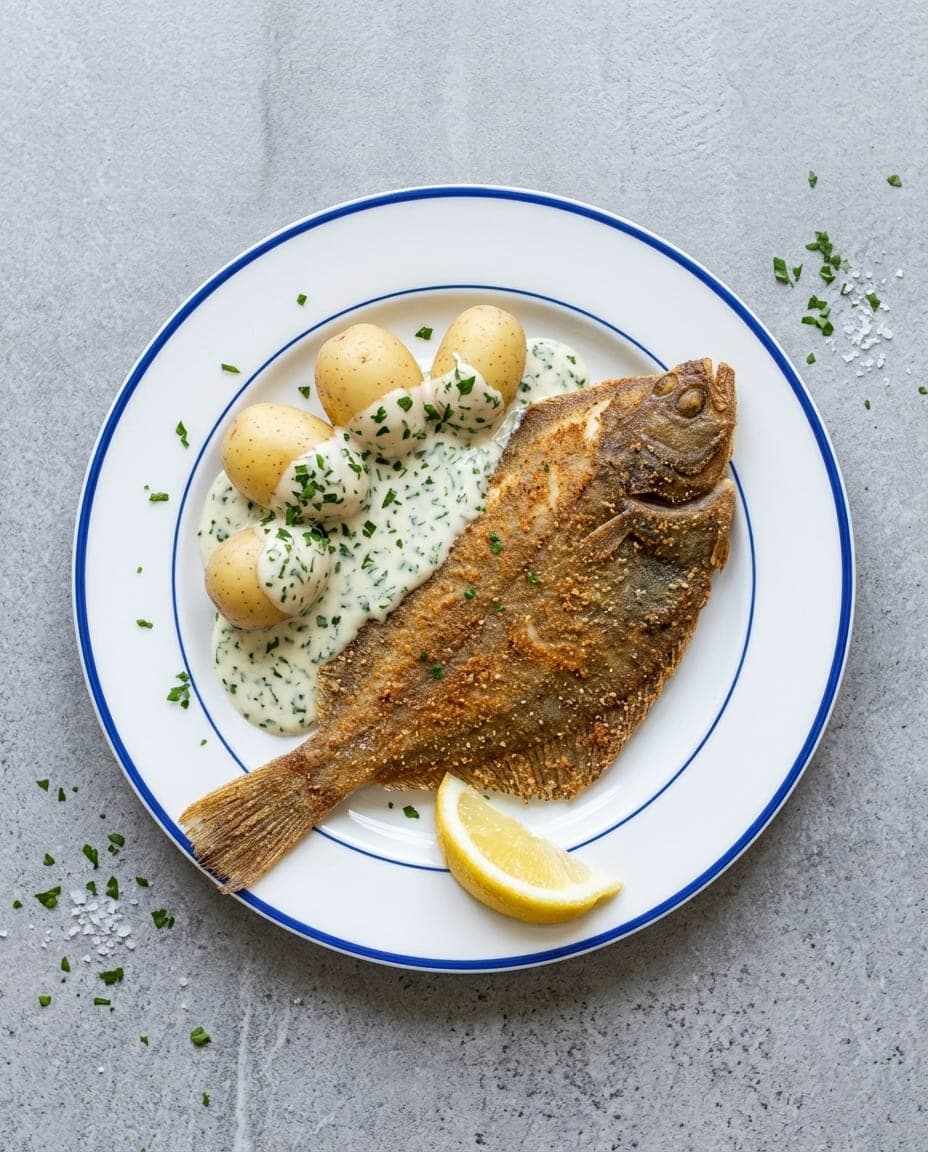
- Breaded plaice, a white fish fried and topped with lemon slices and remoulade.
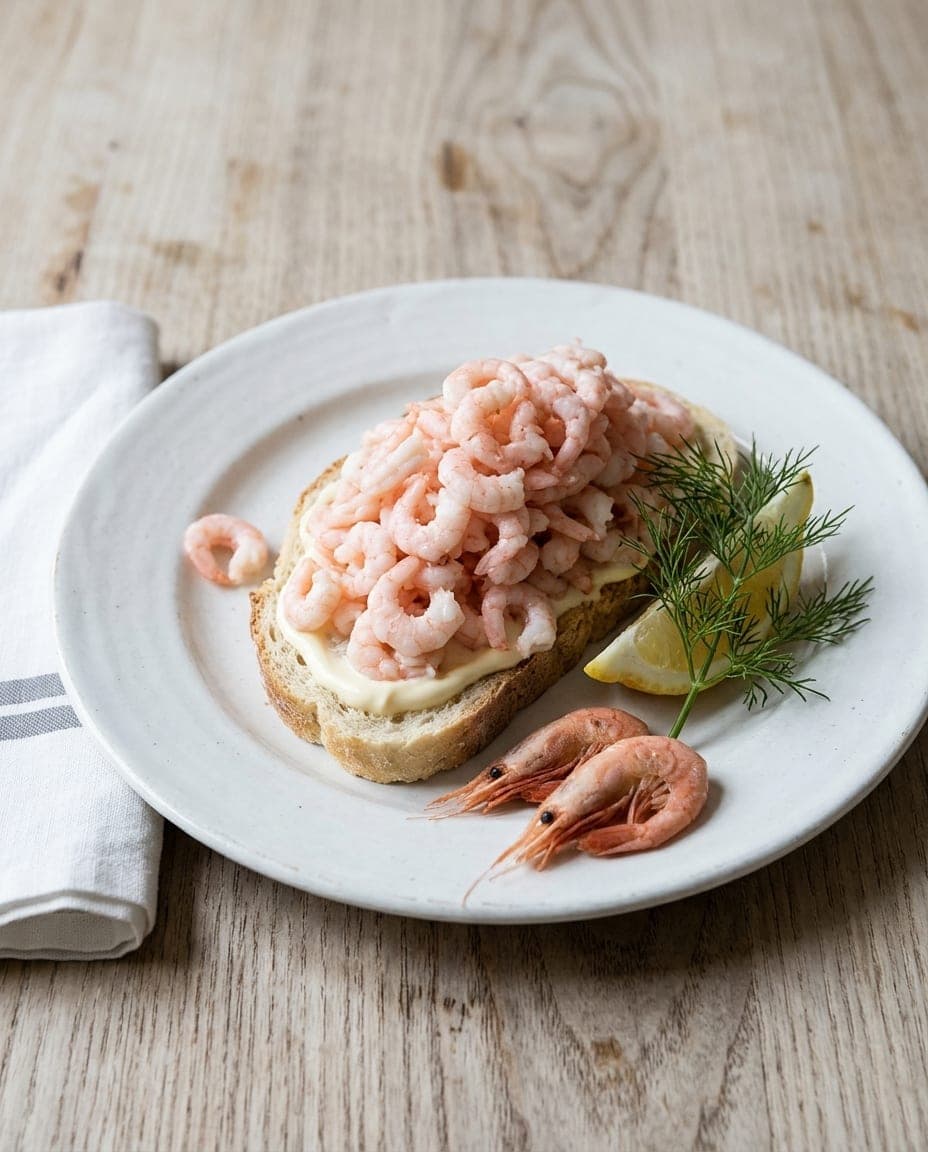
- Hand-peeled shrimp, usually arranged with a dollop of mayonnaise or a light dressing.
- Liver pâté (leverpostej), served warm or cold, usually under bacon and sautéed mushrooms.
- Dyrlægens natmad, the "vet's midnight snack," a combination of liver pâté, salt beef, raw onion and aspic.
The garnishes are fixed rather than decorative: pickled cucumber, raw onion rings, dill, a twist of lemon on the fish, depending on what is underneath. Their job is acid against fat, and a plate that arrives without them is incomplete.
How it is eaten
A proper frokost is long and not hurried: one plate at a time, in sequence, with a long gap for talking in the middle of it.
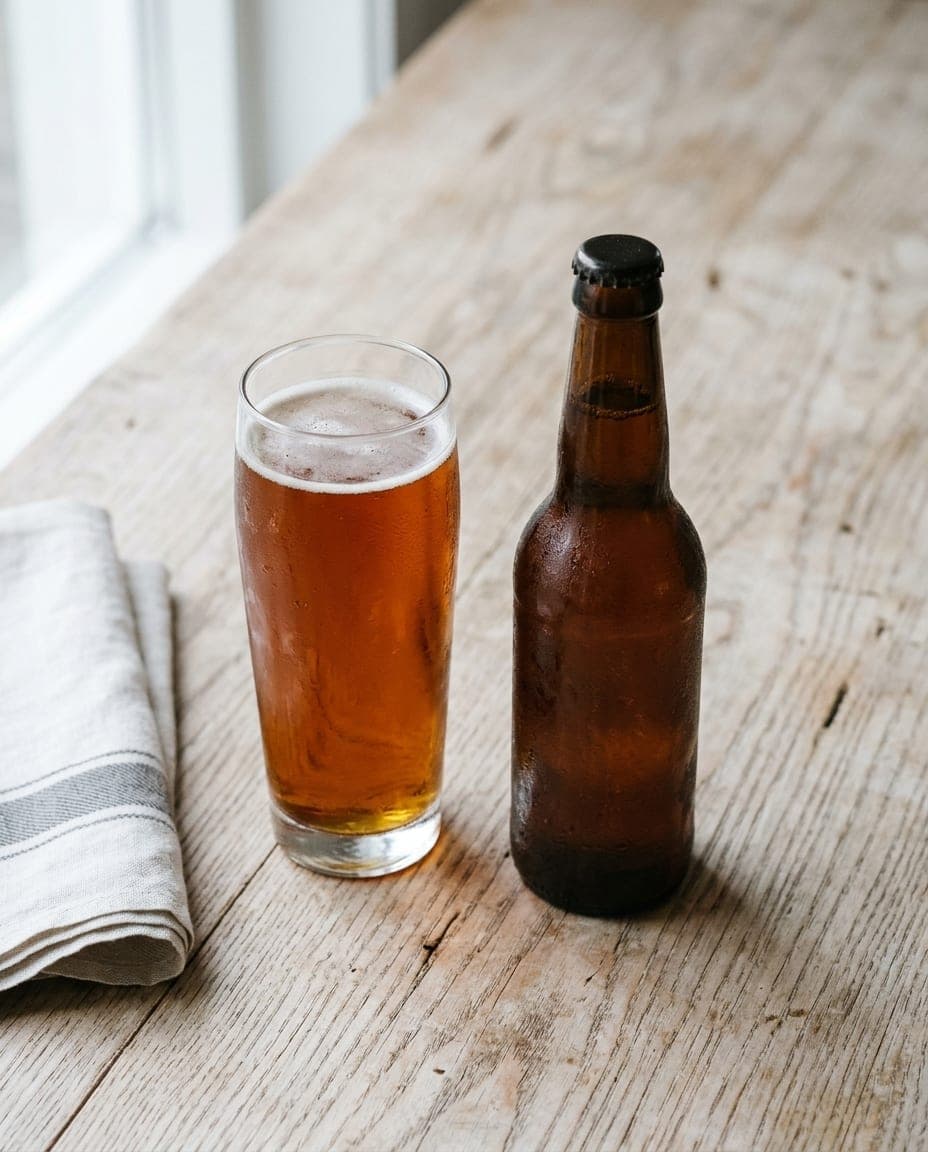
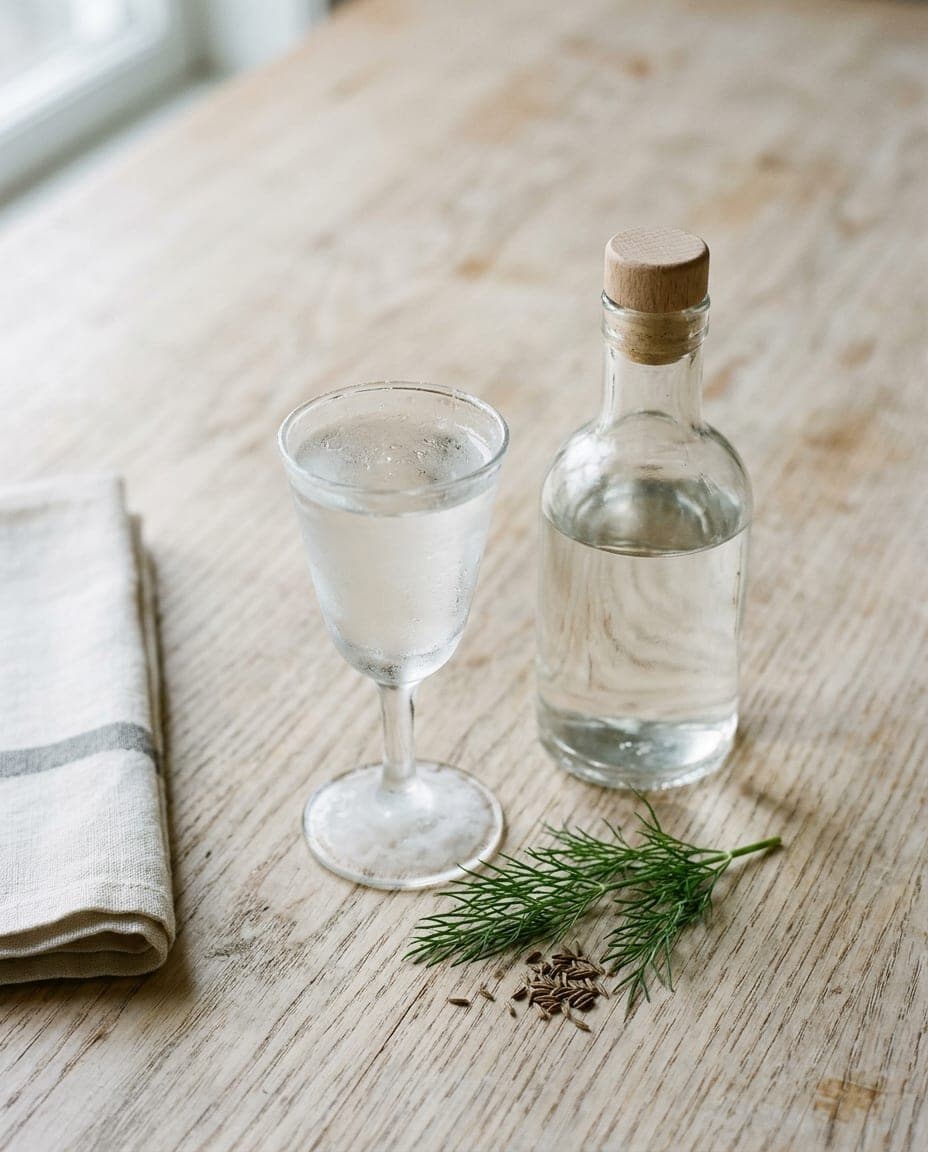
The drinks are part of the structure. The herring course comes with akvavit, the cold caraway spirit, in a small glass, and a lager alongside it; the beer carries on through the meat. Two or three plates and a beer is the everyday version, and nobody insists on the full run at lunch on a Tuesday.
Curious facts
- The butter barrier. The layer of butter between the rye bread and the topping is not merely for flavour; it prevents the moist ingredients from making the bread soggy too quickly, a practical necessity for the heavy toppings used.
- Herring comes first. Fish before meat and meat before cheese, so the sharpest thing arrives while the palate is clean.
- The vet's snack. The dish known as dyrlægens natmad is usually traced to Oskar Davidsen's smørrebrød restaurant in Copenhagen, where a veterinarian is said to have ordered the same combination every evening.
- Rye bread density. Danish rye bread is distinct for its high percentage of whole grain rye and long fermentation process, giving it a dark colour, dense texture and slightly sour taste that white bread cannot replicate.
- The regions do their own. Bornholm builds its versions on its smoked herring and North Jutland on Skagen shrimp — the same form with whatever the local boats land.
Where to try it
A frokost restaurant — the word on the door is the signal — serves little else and will have a long list. Copenhagen has the greatest concentration of them, and the older ones keep the full sequence and a waiter who will steer an uncertain order.
Outside the capital the form follows the catch. On Bornholm the plates are built on the island's smoked herring; in North Jutland, on Skagen shrimp peeled that morning. A seaside kro, the Danish roadside inn, will serve three or four standard versions rather than thirty, which is the honest everyday version of the thing.
Where to try it
2 regions
 Boat Rentals1 destination
Bornholm
Bornholm, a Danish island in the Baltic Sea, is known for its unique round churches and rich artisanal traditions. The island is home to picturesque towns such as Gudhjem, famous for its smoked herring, and Svaneke, recognized for local craft beer and glassblowing. With stunning coastal cliffs, sandy beaches, and lush forests, Bornholm offers diverse landscapes. The island hosts a variety of local festivals, including the Bornholm Art Week, showcasing local artists. Historical sites like Hammershus, a medieval castle ruin, provide insight into the island's past. Bornholm is the only region in Denmark with a unique blend of Danish and Nordic influences, perfect for cultural exploration.
Boat Rentals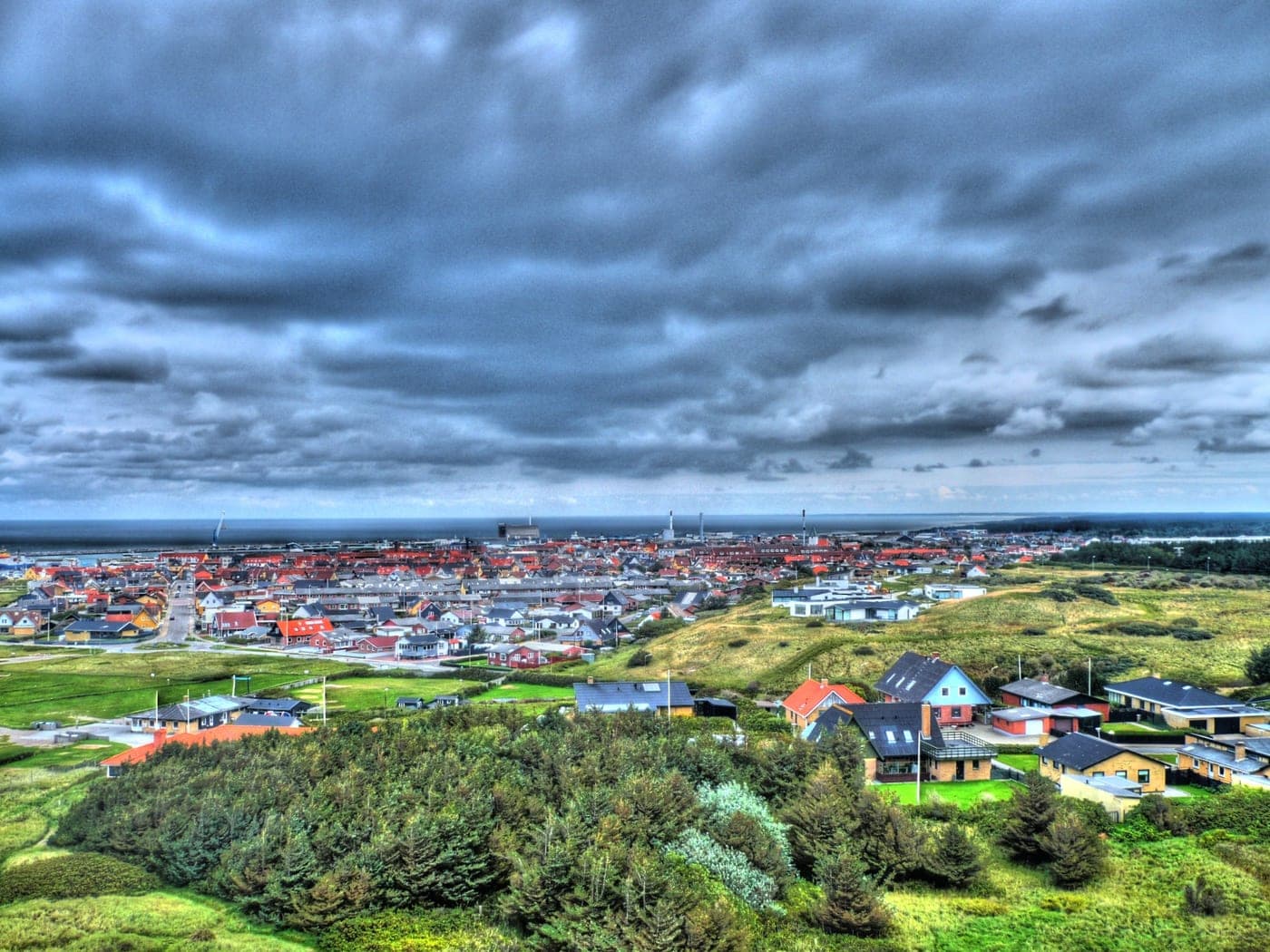 Boat Rentals3 destinations
Nordjylland
Nordjylland sits at the top of the Jutland peninsula, where the North Sea and the Kattegat come close enough that both are within reach of the same coastal walk. The region has built its character slowly, around fishing harbours, dune landscapes, and a clear northern light that has drawn painters here for more than a century. The sea sets the pace along this coast, and daily life in many towns still runs on tides, weather, and the rhythm of the harbour market. Aalborg is the largest city and sits on the Limfjord, the long stretch of water that cuts across northern Jutland. Old harbour warehouses have become cafés and concert venues, and cobbled streets in the historic centre lead down to a waterfront promenade where locals cycle along the water in the evening and boats sit moored until morning. It is a good introduction to the unhurried mood that runs through the wider region. North of Aalborg, the coastline changes character from one stretch to the next. On the North Sea side, Løkken and Lønstrup keep the look of old bathing towns, with rows of small beach huts, wide sandy beaches, and fishing boats still hauled up onto the sand by tractor, since there is no natural harbour deep enough here for permanent moorings. Further along, Hirtshals and Frederikshavn work as proper fishing and ferry harbours, their quaysides busy with the day's catch heading into smokehouses along the water. At the very tip of the peninsula lies Skagen, where the Skagerrak and the Kattegat meet at the sandy point known as Grenen, the two currents visibly colliding just off the beach. The same clear light that pulls those waters from two directions drew a colony of painters north in the late nineteenth century, and Skagen's yellow houses with blue-grey window frames still carry that artistic history. Inland and to the west, Thy holds a different landscape: heather-covered dunes, pine plantations, and wide open skies over Denmark's first national park, home to a wild red deer population and a scattering of small lakes. This stretch of coast is wilder and less developed, a reminder that much of Nordjylland's calm comes from simple remoteness. Cycling ties the region together. Nordjylland is flat and its coastal paths are well kept, so moving between harbour towns on two wheels feels like a natural way to take in dune ridges, fjord edges, and quiet lanes through fields of rapeseed and barley. Villages in Nordjylland tend to gather around a church, a harbour, or both, with a bakery and a smokehouse doing most of the daily trade. Hygge here shows up in practical comforts: a warm café after a windy beach walk, a bowl of fish soup in a harbour restaurant, an evening spent watching the sun go down over the water. The local table draws directly on the sea and the fjord, with smoked mackerel and herring, whole fried plaice, and shrimp landed daily by small boats working the Kattegat. Each coastal town in Nordjylland faces its own stretch of water and takes its character from it, so a morning in Skagen and an evening in Løkken can feel further apart than the short distance between them suggests. The harbours, dunes, and fjord towns each keep their own pace, set more by the sea and the season than by any set route between them.
Boat RentalsHiking