Bryndzové pirohy
Eastern Slovakia's answer to the pierogi
- Local name
- Bryndzové pirohy
- Served with
- Bacon, sour cream
- Best eaten at
- A Slovak salaš
- Pairs with
- Žinčica
What it is
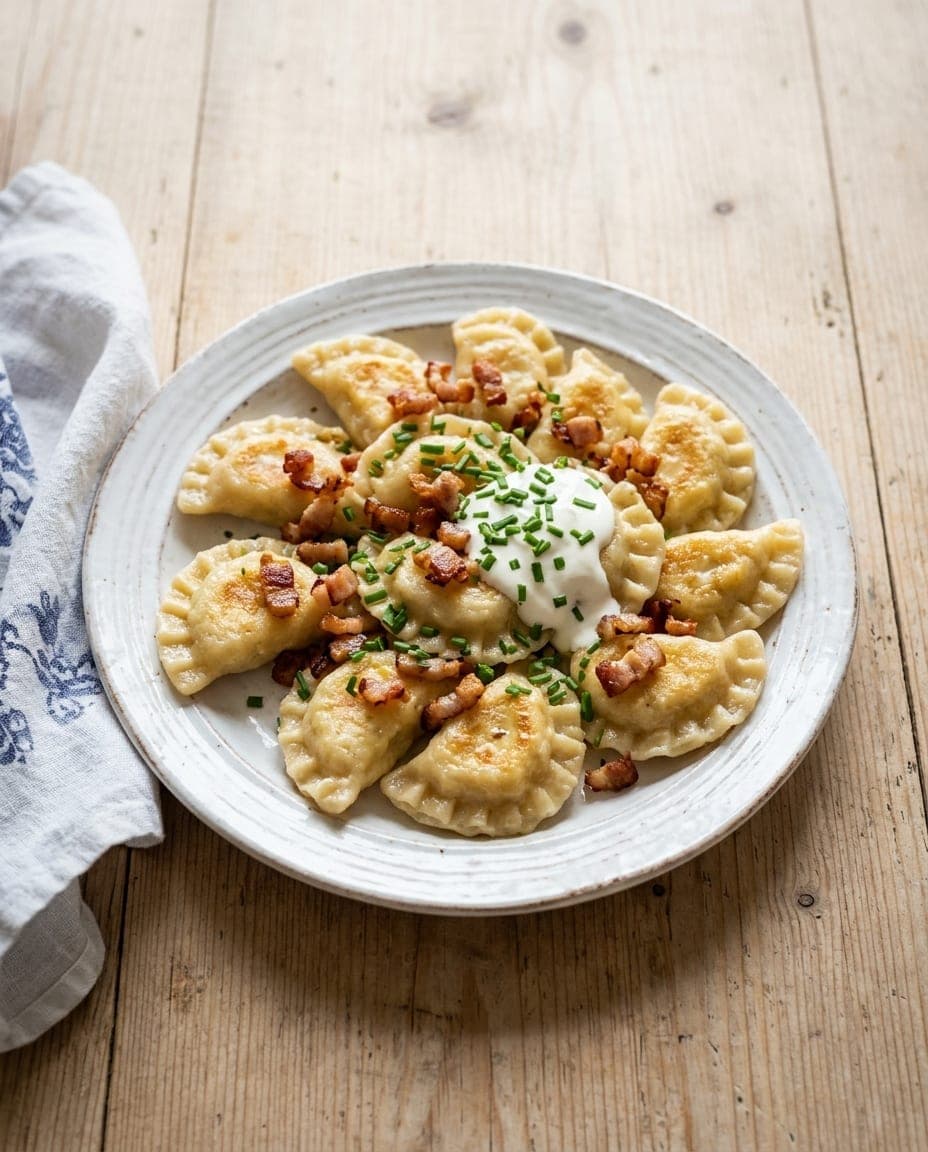
Bryndzové pirohy are eaten across Slovakia but are most at home in the north and east, in regions such as Spiš and Šariš. They are half-moons of thin wheat dough filled with mashed potato and bryndza, the soft, salty sheep's-milk cheese of the Slovak mountains, boiled and served under fried bacon and its fat.
They belong to a family that runs across the whole region — Polish pierogi, Ukrainian pyrohy, Slovak pirohy — and the border between them is a matter of filling rather than of nationality. What makes these Slovak is the cheese, and the cheese comes from the Carpathian sheepfolds a few valleys away.
The ingredients of the filling
There is no single official recipe, but the core components are consistent across traditional kitchens:
- Potato, boiled and mashed until smooth, forming the base of the filling.
- Bryndza, the soft, spreadable sheep's-milk cheese — salty and slightly sour, and the reason to eat these rather than any other dumpling.
- Wheat flour dough, usually made with water or milk, which is rolled thin and cut into circles before being folded over the filling.
The filling should taste of the cheese first and the potato second; the potato is there to carry it and to stop the salt being overwhelming. The dough is rolled thin and is not meant to be noticed.
How it is eaten
Bryndzové pirohy are typically served hot, fresh from the boiling water. The standard accompaniment is a generous topping of fried bacon, including the crisp pieces and the rendered fat, which coats the dumplings in a savoury glaze. A dollop of thick sour cream is often added on top or on the side, offering a cool, tangy contrast to the warm, salty filling.
A salaš — the sheepfold with its dairy and its restaurant, up on the summer pasture — is where the cheese is made and where the dumplings taste of the place. Down in the valleys they are lunch: a plate of eight or ten, bacon on top, sour cream on the side, and a glass of žinčica, the sour whey left from the cheese-making, for anyone who wants the full version.
Curious facts
- A regional boundary marker. The dish is most prevalent in the east, near the borders with Poland and Ukraine, where cultural exchange has historically been strong.
- Sheep's milk is the point. Bryndza is a sheep's-milk cheese, sometimes blended with cow's milk; a cow's-milk substitute makes a milder and much plainer dumpling.
- Salt was the preservative. Bryndza is salted heavily enough to keep, which is how a summer's milk reached a winter kitchen before refrigeration.
- Elsewhere it is halušky. The same cheese goes into the dumplings of central and northern Slovakia; the filled pocket is especially loved in the east.
Where to try it
Eastern Slovakia: Košice, the Spiš towns to its north-west, and the villages of the Carpathian foothills, where the dish is on the daily menu of ordinary restaurants rather than in a tourist section. A salaš in the hills, open through the grazing season, is where to eat them alongside the cheese-making.
They are less common in the west of the country, where the same cheese is more often served with halušky — ordering pirohy in Bratislava is possible, but the east and north are where they belong.
Where to try it
1 region

Košice
Košice is Slovakia's second-largest city, offering a rich blend of history and culture. Known for its well-preserved medieval core, the city features the stunning St. Elisabeth Cathedral, the largest in Slovakia. The region is celebrated for its vibrant arts scene, with numerous galleries and theaters showcasing local talent. Nearby, the picturesque town of Prešov is famous for its well-preserved Renaissance architecture and unique folklore traditions. The surrounding mountains, including the High Tatras, provide excellent hiking opportunities and breathtaking landscapes. This area is also known for its wine production, particularly in the Tokaj region, where a unique blend of flavors awaits. Experience local festivals that celebrate the region's heritage, offering insights into Slovak traditions. This destination is ideal for those looking to explore away from the typical tourist crowds, enjoying authentic Slovak culture and hospitality.