Bryndzové halušky
Potato dumplings with sheep's cheese and bacon
- Local name
- Bryndzové halušky
- Served with
- Bacon, sour milk
- Best eaten at
- A Slovak salaš
- Pairs with
- Žinčica or beer
What it is
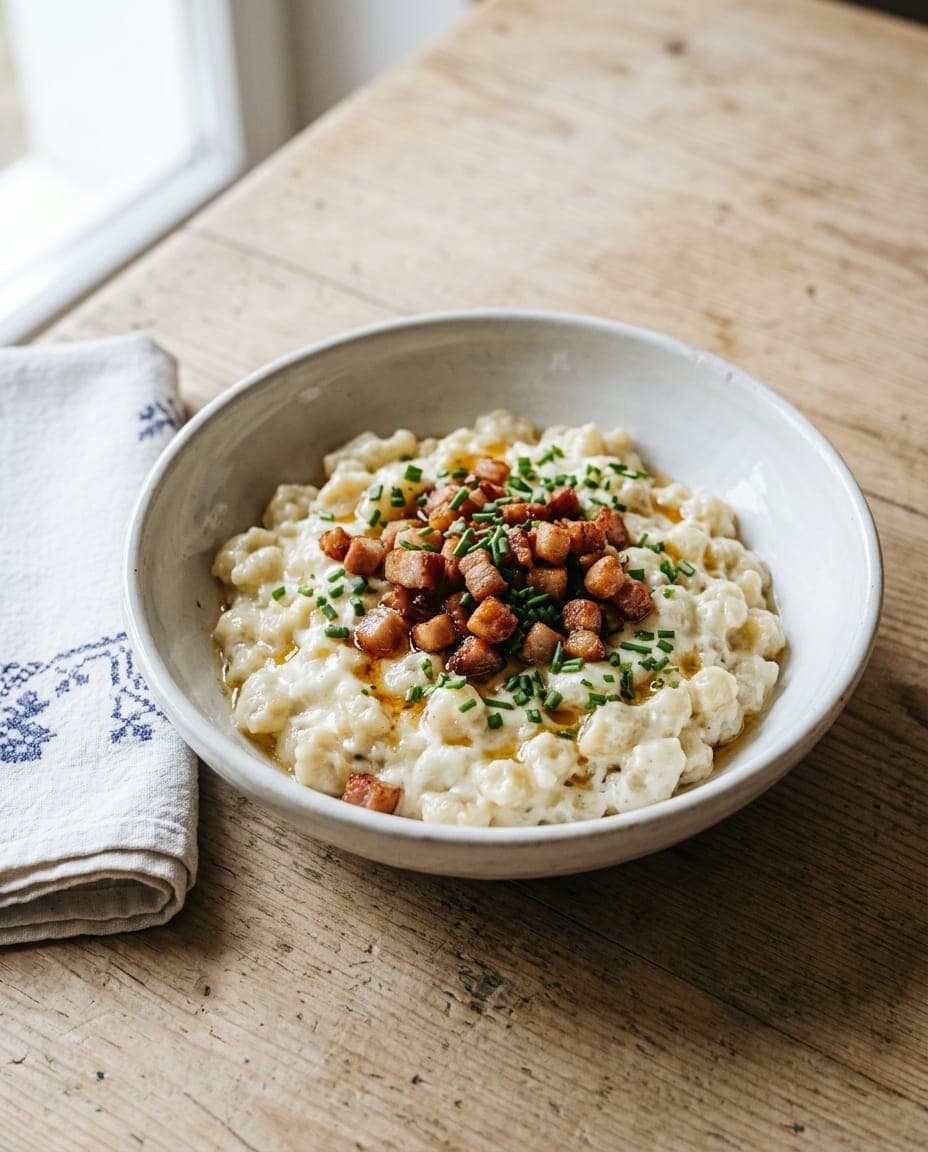
Bryndzové halušky are small, soft dumplings made from grated raw potato and flour, served with bryndza, a salty sheep's-milk cheese, and topped with fried bacon. The dish is widely regarded as Slovakia's national food, eaten across the country from the capital to the eastern border towns, though its true home lies in the mountains of central and northern Slovakia.
The dumplings are not dough in the usual sense. They are formed by pressing a mixture of raw potato and flour through a coarse grater or a special wooden board directly into boiling water. Once cooked, they are drained and tossed with generous amounts of bryndza, which melts slightly from the heat to coat every piece. The dish is finished with a layer of crispy smoked bacon and its rendered fat, often accompanied by a side of sour milk whey.
Three things and no technique: soft potato, sharp salty cheese, smoked fat. It was built to feed people working outside all day, and it has not been lightened since.
Where it comes from
The dish comes out of Carpathian sheep farming. Flocks go up to the summer pasture and the salaš — the sheepfold, its dairy, and now usually its restaurant — makes cheese there through the season. The potato arrived in these mountains in the 18th century and took to the thin soil better than grain did.
Putting the two together needed no inventor and has no recorded date: a shepherd's meal of what the farm had, cooked in one pot over a fire. What is unusual is that the arrangement still exists — the same pastures, the same cheese, the same dish, now also served to visitors who have driven up for it.
The cheese that defines it
The heart of bryndzové halušky is bryndza. This soft, spreadable cheese is made from sheep's milk and has a distinctively salty, slightly sour flavour. It is not aged like hard cheeses; instead, it is consumed fresh or lightly cured, maintaining a creamy consistency that blends easily with the warm dumplings.
Slovenská bryndza carries an EU protected designation, which ties the name to Slovak production and to a defined method. The flocks graze the slopes of the central Slovak ranges, and the cheese changes with what they are eating.
The quality of the cheese varies with the season. Sheep are milked only through the grazing months, and spring and summer bryndza, made from fresh cheese while the flocks are on the mountain meadows, is reckoned the best. Winter bryndza is made from stored sheep's cheese, often blended with cow's-milk cheese. This seasonal shift means that a bowl of halušky in July tastes different from one served in January, even if the recipe remains the same.
How it is eaten
Bryndzové halušky are typically served as a main course for lunch or dinner. The dish arrives in a deep bowl or plate, with the dumplings piled high and the cheese melted over the top. A generous layer of crispy bacon strips covers the surface, often glistening with hot fat that pools around the edges.
What comes with it is žinčica, the whey left over from making the cheese, served sour and cold in a small jug or cup. It is thin and sour, and it is an acquired taste that goes with the dish better than anything brewed.
The texture is the test. The dumplings should hold their shape and still be soft; worked too hard or left too long, they go to paste. A grind of pepper is as much seasoning as anyone adds.
Curious facts
- A national symbol. While not officially declared by law, bryndzové halušky are universally recognised as Slovakia's national dish and appear on menus from the smallest village tavern to the grandest hotel dining room.
- The whey is drunk, not thrown away. Žinčica, the by-product of making the cheese, is served alongside in a cup; nothing from the milk is wasted.
- The cheese is protected. Slovenská bryndza carries an EU protected designation tied to Slovak production and a traditional method.
- Seasonal flavour. The taste of the cheese changes with the season: spring and summer bryndza is made from fresh sheep's cheese, while winter bryndza relies on stored cheese, often with cow's milk blended in.
- The salaš is still working. The sheepfolds that make the cheese are the same places that serve the dish, which is the reason to eat it up there.
Where to try it
A salaš in the mountains: the sheepfold's own restaurant, open through the grazing season, with the dairy next door and long wooden tables outside. They sit at the end of unsurfaced roads in the central Slovak ranges, and the drive is the point as much as the lunch.
In the towns the dish is everywhere, and a tavern in Bratislava or Košice will do it properly — the thing to look for on the menu is ovčia bryndza, made from sheep's milk alone, rather than simply bryndza, which may be up to half cow's milk. It is served all year; the summer, when the flocks are up and the cheese is young, is when it tastes of the place it comes from.
Where to try it
2 regions

Bratislava
Bratislava lies along the banks of the Danube River, marking it as the largest city in Slovakia and the country's political and cultural hub. The city's medieval Old Town boasts a wealth of history, including the iconic Bratislava Castle, which offers panoramic views of the river and surrounding areas. Notably, the region is known for its wine production, particularly the white wines from the Small Carpathians, and the unique culinary offerings such as bryndzové halušky, a traditional potato dumpling dish. Nearby, the Little Carpathians offer scenic hiking trails and vineyards. The region also hosts various local festivals, highlighting traditional crafts and regional food, providing a genuine taste of Slovak culture.

Košice
Košice is Slovakia's second-largest city, offering a rich blend of history and culture. Known for its well-preserved medieval core, the city features the stunning St. Elisabeth Cathedral, the largest in Slovakia. The region is celebrated for its vibrant arts scene, with numerous galleries and theaters showcasing local talent. Nearby, the picturesque town of Prešov is famous for its well-preserved Renaissance architecture and unique folklore traditions. The surrounding mountains, including the High Tatras, provide excellent hiking opportunities and breathtaking landscapes. This area is also known for its wine production, particularly in the Tokaj region, where a unique blend of flavors awaits. Experience local festivals that celebrate the region's heritage, offering insights into Slovak traditions. This destination is ideal for those looking to explore away from the typical tourist crowds, enjoying authentic Slovak culture and hospitality.