Šaltibarščiai (cold beet soup)
Cold pink soup, hot potatoes, same mouthful
- Vegetarian
- Local name
- Šaltibarščiai
- Served with
- Hot boiled potatoes, dill
- Best eaten at
- A Vilnius summer café
- Pairs with
- Kvass or Lithuanian beer
What it is
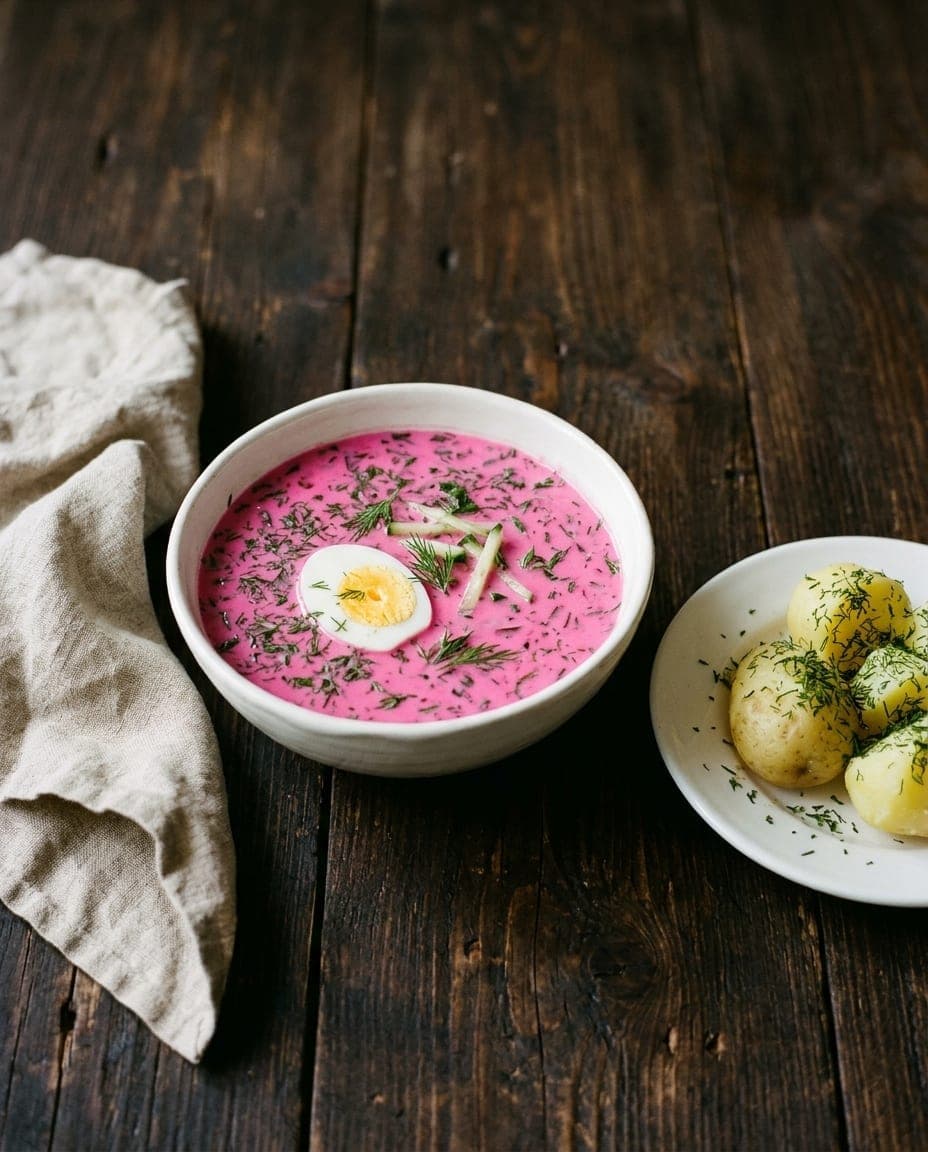
Šaltibarščiai is the most recognisable taste of a Lithuanian summer. It is a cold soup of bright pink colour, made from kefir or buttermilk mixed with grated boiled beetroot, fresh cucumber, dill and spring onion. The surface is often topped with chopped hard-boiled egg. The dish is defined by a single, deliberate contrast: it arrives at the table alongside a bowl of hot, plain boiled potatoes.
The combination of freezing cold soup and steaming hot potato is not an accident or a mistake. It is the essential structure of the meal. Diners dip a piece of hot potato into the cool, tangy soup, or eat a bite of potato and follow it with a mouthful of the soup. The temperature shift is the point. The heat of the potato cuts through the sharp chill of the beetroot and kefir, creating a balance that feels refreshing on a warm day.
It is not a delicate starter. A bowl of it with the potatoes is lunch. The grated beetroot gives the liquid a slight graininess, the cucumber stays crisp in it, and the colour — a flat, improbable magenta — is the first thing anyone notices.
A regional tradition
The soup is shared rather than Lithuanian alone. Poland has chłodnik, and Belarus and Latvia have their own chilled beetroot soups under their own names; the whole region eats a version of it, which is what happens when a short, hot summer meets a garden full of beetroot and a cellar full of soured milk.
In Lithuania, the dish has become a specific marker of the season. It is mostly a warm-weather dish, because a cold soup needs warm weather to make sense, and its season — fresh cucumbers, dill, then the first young beetroot — runs roughly from May to September. When the temperature rises, the soup appears in village kitchens and city cafés alike.
The tradition is strong enough to have its own festival. Since 2023, the capital city of Vilnius has held a Pink Soup Fest every year in late May or early June. It celebrates the dish with tastings around the city, music, a mass walk in pink and a contest for the pinkest outfit. It is a public acknowledgement that šaltibarščiai is more than just a meal; it is a seasonal ritual that marks the shift from spring to summer, and the festival draws crowds in the thousands.
What goes into it
There are no strict rules for the proportions, but the core ingredients remain consistent across almost every kitchen. The base is always a fermented dairy product, either kefir or buttermilk, which provides the tangy, slightly sour flavour that defines the dish. This liquid is mixed with grated boiled beetroot, which gives the soup its colour and body.
The vegetables added to the mix are fresh and raw. Cucumber is essential, usually peeled and coarsely grated or chopped. Dill is used generously, both stirred into the soup and sprinkled on top. Spring onion adds a sharp bite that cuts through the creaminess of the dairy. Some versions include boiled potatoes in the soup itself, but the standard form keeps the hot potatoes separate in a side bowl.
Chopped hard-boiled egg goes over the top, sometimes half an egg laid in the middle of the bowl. Nothing is cooked except the beetroot, the potatoes and the egg, and nothing is seasoned beyond salt — the sourness of the dairy does the work spices would do elsewhere.
How to eat it
The method matters more than the recipe. The soup and the potatoes are not two courses: a piece of hot potato goes onto the spoon with the cold soup, or is dipped into it, so that both temperatures arrive together. Eating them separately is not wrong, exactly, but it misses what the dish is for.
It is served as a main course at lunch, with the potatoes in their own bowl, salted and sometimes buttered and dusted with dill. A glass of gira — kvass, the lightly fermented bread drink — or a cold lager is the usual thing beside it.
Curious facts
- The colour is natural. The vivid pink hue comes solely from the grated beetroot. No food colouring is used in traditional versions.
- Temperature contrast. The dish relies on the deliberate clash between the freezing cold soup and the steaming hot potato.
- A seasonal clock. The soup appears mainly when the weather is warm enough, typically running from May to September.
- Shared heritage. Similar cold beetroot soups are common in Poland, Belarus and Latvia, reflecting a shared regional history.
- Festival food. Since 2023 Vilnius has hosted an annual Pink Soup Fest around the start of June to celebrate the arrival of the season.
Where to try it
Everywhere in Lithuania, from May onwards: on the blackboard of every tavern, in the summer cafés that put tables on the pavement in Vilnius, in the garden restaurants of the coast around Klaipėda. It is not a dish that needs seeking out in season, and it is much harder to find out of it.
Two things are worth timing. Early summer, when the beetroot is young and sweeter, gives the best version; and the Vilnius festival at the turn of May and June, which is the one weekend a year when the soup is the reason a city centre is full.
Where to try it
1 region
 Boat Rentals3 destinations
Klaipėda
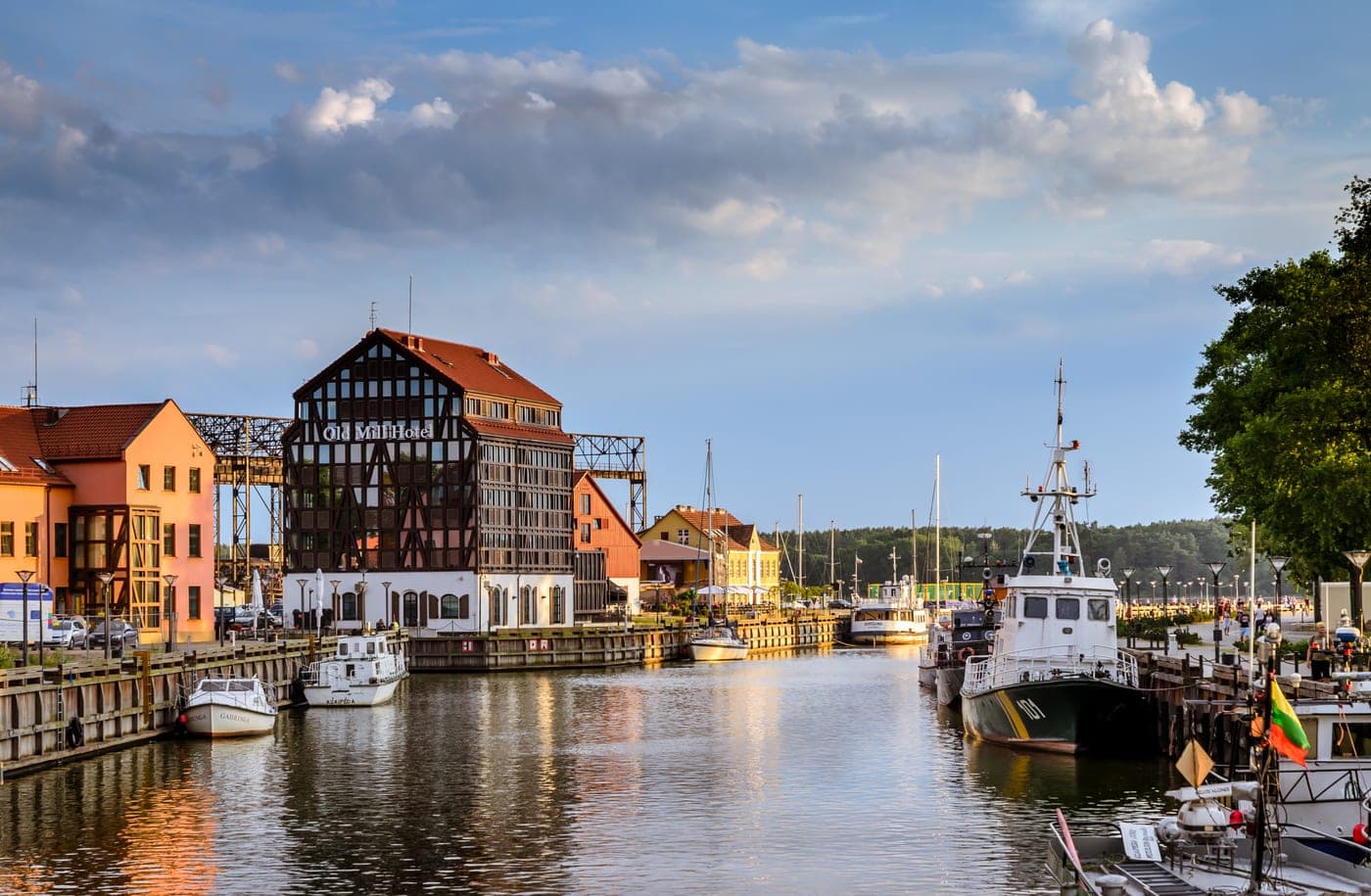
Klaipėda is Lithuania's only port city, offering unique access to the Baltic Sea. It features a blend of maritime history and vibrant culture, with its roots tracing back to the 13th century. Notably, the city is famous for the Curonian Spit, a UNESCO World Heritage Site that separates the lagoon from the sea, showcasing stunning dunes and diverse ecosystems. Explore the old town with its German-influenced architecture, including the iconic Theatre Square. Nearby, the quaint fishing village of Nida captivates with its scenic beaches and local crafts. The region is also known for its rich maritime traditions, local seafood cuisine, and annual festivals celebrating the sea and its heritage, providing a deeper understanding of Lithuanian culture beyond common tourist paths.
Boat RentalsHiking