Cepelinai
Potato dumplings named after airships
- Local name
- Cepelinai
- Served with
- Sour cream, bacon-onion sauce
- Best eaten at
- A Lithuanian karčema (tavern)
- Pairs with
- Lithuanian beer or gira
What it is
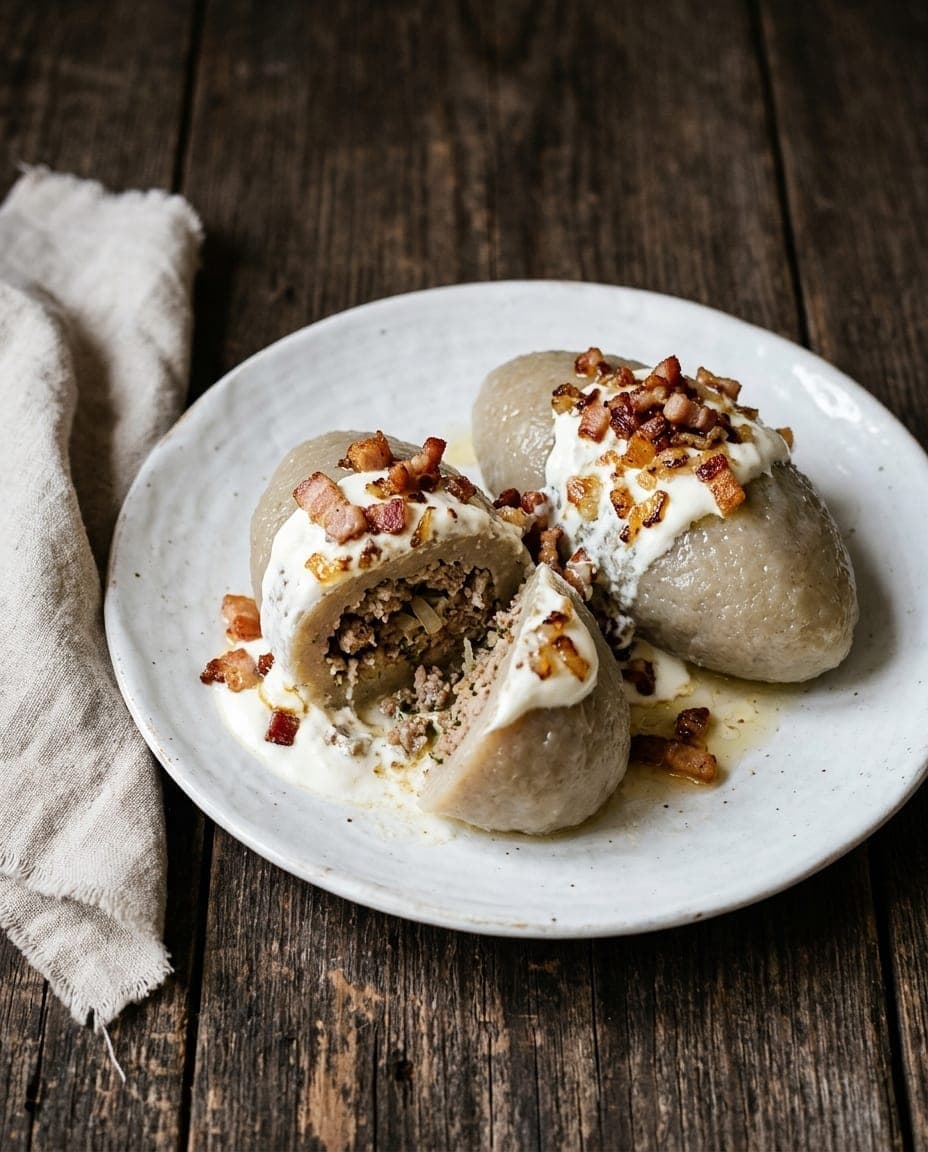
Cepelinai are Lithuania's best-known dish: large dumplings of potato, pointed at both ends, named after the airships they resemble. They are made from grated raw potato mixed with boiled mashed potato, shaped around a filling of minced pork, curd cheese or dried mushrooms, and boiled. The name cannot be older than the early 20th century; the older word for them, didžkukuliai, simply means big dumplings.
Two of them are a meal and a half. The outside has a slight slipperiness and a faint resistance from the raw potato, the inside is soft, and the filling sits in the middle of it. Lithuanians joke about the afternoon that follows, and the joke is not entirely a joke.
How they are shaped
The construction of cepelinai relies on a specific balance of potatoes. A cook must grate raw potatoes to create a sticky paste, then mix it with boiled and mashed potatoes to provide structure and prevent the dumpling from falling apart in the boiling water. This combination creates a dough that is sturdy enough to hold a generous amount of filling but soft enough to be pleasant to eat.
The shaping is done in the palm: a handful of the mixture flattened out, the filling set in the middle, the sides closed over it and the whole thing worked into a long oval with a point at each end. They go into simmering water — not a rolling boil, which splits them — and come out twenty-five minutes later holding their shape.
The fillings inside
The filling defines the character of each dumpling, with three main variations finding their way onto plates across the country. The most common version contains minced pork, often seasoned simply with salt, pepper, and a little fried onion to deepen the flavour. This meat-filled cepelinai is the standard offering in most households and taverns.
The second filling is varškė, the fresh curd cheese, which makes a lighter and milder dumpling; the sauce served over it is usually the same one, bacon and all. The third is dried mushrooms, soaked and chopped with fried onion — a filling that belonged to fast days and to households without meat, and which is still a common choice.
The sauce and the serving
The sauce is not optional and is half the dish: diced smoked bacon fried until it has given up its fat, onion softened in it, and sour cream stirred through off the heat so it does not split. It is poured over the dumplings on the plate, where the heat of the potato loosens it into a smoky cream.
Dill goes over the top, and a small plate of pickled cucumber or a sharp salad usually comes alongside to cut the fat. Most people do not finish the salad.
Where they come from
The potato reached this part of Europe late — brought to Lithuania in the 17th century, it spread from the manor estates into peasant fields only gradually and became a staple crop in the 19th — and before it the diet was rye, barley and what the forest gave. Within two or three generations the potato had rewritten the cooking, and cepelinai are the clearest evidence of it: a dish that could not have existed here before the crop did, now treated as the oldest thing on the menu.
They are eaten in every part of the country, Vilnius to the coast at Klaipėda, and are not a regional speciality at all. What differs from kitchen to kitchen is the ratio of raw to cooked potato, which is argued about with some energy.
How they are eaten
In a karčema, the Lithuanian tavern: two to a plate, under the sauce, with a knife and fork. The first cut releases the steam and the filling, and each forkful of potato is then taken with some of the sauce.
A single dumpling is an option in many places and worth knowing about. The drink is a Lithuanian lager or gira, the lightly fermented bread drink, sharp and barely alcoholic, which does the work the salad was supposed to do.
Curious facts
- The name has a date. The term cepelinai cannot be older than the early twentieth century, coinciding with the era of the famous Zeppelin airships that captured the imagination of the world.
- Two is a portion. It is also more food than most people expect, and ordering one is normal.
- The older name survives. Didžkukuliai, big dumplings, is the plainer Lithuanian word and has not disappeared.
- It is national, not regional. They are made in much the same way across the country; what varies is the proportion of raw to cooked potato in the dough.
- The potato's arrival. The dish demonstrates how the late arrival of the potato reshaped Lithuanian cuisine, turning a grain-based diet into one in which the potato is central.
- The dough greys without help. Grated raw potato oxidises quickly, so cooks work fast, squeeze out the liquid, add back the starch that settles from it, and often a little lemon juice or ascorbic acid to keep the colour.
Where to try it
A karčema — the Lithuanian tavern, usually wooden, usually with a long menu of heavy things — anywhere in the country, where cepelinai are on the lunch menu and made in the kitchen that morning. Vilnius has them in every second restaurant in the old town; the versions in small-town taverns are cheaper and often better, for the simple reason that they are made in smaller batches.
The thing worth asking is whether they are made on the premises. Frozen cepelinai exist, they are sold industrially, and the difference is immediate: a hand-made one has a slightly uneven grey-pink skin and holds its shape loosely, while a factory one is uniform and rubbery. A kitchen that makes its own will usually say so on the menu, and may run out by mid-afternoon.
Where to try it
1 region
 Boat Rentals3 destinations
Klaipėda
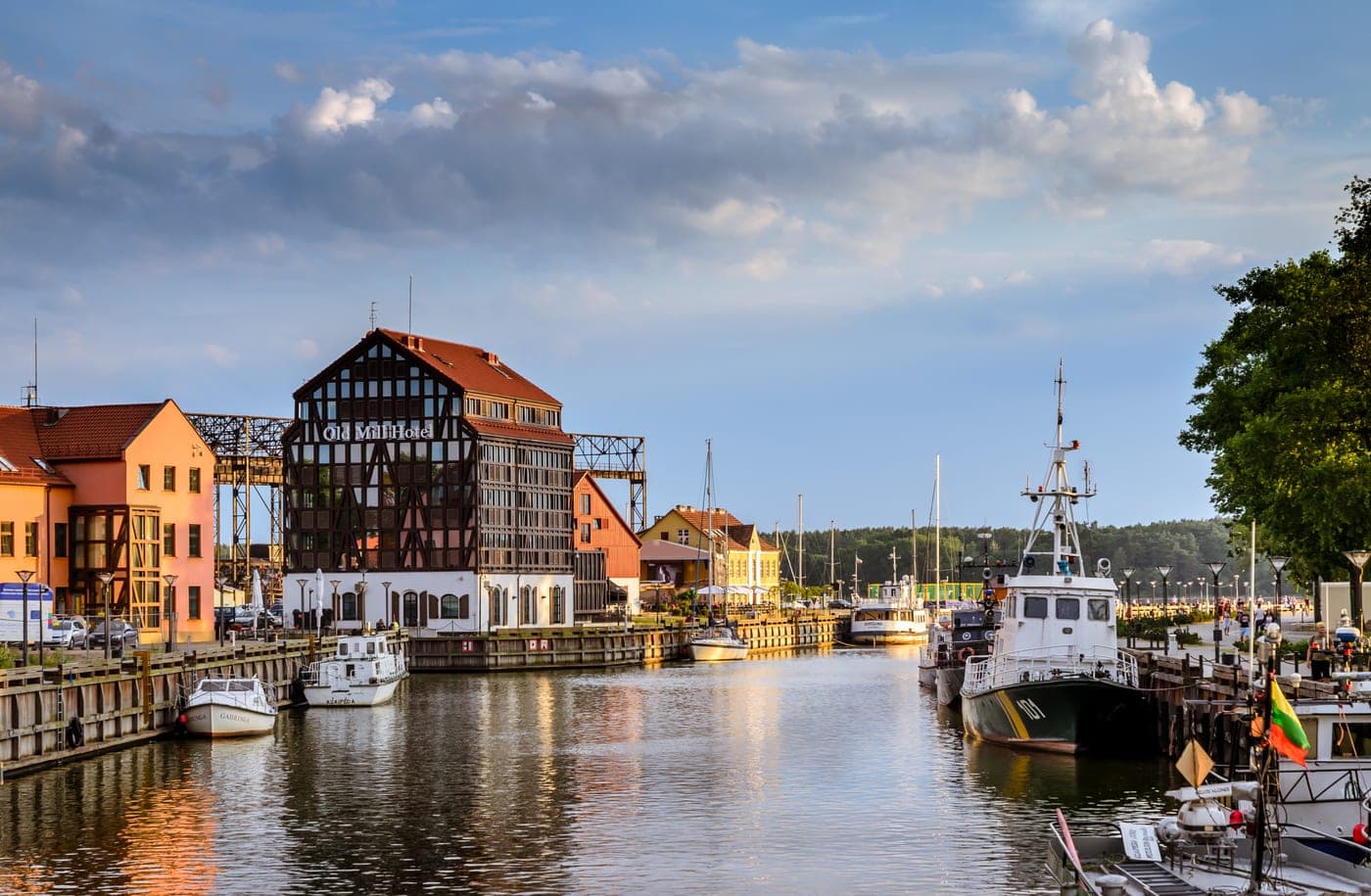
Klaipėda is Lithuania's only port city, offering unique access to the Baltic Sea. It features a blend of maritime history and vibrant culture, with its roots tracing back to the 13th century. Notably, the city is famous for the Curonian Spit, a UNESCO World Heritage Site that separates the lagoon from the sea, showcasing stunning dunes and diverse ecosystems. Explore the old town with its German-influenced architecture, including the iconic Theatre Square. Nearby, the quaint fishing village of Nida captivates with its scenic beaches and local crafts. The region is also known for its rich maritime traditions, local seafood cuisine, and annual festivals celebrating the sea and its heritage, providing a deeper understanding of Lithuanian culture beyond common tourist paths.
Boat RentalsHiking