Rūkyta žuvis (smoked fish)
Lagoon fish, alder smoke, waxed paper
- Local name
- Rūkyta žuvis
- Served with
- Dark rye bread
- Best eaten at
- A Curonian Spit smokehouse in Nida
- Pairs with
- Lithuanian beer
What it is
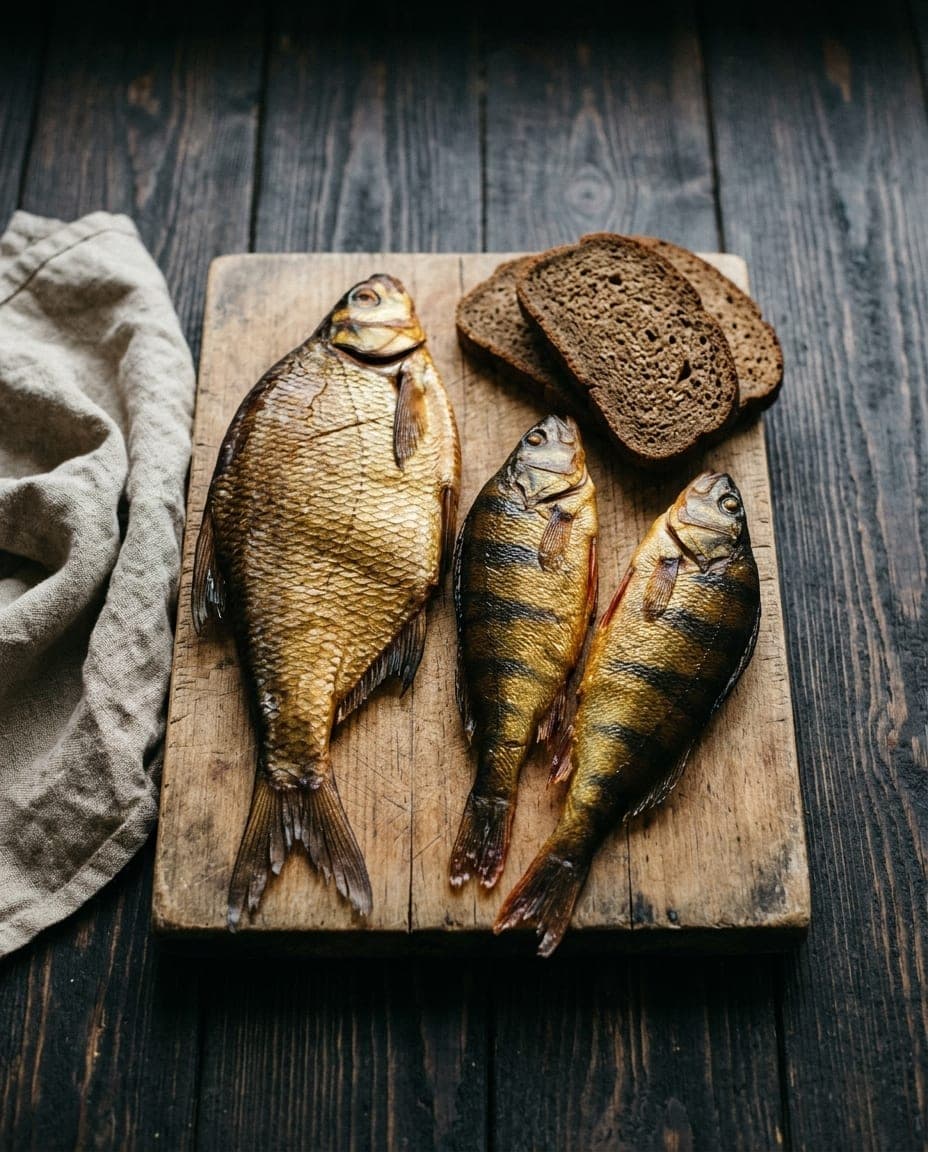
Rūkyta žuvis is simply smoked fish, and on the Lithuanian coast it is the food of the Curonian Lagoon and the Spit of dunes that closes it off from the Baltic. Bream, perch and pike go into the smokers; eel is the expensive one and the one most people stop for.
It is hot-smoked over alder in small smokehouses, in Nida on the Spit and in the fishing villages along the mainland shore of the lagoon. An hour or two of hot smoke cooks the fish and colours the skin deep amber; it keeps for a few days and is at its best within one. It comes wrapped in waxed paper, warm, with the oil already soaking through the wrapping.
Where it comes from
The Curonian Lagoon is a vast shallow freshwater bay held in behind the Curonian Spit — a bar of sand dunes nearly a hundred kilometres long — and open to the Baltic only through the narrow channel at Klaipėda. Shallow, warm and fed by the Nemunas, it holds bream, perch, pike and eel, and fishing it has been the work of the Spit's villages for as long as they have existed.
In Nida, the main village on the Lithuanian half of the Spit, the smokehouses are wooden sheds and small brick buildings with chimneys, set among the old wooden fishermen's houses near the lagoon shore. They sell at a hatch to whoever is standing there when the fish comes out, which is why there is usually a small queue of people waiting in the smell of the smoke.
How it is eaten
The tradition here is casual and immediate. Rūkyta žuvis is rarely served on a plate with cutlery in the traditional sense. Instead, it is placed on a sheet of waxed paper or a simple cardboard tray, sometimes accompanied by a small piece of dark rye bread. Diners often stand near the smokehouse or sit on wooden benches nearby, tearing the fish apart with their hands.
Eel is the one people queue for: oily, dense, almost buttery, and sold by weight at a price that reflects it. Dark rye bread is the standard partner, sour and dense enough to stand up to the oil, and a Lithuanian lager is the usual drink. It is eaten on a bench, or on the dune, looking at the water the fish came out of.
What goes into it
Three things: the catch, the alder, the heat. Salt before smoking, and usually little else — no sugar, no glaze.
- Eel, dense and oily, sold by weight and the priciest of the lot.
- Bream, a common lagoon fish that smokes well and offers a flaky texture.
- Perch, which holds its shape during smoking and provides a leaner alternative.
- Alder wood, used for the fire to create the characteristic sweet smoke.
- Dark rye bread, served alongside to balance the salt and fat.
The fish is sold warm, often still steaming from the smokehouse. It is not a dish meant for long storage or cold serving; it is best on the day it leaves the smoke.
Curious facts
- Sold warm, eaten warm. It comes out of the smoker in batches; cold is a different and lesser thing.
- Alder, not beech. The wood is alder, which smokes sweet, and it is the other half of the taste.
- Salt, mostly. Some smokers add a little pepper or garlic, but the best keep it plain — the fish and the smoke.
- No table required. A bench, a dune or the bonnet of a car; waxed paper instead of a plate.
Where to try it
Nida, where the smokehouses sit among the dunes and the sheds sell at a hatch, and the fishing villages along the mainland shore of the lagoon between Klaipėda and the Nemunas delta, which are quieter and cheaper. Many of the Spit's smokers work hardest through the summer and reduce their hours out of season.
The way to find one needs no address: the smell of alder smoke, and a handful of people standing about waiting for a tray to come out.
Where to try it
1 region
 Boat Rentals3 destinations
Klaipėda
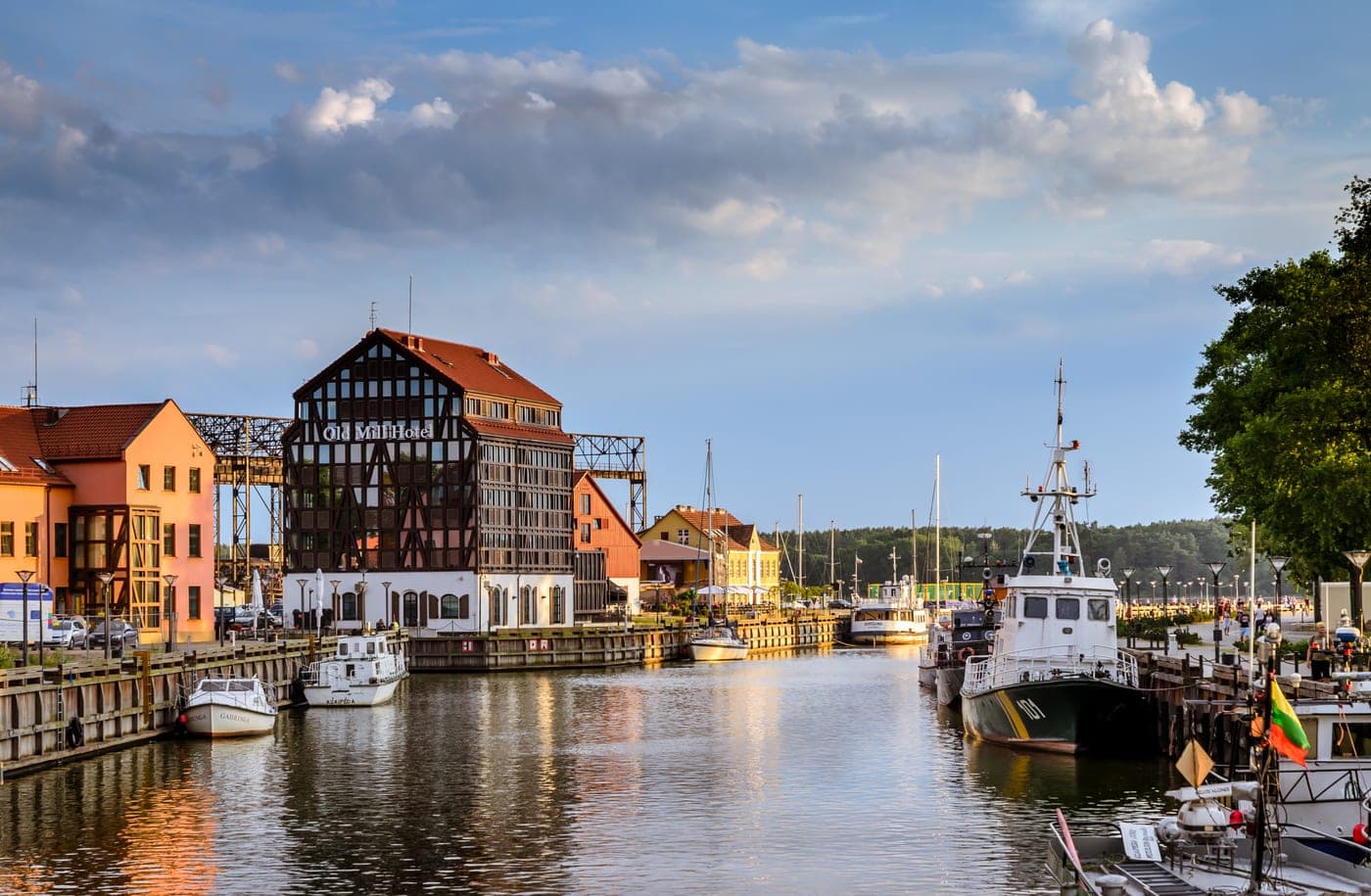
Klaipėda is Lithuania's only port city, offering unique access to the Baltic Sea. It features a blend of maritime history and vibrant culture, with its roots tracing back to the 13th century. Notably, the city is famous for the Curonian Spit, a UNESCO World Heritage Site that separates the lagoon from the sea, showcasing stunning dunes and diverse ecosystems. Explore the old town with its German-influenced architecture, including the iconic Theatre Square. Nearby, the quaint fishing village of Nida captivates with its scenic beaches and local crafts. The region is also known for its rich maritime traditions, local seafood cuisine, and annual festivals celebrating the sea and its heritage, providing a deeper understanding of Lithuanian culture beyond common tourist paths.
Boat RentalsHiking