Get slow travel tips delivered to your inbox
A short message when something worth the trip lands. Reply STOP anytime.
By subscribing, you agree to be contacted via WhatsApp. Privacy policyOccasional letters in your inbox — with recommendations, maps and routes.
By subscribing to newsletter, you agree to our privacy policy.Found in 11 regions

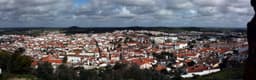
Alentejo, the largest region in Portugal, features a rich agricultural landscape dotted with vineyards and olive groves. It is known for its unique wines, particularly the robust reds from the Alentejo DOC. The region is home to Évora, a UNESCO World Heritage site with Roman ruins and medieval architecture, and Monsaraz, a hilltop village offering stunning views of the surrounding plains. Alentejo’s coastline, though less frequented, boasts beautiful beaches like Praia da Amália. Additionally, the region is famous for its traditional festivals, such as the Festa de São João in Évora, where locals celebrate with music and dance. Travelers will find a slower pace of life here, with opportunities to explore local markets and sample regional delicacies like açorda and queijos.

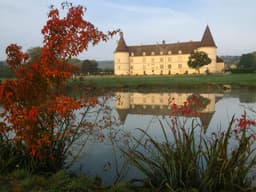
Bourgogne-Franche-Comté is France's largest region, rich in history and culture. It's renowned for its exceptional wines, particularly those from the Burgundy area, which produce some of the world's finest Pinot Noir and Chardonnay. The region features historic cities like Dijon, known for its mustard and vibrant markets, and Besançon, famous for its citadel and watchmaking heritage. Natural landscapes include the Jura mountains and the picturesque Doubs River, perfect for hiking and cycling. The region is dotted with charming villages such as Arbois and Nans-sous-Sainte-Anne, offering a taste of local crafts and cuisine. Festivals celebrating wine and regional traditions add to its cultural depth, attracting those looking to experience France beyond the usual tourist paths.

Flanders is the Dutch-speaking region of northern Belgium, and its short distances between towns hide a slow, layered kind of travel. Villages in Flanders and its larger cities share a way of asking for attention: a market square, a belfry, a stretch of canal reflecting brick gables. The pace here rewards stopping, and the region's compact size makes it possible to settle into a handful of places instead of covering ground. The medieval old towns are the backbone of any Flanders itinerary. Ghent carries the largest and least polished of them, its student population keeping the streets lived-in. Bruges is smaller and more carefully kept, its canal loop and lace-making tradition drawing people who want the postcard version of Flanders done well. Antwerp brings energy to the mix: a working port, a Baroque cathedral, a fashion district, and a diamond trade still run on old trust. Mechelen and Leuven sit close to the bigger cities and carry the same belfry-and-canal character at a quieter volume. Flemish painting shaped much of what these cities still show today. Ghent's cathedral holds an early masterpiece of Flemish painting, and Antwerp's museums keep strong collections from the city's own Baroque painters. These works were made for the churches and guild halls that still stand on the same streets, which gives them a different weight than seeing them somewhere unconnected to their making. Beer culture in Flanders runs deep and steady. Trappist monasteries brew to support their communities, following recipes kept inside their own walls for generations, and abbey beers named after those monasteries fill the menus of ordinary town cafés. A brown café in Ghent or Antwerp — dim, wood-panelled, unhurried — is where this culture is actually lived, over a single well-poured glass at a corner table. Chocolate carries a similar seriousness. Family-run chocolatiers in Bruges, Ghent and Antwerp still hand-dip pralines and temper chocolate by hand, and a short exchange with the person behind the counter often teaches more than any shop sign. A small box eaten the same afternoon suits the tradition better than a large one carried home. Flanders' countryside opens quickly beyond the larger cities into flat farmland, poplar-lined canals, and villages that rarely appear on an international itinerary. Damme, close to Bruges along a canal path, holds a windmill, a church and a handful of houses, and needs little more than that. Further south and east, the villages around Ypres carry the memory of the First World War: cemeteries, memorials, and the Last Post sounded each evening at the Menin Gate sit alongside the region's more familiar reputation for beer and lace. The coast changes the rhythm again. Oostende keeps a working fishing fleet and a long promenade, while smaller resorts such as De Haan hold onto early-twentieth-century villas and quiet dunes once summer ends. The flat sand and open sky offer a clear contrast to the cobbled squares and canal reflections inland. Traditions stay visible through the year. Processions, guild festivals, and beer events give each town its own calendar, kept by the community rather than staged for visitors. Slow travel here means choosing depth over distance. The region's small scale makes it tempting to plan a long list of towns, but it holds together better when explored through fewer stops, each one given room to open up: a market square seen at different times of day, a canal walk repeated at dusk, a return visit to the same chocolate shop once the first box runs out. Ghent and Bruges alone hold enough layers — museums, churches, quiet residential streets away from the centre — to fill a visit, and pairing either with a coastal stop or a village like Damme adds contrast without adding rush. Flanders rewards this kind of attention because so much of its character sits just below the surface: a monastery's own beer recipe, a canal town's working history before tourism arrived, a village whose only claim is a windmill and a church that has stood for generations. Most of it opens up only once the rushing stops.

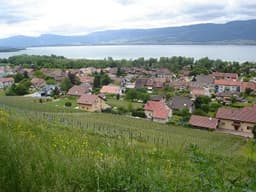
Fribourg is a Swiss region built for a slower pace. It sits between the French- and German-speaking parts of the country, and that mix still shapes daily life here — road signs change language partway through the canton, and the same cheese is sold under two names at the same market stall. The regional capital, also named Fribourg, sits on a sandstone hill above a bend in the Sarine river. Its old town is one of the larger medieval centres in Switzerland, with covered wooden bridges, a Gothic cathedral, and streets so steep that some are built as steps rather than roads. From the ramparts, the river loops below and the rest of the canton spreads out towards the hills. South of the city, the land softens into rolling dairy country. This is Gruyère territory, named after both the cheese and the small walled town of Gruyères that still gives it its name. Around Gruyères and the nearby town of Bulle, farms and mountain huts still make cheese by hand through the summer months, when herds move up to the high pastures. Several dairies open their doors to visitors watching a wheel of Gruyère being pressed and salted, a process that has changed very little over generations. The landscape rises further south into pre-alpine terrain: green terraces, scattered timber barns, and villages built from wood that has weathered dark over centuries. Walking paths here follow old cattle tracks between pasture and forest, gentle enough for an unhurried afternoon rather than a full day's climb. In autumn, cattle are led back down from the alpine pastures in a tradition still marked with flowers, bells, and a village gathering — one of the few moments when the summer's quiet farm work becomes a public event. To the north and west, the canton reaches Lake Neuchâtel and Lake Murten. Murten itself is a walled medieval town on the water, small enough to circle on foot within the hour, with a lakeside promenade that fills with café tables in summer. In warmer months, passenger boats cross the lake to nearby towns, a pleasant way to spend an afternoon without hurrying. One of the quieter pleasures of the region is its local railway, which climbs from the lowland towns into the hills in short, unhurried stages, following the river through farmland before a hilltop town's towers come into view above the tracks. These are working regional trains rather than tourist rides, and that is much of their charm — riders share the carriage with people going to market or coming home from the fields. Food shapes much of what there is to do here. Beyond cheese, the region is known for its double cream, for meringues eaten with that cream, and for a dried, air-cured meat found across French-speaking Switzerland. Village markets, especially in Bulle and Fribourg itself, are where these products change hands directly between maker and buyer, often with a taste offered first. A comfortable way to see Fribourg is over three to five days: a day or two in the old town and along the Sarine, a day around Gruyères and its cheese dairies, and a day or two further into the hills or out to Murten and the lake. Trying to fit it into a single day usually means choosing between the city and the countryside, and both reward more time than that. What makes the region worth this pace is less any single sight than how its parts connect — a cathedral town, a cheese-making valley, alpine pastures, and a lakeside village, all within a canton small enough to move between slowly and still see plenty. Fribourg does not have the scale of the Bernese Oberland or the fame of Lake Geneva, but it holds a quieter version of the same Swiss countryside, with fewer crowds and more time to notice the details: the smell of a cheese cellar, a wooden bridge underfoot, the particular green of a pasture after rain.

Known for its exceptional wines, this region is home to diverse vineyards producing Tempranillo and Garnacha grapes. The only wine-producing region in Spain with a Denomination of Origin status, La Rioja is characterized by rolling hills and the Ebro River. Historic towns like Haro offer wine cellars and local festivals, while the capital, Logroño, is famous for its vibrant tapas scene along Calle Laurel. The region features ancient monasteries, such as San Millán de la Cogolla, a UNESCO World Heritage site. Hikers can explore the Sierra de la Demanda mountains, and traditional crafts like pottery and leatherwork are still practiced in small villages. La Rioja’s landscapes vary dramatically, providing a rich tapestry of cultural experiences.

Nestled along the Adriatic Sea, this region boasts a mix of mountains and coastline, making it the only Italian region with a significant maritime presence. As Italy's fourth smallest region, it features historical towns like Urbino, known for its Renaissance heritage and UNESCO status, and Ascoli Piceno, famous for its travertine architecture. The landscape is dotted with rolling hills, vineyards, and olive groves, producing notable wines such as Verdicchio and Rosso Piceno. Culture thrives here through local festivals celebrating traditional crafts and cuisine, particularly the renowned olive all'ascolana. Rich in history, the region invites exploration beyond the typical tourist paths, showcasing authentic village life and regional gastronomy.

This expansive region is the largest in France, boasting a stunning coastline along the Atlantic Ocean. Known for its diverse landscapes, Nouvelle-Aquitaine features the Pyrenees mountains, rolling vineyards, and historic towns. Bordeaux, the region's major city, is celebrated for its world-class wines, particularly Merlot and Cabernet Sauvignon. Other notable areas include the picturesque village of Saint-Émilion and the stunning Dune du Pilat, the tallest sand dune in Europe. The region's rich history is reflected in its architecture, with medieval castles and Roman ruins scattered throughout. Local markets offer artisan cheeses and fresh seafood, highlighting the region's culinary delights. Festivals celebrating wine and local culture are common, providing deeper insights into the area's heritage.

Saxony-Anhalt is a historically rich region known for its diverse landscapes and cultural heritage. It is home to the Harz Mountains, offering scenic hiking trails and charming towns like Wernigerode and Quedlinburg, a UNESCO World Heritage site with well-preserved medieval architecture. The region's largest city, Magdeburg, features the stunning Cathedral of St. Maurice and St. Catherine. Notably, Saxony-Anhalt is recognized for its wine production along the Saale-Unstrut wine route. The region is also famous for the Bauhaus movement's roots in Dessau, where the iconic Bauhaus School was founded. Festivals celebrating local traditions abound throughout the year, providing unique insights into regional culture.

Skåne, Sweden's southernmost region, is known for its diverse landscapes, from sandy beaches to rolling farmland. Malmö is the largest city, famous for its modern architecture and vibrant cultural scene, while Lund boasts a historic university and medieval charm. The region features a unique blend of Danish influence and Swedish traditions, evident in its cuisine, particularly in the use of locally sourced ingredients and seafood. Skåne is also home to the scenic Öresund Strait and picturesque coastal towns like Ystad, known for its medieval streets. The area hosts several local craft markets and food festivals, providing authentic experiences beyond typical tourist attractions. The Skåne Trail offers stunning hiking routes through its varied terrains, allowing for deeper exploration of this culturally rich region.

Tuscany, known for its rolling hills and rich history, is the second-largest region in Italy. Florence, its capital, is renowned for Renaissance art and architecture, but also worth exploring are smaller towns like Pienza, famous for pecorino cheese, and San Gimignano, known for its medieval towers. The region boasts diverse landscapes from the Chianti vineyards to the coastal Maremma. Tuscany is also celebrated for its local festivals, such as the Palio di Siena, and its traditional cuisine that emphasizes fresh, local ingredients. This area offers a glimpse into Italy's agrarian past with its rustic farms and olive groves, making it a unique place to slow down and connect with the local culture.

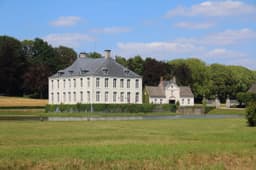
Wallonia, the French-speaking region of Belgium, is known for its rich history and diverse landscapes. It is the largest region in the country, featuring cities like Liège, Namur, and Charleroi, each with unique cultural offerings. The region is famous for its stunning countryside, dotted with picturesque villages, and the Meuse River, which provides scenic vistas and outdoor activities. Wallonia is also home to several UNESCO World Heritage sites, including the Grand-Hornu industrial complex. The area boasts local specialties like artisan cheeses and Trappist beers. For history enthusiasts, the medieval towns of Durbuy and Bouillon offer a glimpse into the past with their ancient castles and cobblestone streets. Wallonia's hidden gems and natural beauty create a compelling backdrop for a leisurely exploration of Belgian heritage.