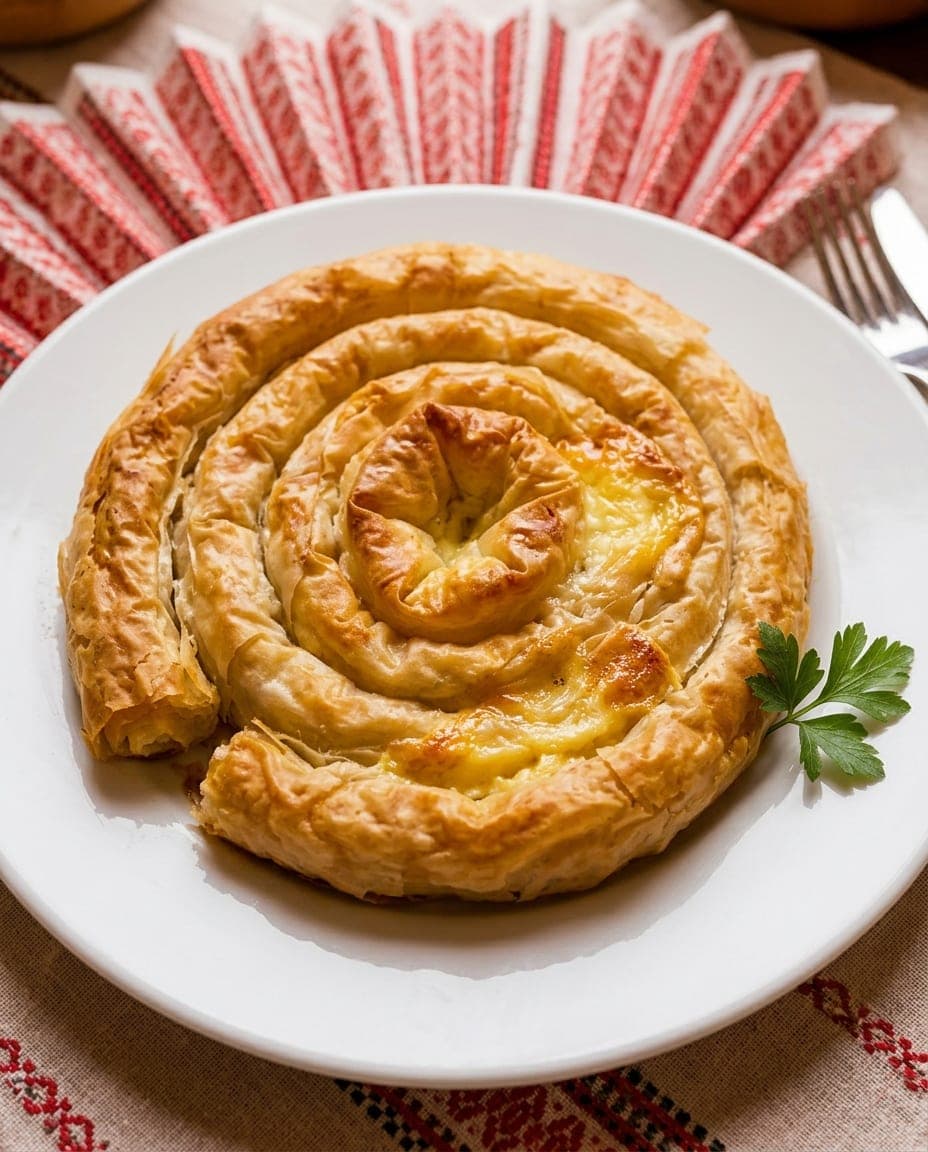
Shopska salata
A salad in the colours of the flag
- Local name
- Шопска салата
- Served with
- Grilled meats, bread
- Best eaten at
- A Bulgarian mehana (tavern)
- Pairs with
- Rakia
What it is
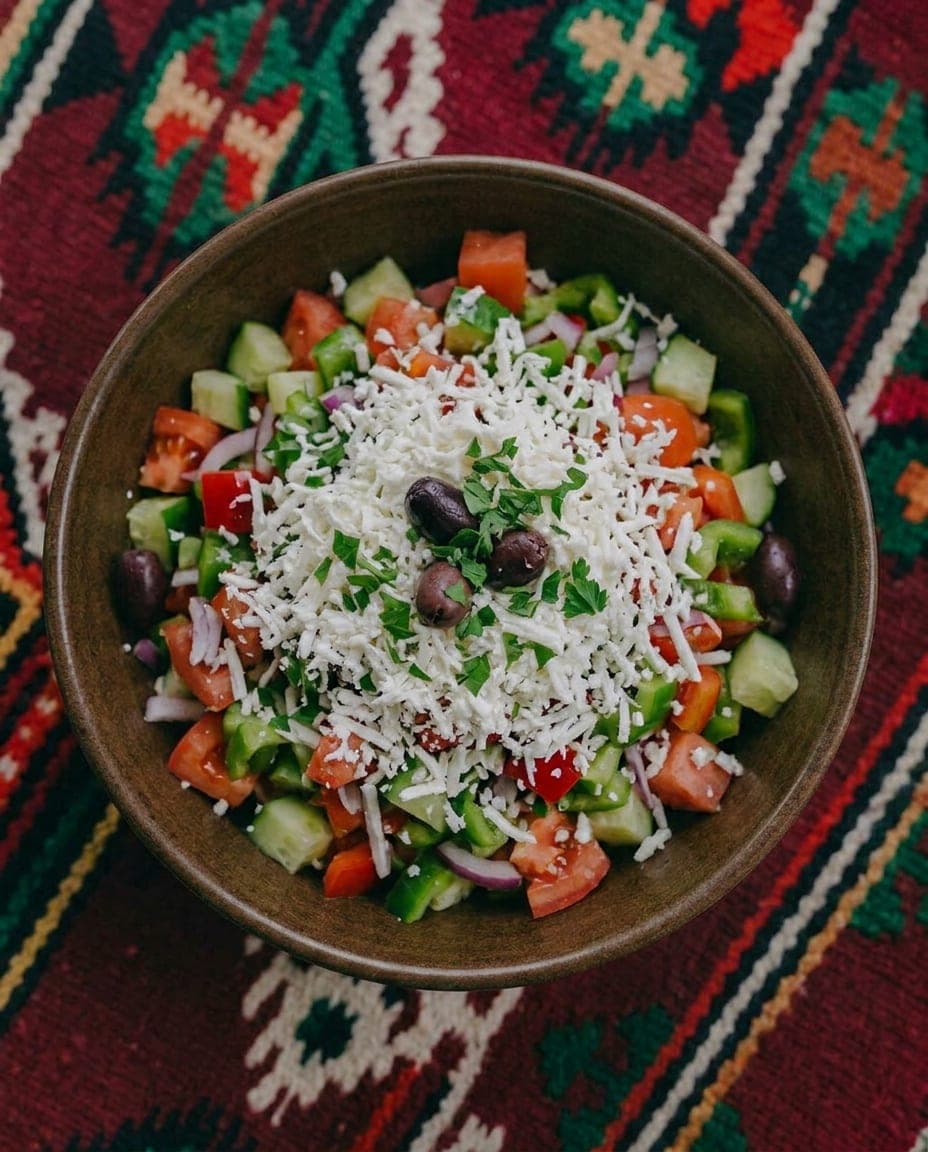
Shopska salata is the most recognisable dish in Bulgaria and on the menu of almost every tavern in it. Chopped tomato, cucumber, green pepper and onion, dressed with sunflower oil and vinegar, parsley over the top, and then the layer that makes it: grated sirene, the brined white cheese, heaped over the lot until the vegetables underneath are hidden.
The dish is not ancient. While the ingredients are traditional staples of the Balkan table, the specific combination known as Shopska salata is generally credited to Balkantourist, the state tourism organisation, which gave it its name in 1956; the chef Petar Doychev, working at a restaurant in the Druzhba resort near Varna, is usually named as its creator. Its white cheese, green cucumber and pepper and red tomatoes echo the colours of the Bulgarian flag, by most accounts a coincidence that was happily put to promotional use. Despite this modern origin story, it has become deeply embedded in daily life and is now treated as a national icon.
The name points to the Shopi, the people of the region around Sofia, who have their own dialect and a reputation for bluntness in the rest of the country. The salad is eaten all year, and is worth eating in August and merely acceptable in February, for the obvious reason.
How it came to be a national symbol
The creation of Shopska salata was part of a broader effort in mid-20th century Bulgaria to present a coherent image of the country to the outside world. Before this period, various regional salads existed across the Balkans, each with slight variations depending on the harvest and local tastes. Balkantourist developed five or six new salads to be served reliably in hotels and restaurants catering to foreign guests, and Shopska is the only one that survived.
The ingredients were what the Bulgarian summer already had in abundance: tomatoes, peppers and cucumbers. The addition of sirene, a brined white cheese made from cow's, sheep's or goat's milk, provided a salty contrast that balanced the acidity of the vinegar and the sweetness of the vegetables. Because these elements happened to mirror the national flag, the salad became more than a meal; it became a visual representation of the country itself.
Whatever its origin, it stopped being a marketing exercise a long time ago. It is on the table at home, at weddings and at village feasts, and a summer meal without it would be remarked on. The invention story still has its variants — one dates the first recipe to 1954–55 — but the Balkantourist and Doychev version is the one most often told.
What goes into it
There are no strict rules for the proportions, yet every cook agrees on the essential components. The base is always fresh vegetables, chopped into small, neat cubes rather than large chunks.
- Tomatoes, ripe and red, form the foundation of the dish. They must be juicy enough to provide a little natural dressing.
- Cucumbers, fresh and peeled or unpeeled according to the cook, cut to the same size as the tomato.
- Green peppers, sweet and mild, are essential for the colour balance and the characteristic crunch.
- Onions, usually white or red, are sliced thinly to provide a sharp bite without overwhelming the other flavours.
- Fresh parsley, chopped finely, is sprinkled over the top for a hint of herbal freshness.
- Sirene, the defining element, grated in a thick layer over everything. A brined white cheese, salty and slightly sour, made from cow's, sheep's or goat's milk.
The dressing is simple: sunflower oil and vinegar, sometimes with a pinch of salt if the cheese is not salty enough. No mayonnaise or cream is used. The result is a light, refreshing salad that relies on the quality of the vegetables and the texture of the cheese rather than heavy sauces.
How it is eaten
Shopska salata is a starter, and it arrives before the grill does — before kebapche, the long grilled minced-meat rolls, or kyufte, the patties, or a kavarma in its clay pot.
In a traditional Bulgarian mehana, a type of tavern known for its rustic atmosphere and hearty food, the salad is placed in a large bowl at the centre of the table. Diners serve themselves or have it portioned out individually before the meat arrives. It is eaten with a fork, often alongside a piece of crusty bread to soak up any remaining oil or cheese crumbs.
The pairing is fixed. Rakia — the clear fruit brandy of the Balkans, made from plums, grapes or apricots — comes with the salad and not with the meat, and the two arrive together at the start of the meal. The sequence is close to a rule: salad and rakia, then the grill. Ordering the brandy only once the meat arrives is something locals rarely do.
Curious facts
- A flag in a bowl. The red tomatoes, green cucumbers and peppers and white cheese match the Bulgarian national flag, by most accounts a coincidence that the tourism industry was glad to promote.
- The Shopi connection. The name refers to the Shopi people, a cultural group from the region around Sofia, whose traditions and dialects are distinct from other parts of Bulgaria.
- A modern classic. Despite its status as a national icon, the salad is not an ancient tradition but rather a mid-century creation of the state tourism industry, first served on the Black Sea coast.
- The rakia ritual. The standard sequence in Bulgarian dining places the salad and a glass of rakia before any meat dish, a rule followed in most traditional taverns across the country.
- No mayonnaise. Like the other Balkan summer salads it has none, and no cream either: oil, vinegar and a great deal of cheese.
- A summer staple. While eaten year-round, the salad reaches its peak in summer when the local tomatoes and cucumbers are at their most juicy and sweet.
Where to try it
A mehana — the Bulgarian tavern, wooden-walled, usually with a grill at the back — anywhere in the country. The Shopi region around Sofia is where the name comes from; the Black Sea coast near Varna is where it was first served, and Burgas and Varna serve it to everyone who sits down, before the fish as readily as before the meat.
The only thing worth checking is whether it is made to order. Cut when it is ordered, the tomato is still firm and the cheese sits dry on top; made in a tray that morning, the whole thing has gone to liquid in the bottom of the bowl. In summer, a tavern with its own garden or a supplier up the road is the difference between a good salad and a great one.
Where to try it
2 regions
 Boat Rentals1 destination
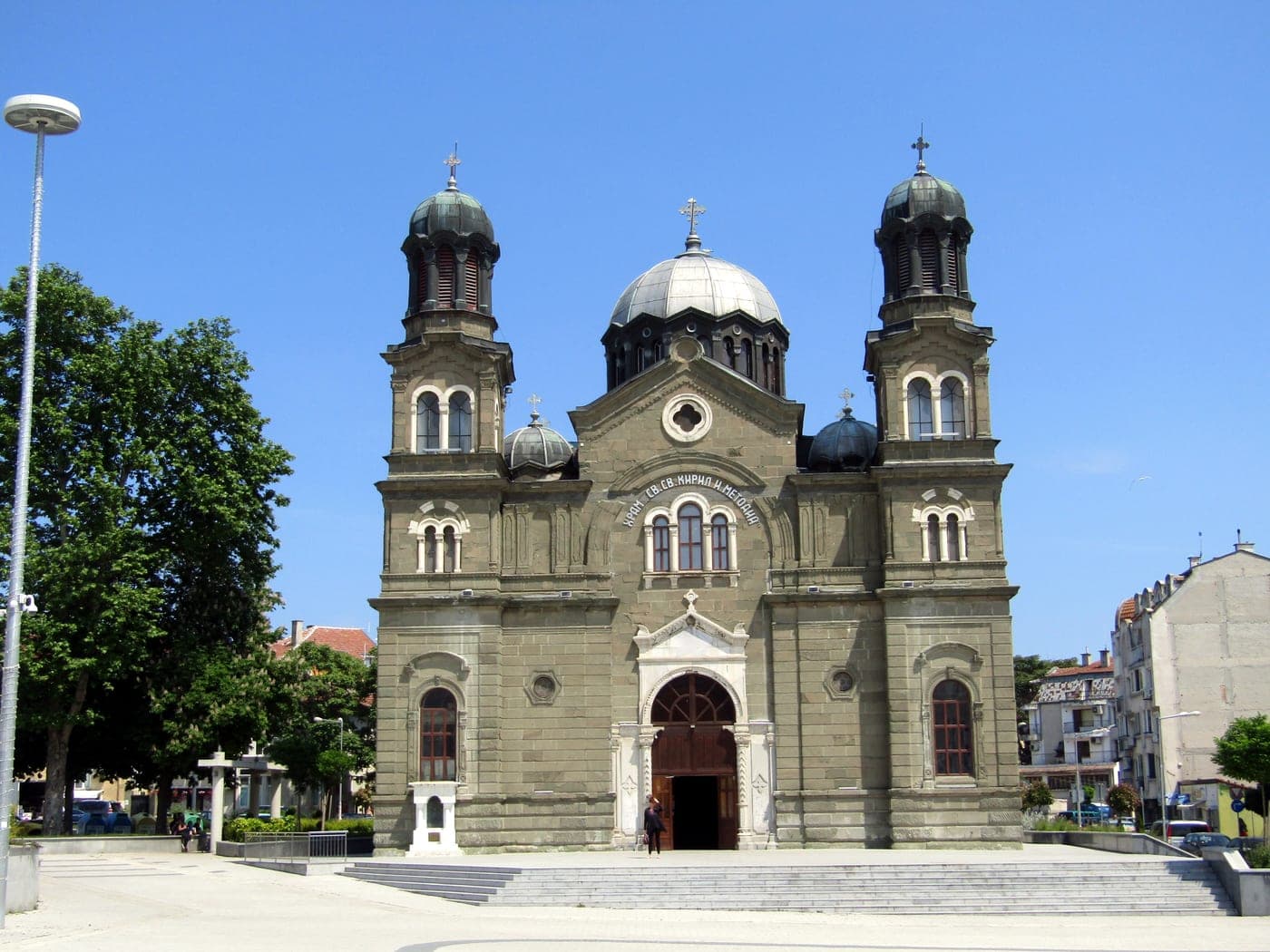
Burgas
Burgas is the largest city on Bulgaria's Black Sea coast and serves as an important cultural and economic center. Known for its diverse blend of natural beauty and urban life, the region features stunning beaches, lush parks, and the scenic Burgas Lake, attracting bird watchers and nature enthusiasts. The city also hosts the annual Burgas Sand Fest, showcasing intricate sand sculptures. Nearby, the ancient town of Sozopol offers a glimpse into Bulgaria's maritime history with its preserved architecture. This region is unique for its rich folklore and local seafood cuisine, making it a delightful destination for those seeking authenticity away from the crowds.
Boat RentalsHiking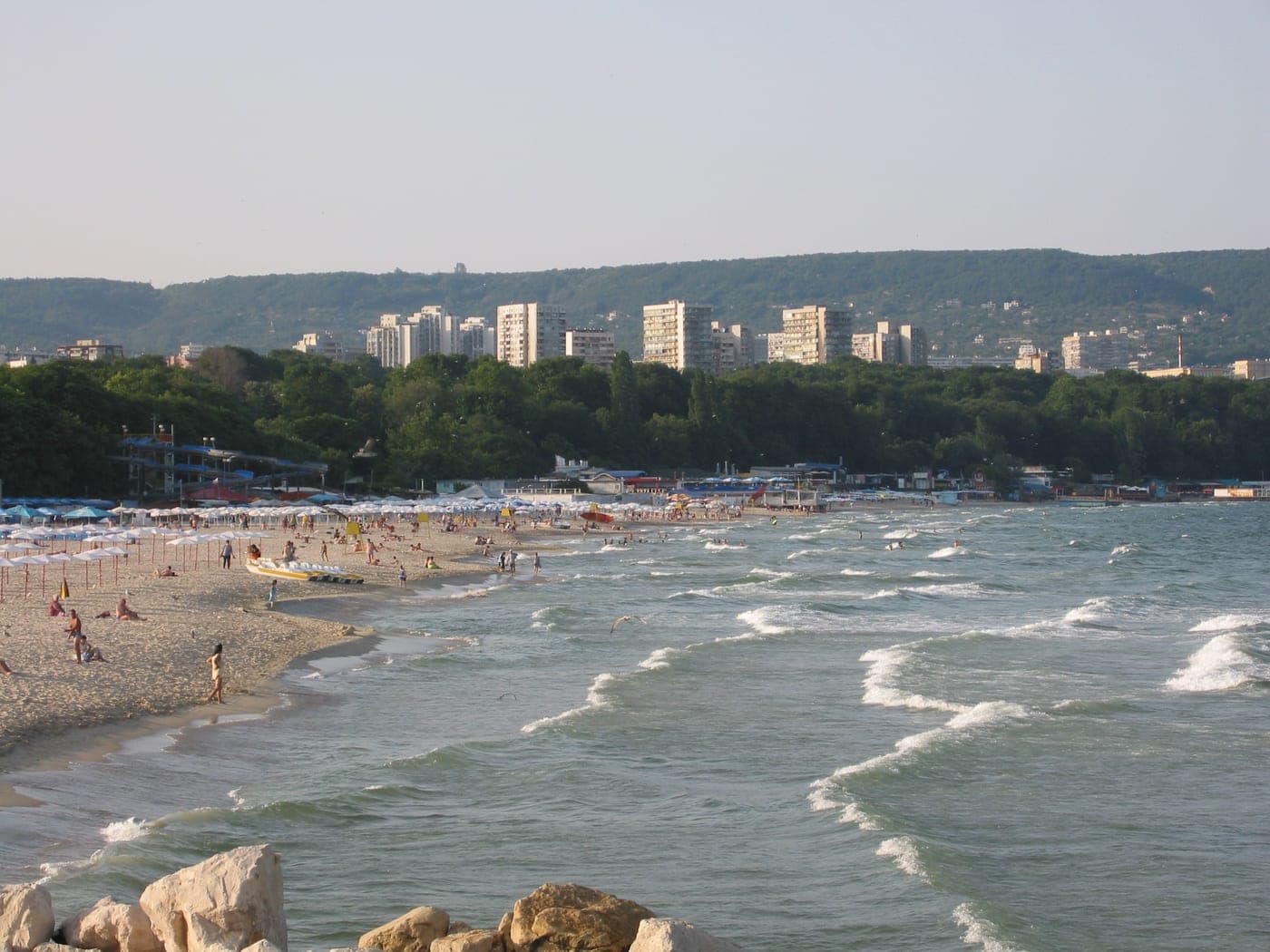 Boat Rentals1 destination
Varna
Varna is Bulgaria's largest coastal city, known for its rich history and diverse cultural heritage. It boasts significant historical sites like the Roman Thermae and the Varna Archaeological Museum, which houses gold artifacts dating back 6,000 years. The city acts as a gateway to the Black Sea, with nearby beaches and resorts, yet also presents opportunities for exploration off the beaten path, such as the charming village of Nessebar and the serene nature of the nearby Golden Sands Nature Park. Varna hosts vibrant local festivals like the Varna Summer International Music Festival, showcasing regional talent and culture. The surrounding countryside offers vineyards and traditional Bulgarian cuisine, making it a delightful region for authentic experiences.
Boat RentalsHiking