Photo by Emptywords · license: CC BY-SA 4.0
Sopot sits on the Bay of Gdańsk, wedged between the pine-covered slopes of the Tri-City landscape park and the open Baltic. It grew out of the same 19th-century wave that shaped so many European spa towns: doctors of the time believed in the healing power of sea air and cold-water bathing, and Sopot built its identity around that idea. Villas, sanatoriums, and bathhouses went up along the shore, and the habit of walking the coast for the good of body and mind has never really left the town.
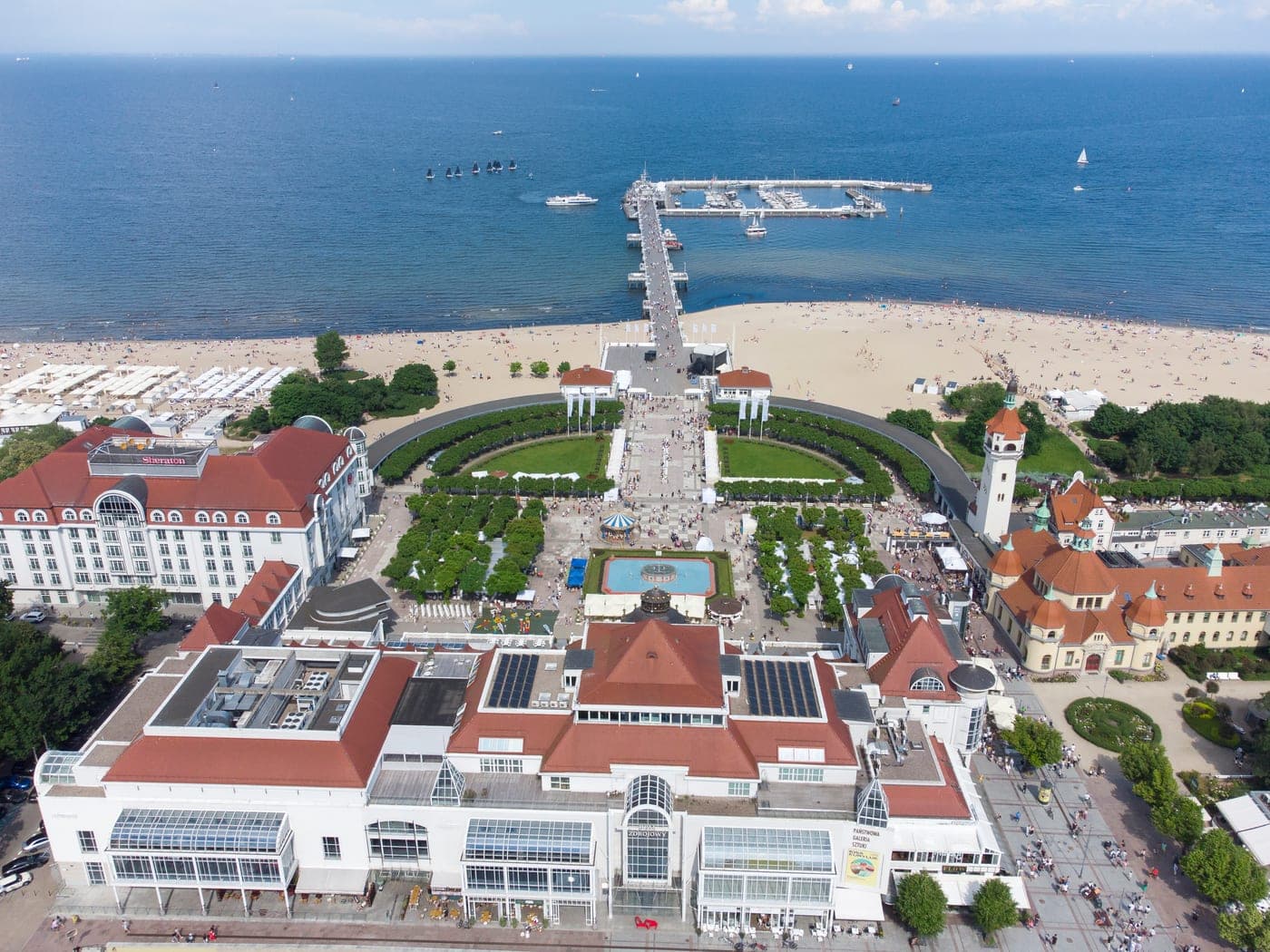
The pier, Molo, is still the clearest expression of that spa heritage. Built of wood and stretching far out over the water, it was designed for unhurried walking rather than for getting anywhere quickly — people came to breathe, to look at the sea, to be seen strolling in their best clothes. That purpose has barely changed. Early risers have the boards mostly to themselves, with gulls, fishing boats on the horizon, and the low light of the Baltic morning. Later in the day the pier fills with a slower kind of crowd: couples pausing at the railings, families letting children run ahead, groups drinking coffee at the small kiosks near the entrance.
Behind the pier, the spa quarter keeps its old rhythm. Bathhouses and wellness centres still draw on the town's tradition of sea-air cures and mineral treatments, and several hotels along the seafront trace their buildings back to the same spa boom that built the pier. The Grand Hotel, with its pale façade facing the water, is one of the surviving buildings from that era, and its terrace remains a good place to watch the changing light on the bay.
Sopot's pace works in layers depending on the season. In high summer the beach fills with striped changing huts, volleyball nets, and the low murmur of a resort in full swing; music drifts from Opera Leśna, the wooden amphitheatre in the forest above town that has hosted song festivals for decades. Out of season, the same beach turns into a wide, quiet stretch of pale sand backed by dunes and marram grass, walked mostly by locals with dogs and by visitors happy to trade heat for solitude. Spring and early autumn show Sopot at its most balanced: mild air, uncrowded cafés, and a sea that is calm enough for long stretches of walking along the shoreline.
Monte Cassino, the pedestrian street running from the town centre down to the pier, holds the everyday texture of Sopot: bakeries, amber jewellers, seafood restaurants, and the tilted façade of the Crooked House, a piece of playful architecture that has become something of a local landmark. Fish here tends to be simple and fresh — herring, flounder, and smoked mackerel show up on menus close to the harbour, often with little more than bread, butter, and a squeeze of lemon.
The forest above Sopot is part of the town's character as much as the water is. Paths climb gently from the streets into beech and pine woods, connecting to the wider Tri-City landscape park, where the sound of the sea fades and gives way to birdsong and the smell of resin. Cyclists and walkers use the same quiet trails, and a short climb rewards with views back down over the rooftops to the bay.
What makes Sopot work as a slow destination is this contrast held close together: spa formality and beach ease, forest quiet and seafront bustle, all within walking distance of each other. There is no need to choose one mood over another — the town simply shifts between them depending on the hour and the season, and its wooden pier remains the constant thread tying the whole coastline together.
Drop the places you like into one list. The planner orders them by day and works out the distances.
Get slow travel tips delivered to your inbox
A short message when something worth the trip lands. Reply STOP anytime.
By subscribing, you agree to be contacted via WhatsApp. Privacy policyOccasional letters in your inbox — with recommendations, maps and routes.
By subscribing to newsletter, you agree to our privacy policy.