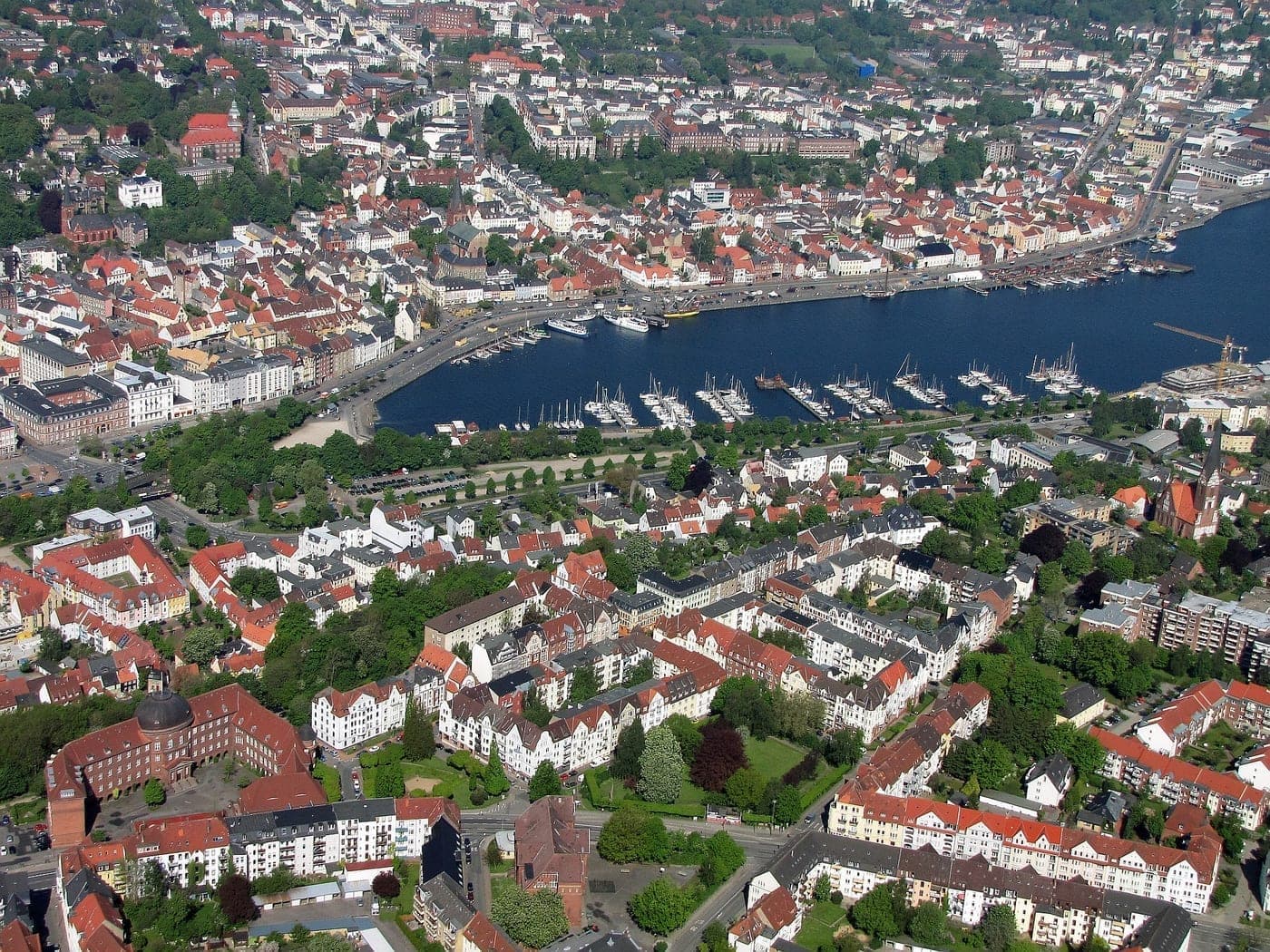
Photo by Wolfgang Pehlemann · license: CC BY-SA 3.0
Flensburg lies at the head of a long, narrow fjord that reaches inland from the Baltic Sea, marking the border between Germany and Denmark. The water shapes everything here: the town grew around its harbour, and the fjord still defines how the region moves, works, and rests. Steep green banks, beech woods, and small sailing harbours line the shore on both the German and Danish sides, and the border itself feels soft — bilingual signs, Danish bakeries, and shared festivals are part of daily life.
The old town rises from the harbour in narrow lanes and courtyards, built from the same red brick used across the southern Baltic coast. Merchant houses with deep cellars once stored rum brought back from the Caribbean; Flensburg grew wealthy as a hub for the sugar and rum trade, and that history is still visible in the warehouses along the Schiffbrücke and in a rum-blending tradition that continues today. Church towers rise from the skyline behind the harbour, visible from the water long before the streets around them come into view.
The harbour itself is a working harbour. Historic sailing ships are moored along the quay, wooden hulls creaking against the stone, and a maritime museum nearby traces the town's long relationship with the sea — shipbuilding, whaling, and the rum trade all left their mark on the same short stretch of waterfront. Fish smokehouses and small harbour restaurants serve what comes in that morning, and the smell of smoked herring drifts along the promenade on quieter days.
Inland and along the fjord, the countryside softens into orchards, pasture, and low hills. Apple trees bloom across the region in spring, a legacy of centuries of fruit-growing on the fertile soil around the fjord, and local orchards still supply the markets and cider presses of the area. Cycling paths trace the fjord's edge and cut through beech forest and farmland, linking small villages where thatched and half-timbered houses sit close to the water.
A short distance from Flensburg, the town of Glücksburg holds one of northern Germany's most striking castles: a white Renaissance water castle rising directly from an artificial lake. The castle's symmetry and its reflection in the still water make it one of the most photographed sights on this stretch of coast, and the surrounding parkland and beech avenues extend the fjord's quiet, wooded character right up to its walls.
Sailing defines much of the summer calendar here. Regattas fill the fjord with white sails on clear days, and small clubs along both shores rent boats and give lessons to newcomers. In the other seasons, the pace drops further: mist over the water in autumn, quiet harbours in winter, and the first orchard blossom announcing spring. Markets in Flensburg's old town sell fish, cheese, and baked goods from the surrounding farms, and Danish influence shows up on menus as much as on street signs — rye bread, pastries, and open sandwiches sit alongside northern German harbour food.
What ties the region together is the fjord itself: a long, sheltered arm of water that has always moved slower than the open Baltic beyond it, and a border landscape where two cultures share a coastline and a rhythm of tides.
Drop the places you like into one list. The planner orders them by day and works out the distances.
Get slow travel tips delivered to your inbox
A short message when something worth the trip lands. Reply STOP anytime.
By subscribing, you agree to be contacted via WhatsApp. Privacy policyOccasional letters in your inbox — with recommendations, maps and routes.
By subscribing to newsletter, you agree to our privacy policy.