Get slow travel tips delivered to your inbox
A short message when something worth the trip lands. Reply STOP anytime.
By subscribing, you agree to be contacted via WhatsApp. Privacy policyOccasional letters in your inbox — with recommendations, maps and routes.
By subscribing to newsletter, you agree to our privacy policy.Found in 3 regions

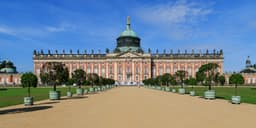
Brandenburg is the largest of Germany's states, and also one of the quietest. It wraps around Berlin on every side, yet it feels like a different country: flat, green, and threaded with water. Lakes, rivers, and canals cover so much of the land that boat and paddle are as normal here as a footpath. This is a place built for slow travel, not because it lacks things to see, but because its landscape rewards patience over speed. The heart of any visit is Potsdam, once the residence of Prussian kings. Its palace parks are enormous, and walking through them takes hours, not minutes. Sanssouci, with its terraced vineyard steps and gilded rooms, is the centerpiece, but the wider park system links smaller palaces, follies, and lakeside paths that most visitors never reach. Spend a full day here and you will still leave things unseen. This is the pace Brandenburg rewards: fewer stops, longer looks. South-east of Potsdam lies the Spreewald, a biosphere reserve where the river Spree splits into hundreds of small channels through wet forest and meadow. Villages here are built along the water rather than roads, and the traditional way to move between them is by flat wooden boat, poled slowly through the canals. Locals still grow the region's famous gherkins in these damp fields, and small family-run inns serve them pickled, alongside regional specialities like Brandenburg mustard. Canoeing the quieter channels away from the main tourist routes gives a clearer sense of how the Spreewald actually works, as a living farmed wetland, not a theme park. Elsewhere, Brandenburg is a state of lakes. The Havel river widens repeatedly into lake-like stretches around Potsdam and further north, and the Uckermark region, close to the Polish border, is scattered with hundreds of small lakes surrounded by beech forest and rolling farmland. This is some of the least crowded countryside in Germany, good for slow cycling on flat, well-marked paths that link village to village rather than city to city. A week here can mean long mornings on the water and short, easy rides between overnight stops, with time left over to simply sit. History sits close to the surface throughout the region. Brandenburg an der Havel, the medieval town that gave the state its name, has a cathedral and old town core that predate Berlin itself. Smaller towns across the state carry church spires, town gates, and market squares largely untouched by mass tourism, since most visitors head straight for Potsdam or Berlin and skip the rest. That gap is Brandenburg's advantage for slow travellers: towns like Rheinsberg, with its lakeside palace, or Werder an der Havel, known for its orchards and spring fruit blossom, feel lived-in rather than staged. For a first visit, three to four days is enough to get a real sense of the region: a day in Potsdam's parks, a day or two in the Spreewald for canals and canoeing, and a day exploring one lake town at an easier pace. A longer stay, a week or more, allows time to properly cycle between villages in the Uckermark or follow the Havel further north, where the crowds thin out almost completely. Brandenburg's food reflects its landscape: freshwater fish from the lakes, Spreewald gherkins, dark rye bread, and small regional breweries that rarely export beyond the state. None of it is showy. It is the kind of place that gives more the slower you move through it, better suited to a canoe paddle or a bicycle than a schedule of sights ticked off quickly. For anyone planning a Brandenburg itinerary built around towns and landscape rather than a single city, this is where to start.

Masovia, the largest region in Poland, is known for its rich history and cultural heritage. Warsaw, the capital city, showcases a blend of modernity and tradition, particularly in the UNESCO-listed Old Town, reconstructed after WWII. The region features picturesque landscapes, including the Vistula River and numerous parks. Off the beaten path, towns like Płock, with its historic cathedral, and the idyllic Kampinos National Park offer a quiet retreat. Masovia also hosts various local festivals celebrating traditional music and cuisine, such as pierogi and żurek. The region's rural areas are dotted with charming villages that highlight local craftsmanship and agriculture, making it a rewarding area for deep exploration.

This region, known for its numerous lakes and forests, is the largest in Poland by area. It is characterized by an abundance of waterways, making it a paradise for canoeing and sailing enthusiasts. Olsztyn, the capital, boasts a rich history with its medieval castle and vibrant cultural scene. The area is also renowned for its wildlife, including rare bird species and diverse flora. Off the beaten path, visit the small town of Mrągowo, famous for its folk culture and music festivals. The region's unique blend of natural beauty and historical significance offers a rich experience for those willing to explore beyond typical tourist routes. Local dishes featuring freshwater fish and mushrooms highlight the culinary offerings of Warmia-Masuria, enhancing the journey into this lesser-known part of Poland.