01Stop · Start
Bådudlejning·Tyskland
Schwerin
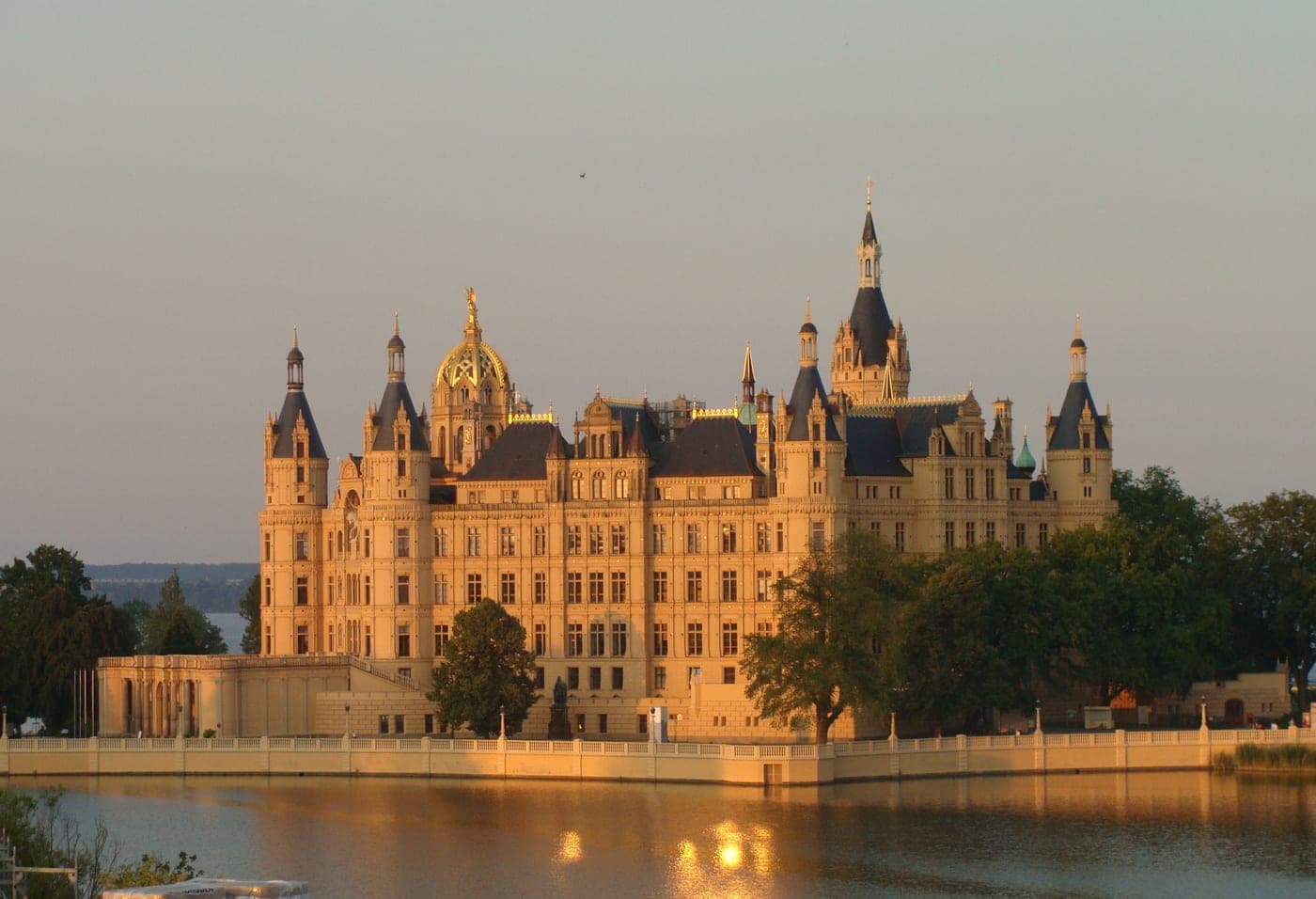
Charmerende by ved søen med et imponerende slot og frodige parker.
⌬Slot⌬Syv søer⌬Hiking
SchwerinCharmerende by ved søen med et imponerende slot og frodige parker.

Tysklands største sø inden for Mecklenburg-søernes nationalpark.
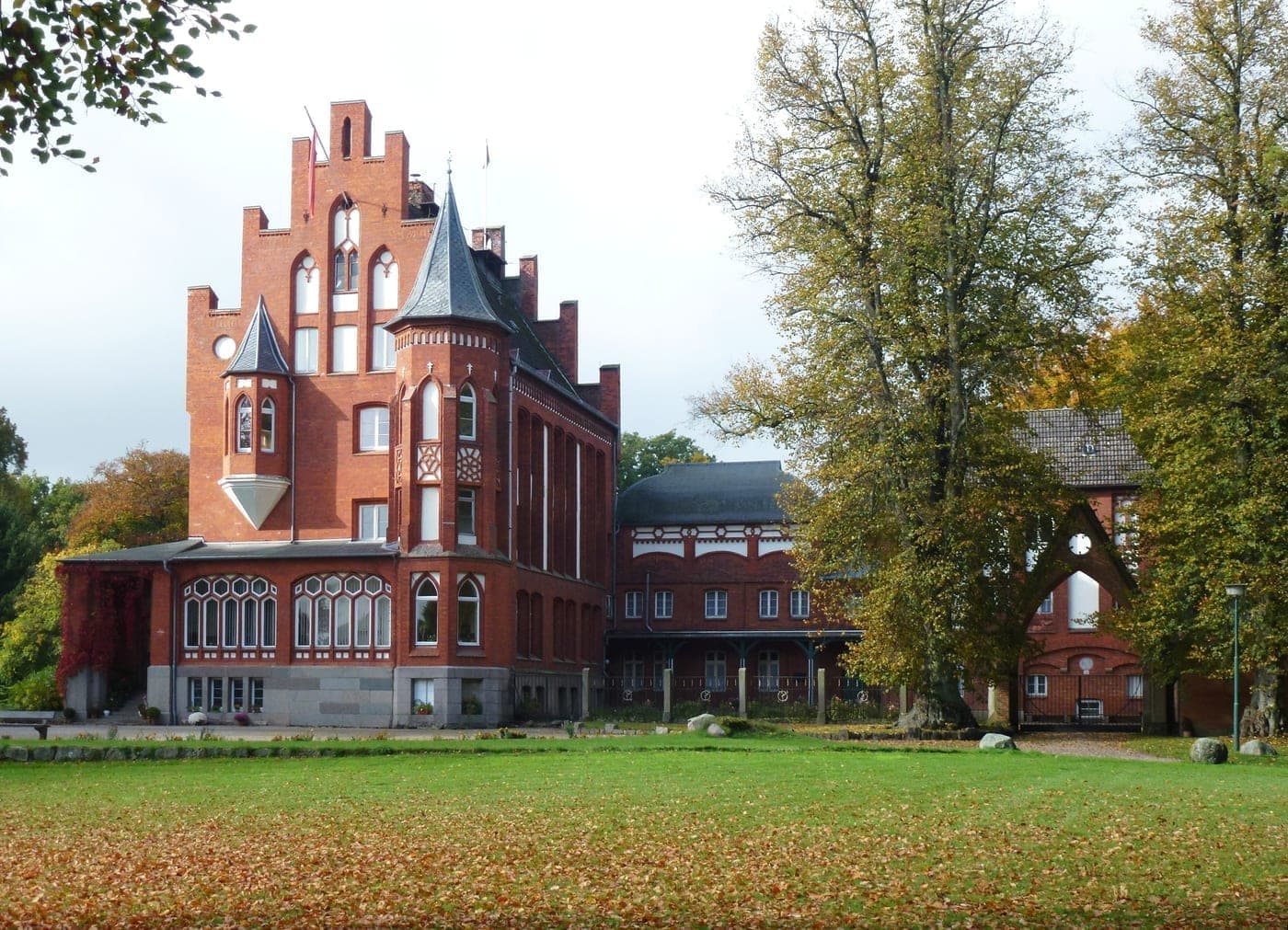
Traditionel landbrugslandsby nær Østersøkysten med bølgende landskab
Det eventyrlige ø-slot rejser sig fra Schwerins største sø, hvor bådture forbinder syv vande.
Tysklands største indlandssø strækker sig over Müritz-bassinet med fiskerlandsbyer og rørkanter.
En tømmerhytte ligger blandt Schleswig-Holsteins fyrretræer, hvor skovstier fører til Lübeck-bugtens sandede kyst.
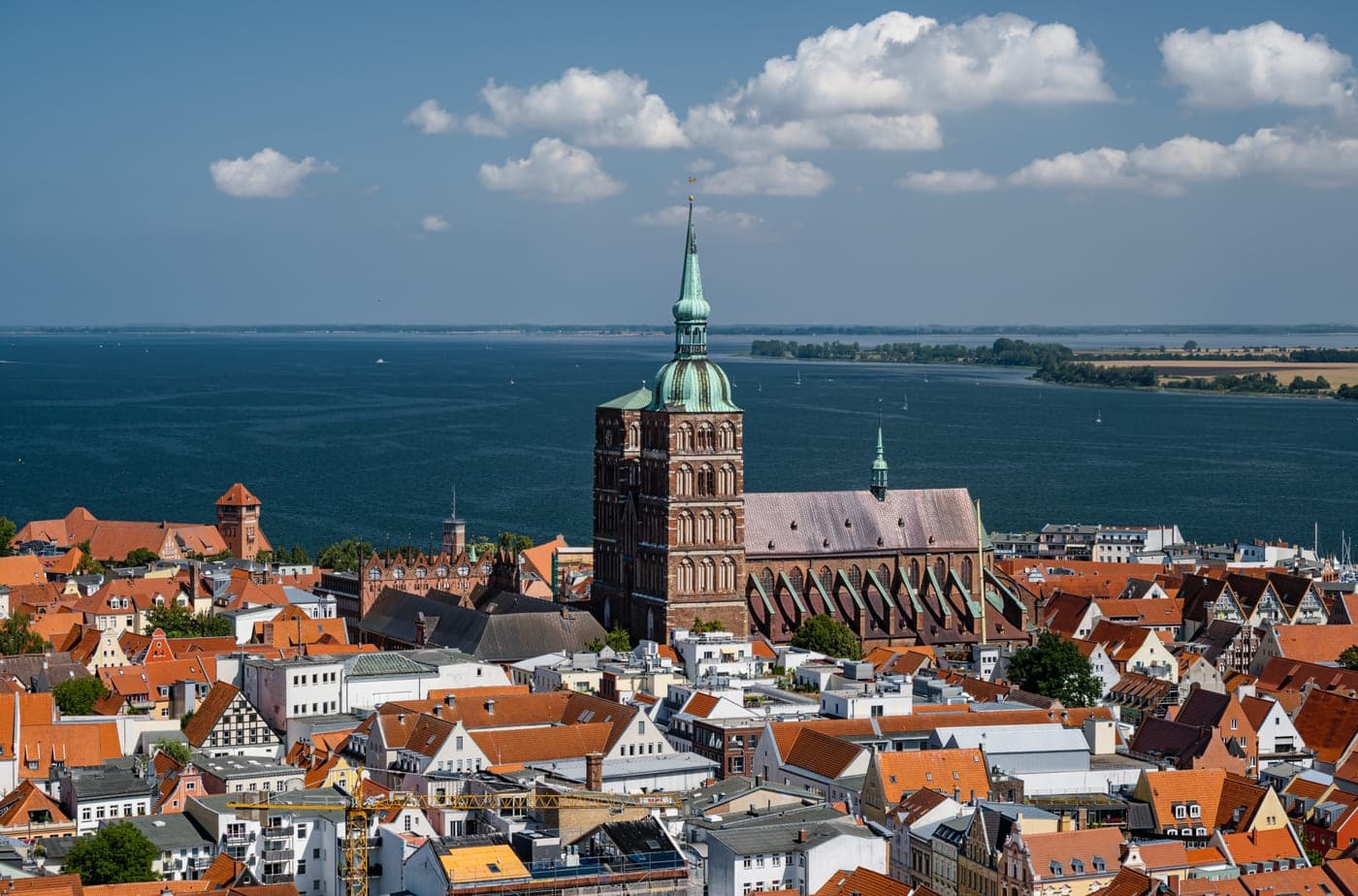
Mecklenburg-Vorpommern is the largest of Germany's federal states by area, reaching from the Baltic Sea inland across a landscape scattered with lakes. The name joins two historic regions: Mecklenburg in the west, long ruled from Schwerin, and Vorpommern, Western Pomerania, in the east, the German share of the old Baltic region of Pomerania that today continues into Poland. This eastern half is flat farmland and river estuaries, with the port towns of Stralsund and Greifswald. Rostock, the state's largest city, keeps a brick Gothic skyline around St. Mary's Church, with a harbour at Warnemünde where ferries, fishing boats, and sailing yachts share the same stretch of water. Stralsund and Wismar preserve step-gabled merchant houses and market squares built on the wealth of Baltic trade. Greifswald, a university town further east, shows the same red-brick churches rising above low rooflines. Inland, Schwerin's old town circles a castle built on an island in the middle of its own lake, now the seat of the state parliament. Behind the coast lies the Mecklenburg Lake District, where glacial lakes are strung together by narrow channels and canals. Müritz anchors a national park of reed beds, wet woodland, and open water. Small towns such as Waren, Röbel, and Plau am See sit at the water's edge, their harbours used by canoes and sailing boats moving between lakes. The Baltic coast itself turns rougher and more open. Rügen, Germany's largest island, rises into chalk cliffs at Jasmund National Park, where beech forest reaches the sea above the white rock face at Königsstuhl. The island's seaside resorts, Binz, Sellin, and Göhren among them, keep rows of nineteenth-century villas with wooden verandas, a style known locally as Bäderarchitektur. Usedom, shared with Poland at its eastern end, has a similar line of resort towns, Heringsdorf, Ahlbeck, and Bansin, strung along one long sand beach joined by a wooden pier. Between the two larger islands, Hiddensee stays low and quiet. Away from the resorts, the Fischland-Darß-Zingst peninsula keeps fishing villages shaped by the shallow Bodden lagoons that separate the peninsula from the mainland. Ahrenshoop grew into an artists' colony in the late nineteenth century and still keeps galleries in old captains' houses. The region's kitchens draw on both sea and lake: herring and sprat from the Baltic, pike and zander from inland waters, rye bread and potatoes as everyday staples, and a tradition of fish smoking in the coastal villages. Mecklenburger Rippenbraten, a slow-roasted pork dish, and beer from small regional breweries round out menus built for a cooler, maritime climate. Mecklenburg-Vorpommern holds together two different rhythms: the still water and reed beds of its lake district, and the open sand and chalk of its Baltic shore.
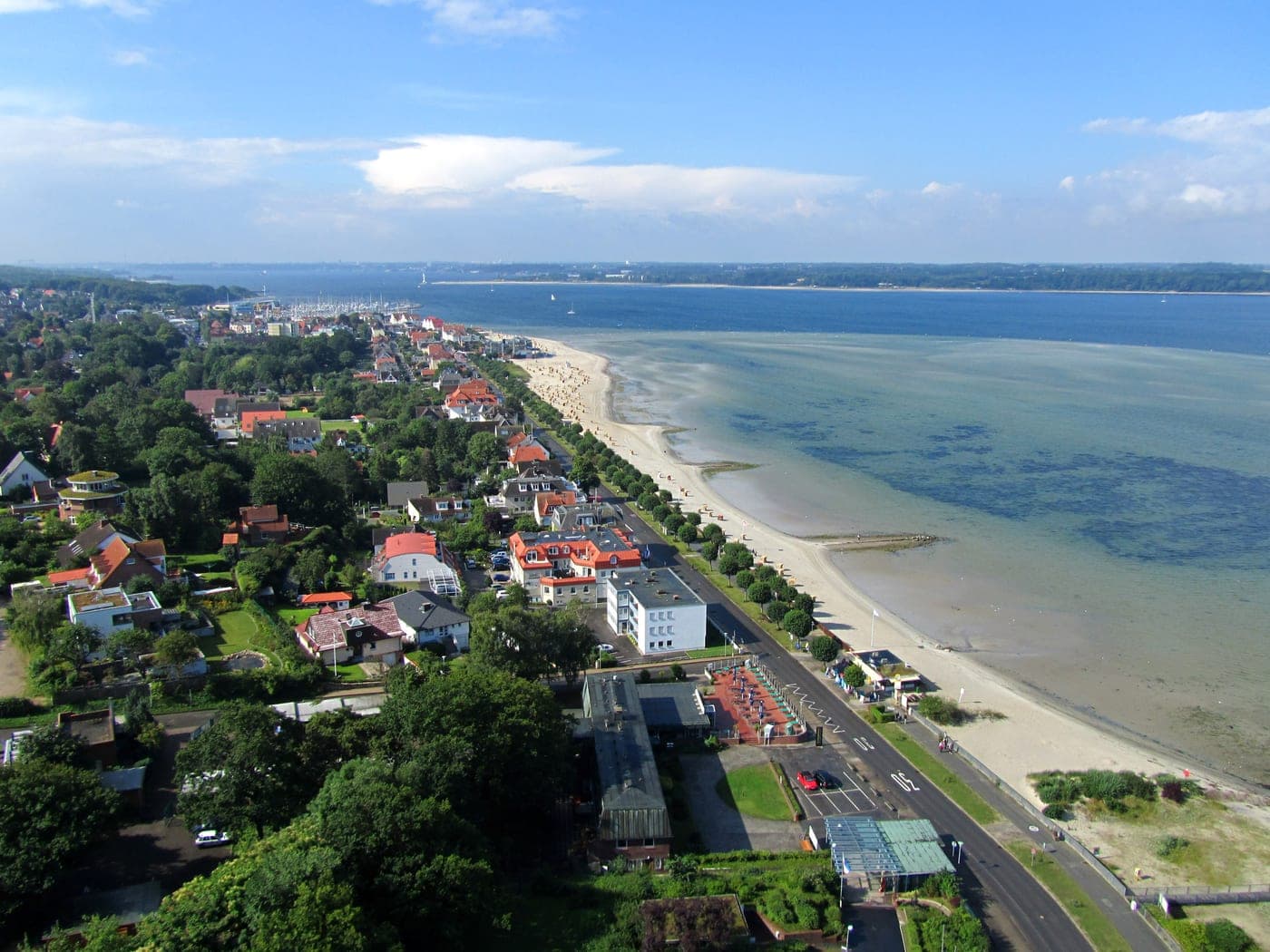
Schleswig-Holstein sits between two seas, and that fact shapes everything about its pace. On the west side, the Wadden Sea pulls back twice a day, leaving wide flats of mud and sand where oystercatchers and seals gather. On the east, the Baltic keeps a calmer shoreline, cut by narrow fjords called Förden that reach inland past reed beds and small fishing harbors. Between the two coasts lies a quieter inland belt of moraine hills, beech woods and lakes known as Holsteinische Schweiz, where the land rolls gently toward small lakes rather than open sea. Lübeck is the region's best-known town, its old core built by Hanseatic merchants and still arranged around brick gabled houses, a river harbor and the twin towers of the Holstentor gate. Marzipan making has been a local craft here for generations, and the smell of almond paste still drifts from shopfronts near the market square. A short distance north, Flensburg carries a different character: its harbor front and old rum warehouses point to centuries of trade with Norway and Denmark, and Danish is still spoken by a minority in town. Schleswig, at the head of the Schlei fjord, keeps an old layer of the region's history, with Gottorf Castle, now home to the state museums, facing the cathedral across the water. Villages in Schleswig-Holstein tend to sit low against the horizon, red brick and thatched roofs blending into flat fields or dike grass. Along the North Sea coast, dikes double as footpaths and cycling routes, running for long stretches with the sea on one side and grazing sheep on the other. The flatness of the land makes cycling an easy way to move between villages, small harbors and the ferry piers that link the mainland to the islands. Sylt, Föhr and Amrum lie offshore within the Wadden Sea National Park, each with its own character: Sylt is known for its dune landscape and thatched Frisian houses, Föhr keeps a quiet, agricultural feel around village greens and old churches, and Amrum holds an extensive dune area. Inland, the lake district around Plön and Eutin offers a different kind of water travel. Small passenger boats cross the lakes between beech forests, and Plön sits below its own castle, overlooking the water from a wooded hill. Eutin keeps a baroque palace and gardens open for slow walking. Further west, the town of Husum sits by its own tidal harbor, and each spring the palace garden there fills with crocus blooms. Kiel, the state capital, faces the Baltic directly and turns into a sailing city every summer during Kieler Woche. Things to do in Schleswig-Holstein tend to build from the coastline itself: watching the tide uncover the Wadden Sea flats, following a dike path between two fishing harbors, crossing an inland lake by small boat, or walking a fjord town's quay while gulls work the fish stalls. Herring and eel appear often on menus near the coast, and Labskaus, a hearty dish of corned beef, potato and beetroot, remains a Baltic port staple. The region rewards attention to weather and tide as much as to any single sight — mudflats change completely between low and high water, and light on the Baltic coast shifts quickly with the wind. Markets, harbor cafés and small guesthouses set the rhythm here more than any schedule does. Whether the starting point is Lübeck's brick lanes, Flensburg's Danish-flavored harbor, or a quiet island church on Föhr, Schleswig-Holstein holds together as one landscape of tide, wind and water, best taken in a village or a shoreline at a time.
Få tips om slow travel direkte i din indbakke
En kort besked, når noget rejsen værd dukker op. Svar STOP når som helst.
Ved at tilmelde dig accepterer du, at vi kontakter dig via WhatsApp. PrivatlivspolitikLejlighedsvise breve i din indbakke — med anbefalinger, kort og ruter.
Ved at tilmelde dig nyhedsbrevet accepterer du vores privatlivspolitik.